


What is Autism? A Beginner’s Guide
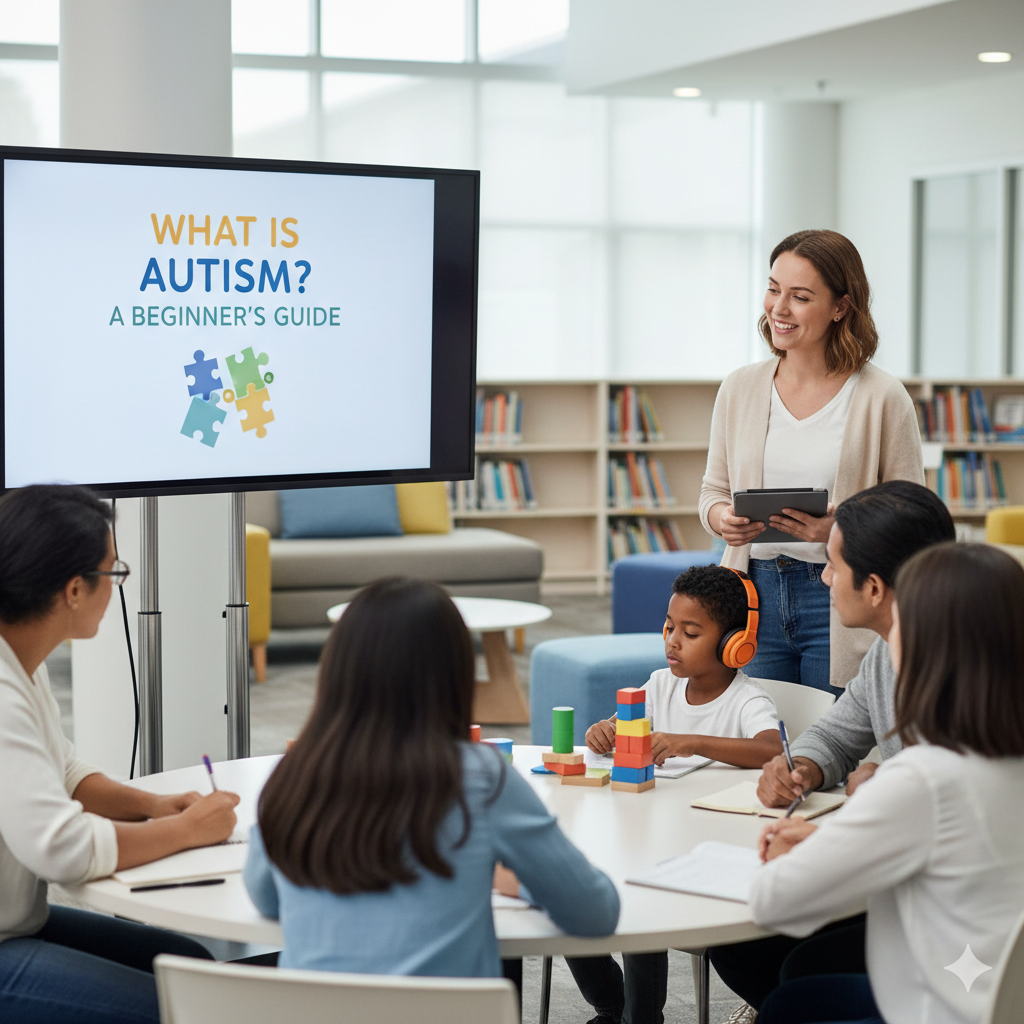
If you’ve ever wondered what is autism, you’re not alone. Autism Spectrum Disorder (ASD) affects millions worldwide, yet it remains one of the most misunderstood conditions. This beginner’s guide breaks it down simply: from core traits to daily life tips and therapy options. Whether you’re a parent, educator, or curious friend, you’ll walk away with clear, practical knowledge.
Understanding Autism: The Basics
Autism is a neurodevelopmental disorder that influences how people communicate, interact socially, and process the world around them. Officially called Autism Spectrum Disorder (ASD), it “spectrum” label highlights its wide range—some individuals thrive independently, while others need lifelong support.
Diagnosed as early as age 2, autism stems from a mix of genetic and environmental factors. It’s not caused by vaccines or parenting styles, as myths once claimed. According to the CDC, about 1 in 36 children in the U.S. has ASD, with boys diagnosed four times more often than girls (though underdiagnosis in girls is common).
Key signs often appear by age 2-3:
-
Limited eye contact or delayed speech.
-
Repetitive behaviors, like hand-flapping or lining up toys.
-
Intense focus on specific interests, such as trains or numbers.
-
Sensory sensitivities to lights, sounds, or textures.
Early detection changes everything—catching it young opens doors to therapies that build skills.
The Autism Spectrum: No Two People Are the Same
What is autism truly like? Think of it as a colorful rainbow, not a checklist. Levels range from 1 (needing minimal support) to 3 (requiring substantial help).
Famous autistics like Temple Grandin (animal scientist) or Anthony Hopkins (actor) show strengths in pattern recognition, memory, and creativity.
Common Myths About Autism Debunked
Misinformation fuels stigma. Here’s the truth:
-
Myth: Autism means low intelligence. Reality: Many have average or above-average IQs; intellectual disability affects only about 30%.
-
Myth: Autistic people lack empathy. Reality: They feel deeply but express it differently.
-
Myth: It’s curable. Reality: Autism is lifelong, but therapies unlock potential.
Therapies That Make a Difference
Tailored interventions help autistic individuals thrive. As a specialist in therapy content, here’s what works:
-
Speech Therapy: Builds communication via picture exchange or AAC devices. Fun fact: Apps like Proloquo2Go turn icons into speech.
-
Occupational Therapy (OT): Improves fine motor skills and sensory processing, like tolerating clothing textures.
-
Behavioral Therapy (ABA): Uses positive reinforcement to teach social skills—think rewards for turn-taking.
-
Physical Therapy: Enhances coordination for activities like bike riding or sports.
Start with an evaluation from a developmental pediatrician. Early intervention (before age 3) yields the best results, per studies from the National Institutes of Health.
Living with Autism: Tips for Families
Daily life can feel overwhelming, but these strategies help:
-
Create predictable routines to reduce anxiety.
-
Use visual schedules for transitions.
-
Embrace special interests as learning tools (e.g., dinosaurs for science lessons).
-
Connect with communities like Autism Speaks or local support groups.
Parents often share: “My child’s ‘superpower’ is hyperfocus—it led to straight A’s in math.”
Final Thoughts: Hope on the Spectrum
What is autism? A unique wiring of the brain that brings challenges and gifts. With awareness, early therapies, and acceptance, autistic individuals lead fulfilling lives. If you suspect ASD in someone you know, consult a doctor—knowledge is the first step.
Ready to learn more? Share this guide and explore our therapy resources below.