
Autism vs Normal Development: Key Differences and Milestones to Watch
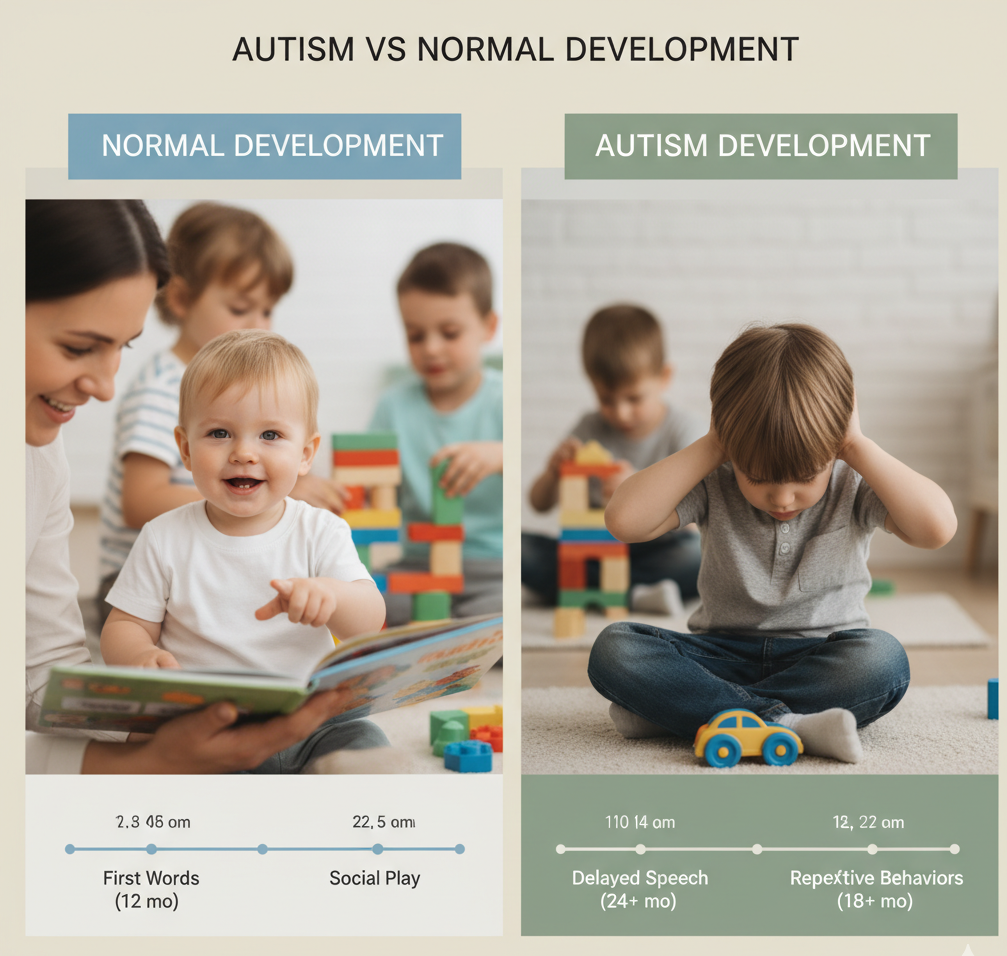
Every child develops at their own pace, but understanding the differences between autism vs normal development can help parents spot potential signs early. Autism Spectrum Disorder (ASD) is a neurodevelopmental condition affecting how children communicate, socialize, and process the world around them. In contrast, “normal” or typical development follows predictable milestones backed by organizations like the CDC and American Academy of Pediatrics.
This article breaks down the core differences across key areas—social skills, communication, behavior, and sensory processing—using age-based comparisons. Early detection through therapies like ABA (Applied Behavior Analysis) or speech therapy can make a huge difference. If you’re concerned, consult a pediatrician for screening.
Social and Emotional Milestones: Building Connections
Social interaction is a cornerstone of normal development, where kids naturally seek out relationships and read social cues.
-
By 6 months: Babies in typical development smile at people, enjoy peek-a-boo, and recognize familiar faces.
-
By 12 months: They point to share interest (joint attention) and look to parents for comfort during distress.
-
By 2 years: Toddlers engage in simple pretend play, like feeding a doll, and show empathy by comforting others.
-
By 3-4 years: Preschoolers make friends, take turns, and understand basic emotions like happy or sad.
In autism vs normal development, children with ASD often lag here. They might avoid eye contact, not respond to their name by 12 months, or prefer solitary play. A child with autism may not imitate actions (like waving bye-bye) or show interest in peers. According to the CDC, about 1 in 36 U.S. children has ASD, and social delays are a red flag by age 2.
Example: A typically developing 18-month-old waves at a neighbor; a child with autism might spin a toy wheel instead, ignoring the interaction.
Communication Milestones: From Babble to Conversation
Language blooms rapidly in normal development, turning coos into full sentences.
-
By 6 months: Babies babble (“ba-ba”) and respond to their name.
-
By 12 months: First words emerge, like “mama” or “dada,” with gestures like pointing.
-
By 2 years: Vocabulary hits 50+ words; simple two-word phrases form (“more milk”).
-
By 3 years: Kids use sentences of 3-4 words, ask questions, and hold short conversations.
Autism vs normal development shows stark contrasts in speech. Children with ASD may have delayed or absent speech—echolalia (repeating phrases) is common instead of original talk. They might not use gestures or follow simple directions like “give me the ball.” Nonverbal autism affects up to 30% of cases, per NIH studies.
Pro Tip: Track milestones with the CDC’s app. Regression, like losing words after 18 months, signals potential autism.
Behavioral Patterns: Play, Routines, and Repetition
Typical kids explore flexibly, while autism often involves rigid patterns.
In normal development, behaviors adapt to context—toddlers throw a ball back and forth. Autism features “stimming” (self-stimulatory actions) for regulation and intense interests, like memorizing train schedules. These aren’t “bad” but differ from the flexible curiosity of neurotypical kids.
Sensory Processing: How the World Feels
Sensory differences highlight autism vs normal development profoundly.
-
Typical: Babies startle at loud noises but adapt; toddlers enjoy textures like finger paints.
-
Autism: Hypersensitivity (covers ears at vacuum noise) or hyposensitivity (seeks deep pressure, like tight hugs). Up to 90% of autistic children have sensory processing challenges, per autism research.
This can lead to meltdowns in overwhelming environments, unlike the resilience in typical development.
When to Seek Help: Early Intervention Matters
Spotting autism vs normal development early unlocks therapies. The average diagnosis age is 4 years, but signs appear by 12-18 months. Use tools like the M-CHAT screening questionnaire online.
Red flags include:
-
No babbling or gesturing by 12 months.
-
No single words by 16 months or two-word phrases by 24 months.
-
Loss of skills (regression).
-
Limited eye contact or response to name.
Interventions like occupational therapy, speech therapy, and behavioral therapy improve outcomes—kids in early programs gain 17 IQ points on average, per studies.
Myths vs Facts: Debunking Autism Misconceptions
-
Myth: Autism is caused by vaccines. Fact: Extensive research (e.g., WHO) debunks this; genetics and environment play roles.
-
Myth: All autistic kids are savants. Fact: Strengths vary; many excel in patterns or memory.
-
Myth: Autism means no emotions. Fact: Emotions exist but expression differs.
Supporting Your Child: Next Steps
Whether tracking normal development or addressing autism, celebrate progress. Create sensory-friendly spaces, use visual schedules, and foster strengths.
For personalized advice, schedule a developmental screening. Resources like Autism Speaks or local clinics offer free tools.
Early action transforms lives—knowledge is your first step.