


Mild vs Severe Autism: Understanding the Spectrum and Key Differences
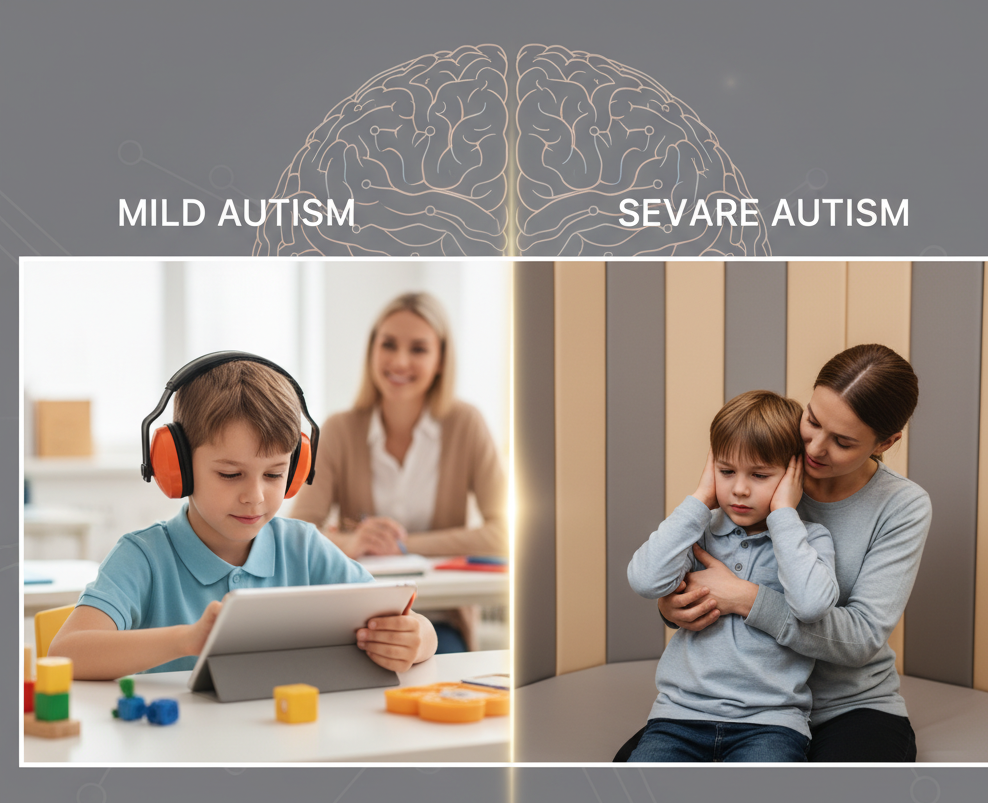
Autism Spectrum Disorder (ASD) is a neurodevelopmental condition that affects how people communicate, interact socially, and process the world around them. One of the most common questions families, educators, and caregivers ask is about mild vs severe autism—what do these terms really mean, and how do they impact daily life? While autism is a spectrum, meaning it varies widely from person to person, the distinction between mild and severe forms helps guide diagnosis, support, and interventions. In this article, we’ll break down the differences, share real-world examples, and explore management strategies.
What Is Autism Spectrum Disorder?
ASD is diagnosed based on criteria in the DSM-5 (Diagnostic and Statistical Manual of Mental Disorders, Fifth Edition), which emphasizes two core areas: persistent challenges in social communication and restricted, repetitive behaviors. Symptoms typically appear by age 2-3, but support needs can range from minimal to lifelong.
The term “spectrum” reflects this variability—no two autistic individuals are exactly alike. Mild autism often aligns with what was previously called Asperger’s Syndrome or Level 1 ASD, while severe autism corresponds to Level 3 ASD, requiring very substantial support. According to the CDC, about 1 in 36 children in the U.S. has ASD, with roughly 30% falling into the severe category.
Defining Mild Autism (Level 1 ASD)
Mild autism describes individuals who can function independently in many settings but face noticeable challenges. They often have average or above-average intelligence and develop spoken language, though social nuances might elude them.
Key characteristics include:
-
Social challenges: Difficulty reading facial expressions or sarcasm; prefers solitary activities but can form friendships with effort.
-
Repetitive behaviors: Intense interests (e.g., memorizing train schedules) or routines, but these rarely disrupt daily life.
-
Sensory sensitivities: Overwhelmed by loud noises or textures, yet manageable with coping strategies.
For example, a child with mild autism might excel in school academically but struggle during group projects, leading to isolation. Adults may thrive in structured jobs like software programming, where their focus shines, but navigate dating or small talk with difficulty.
Defining Severe Autism (Level 3 ASD)
In contrast, severe autism involves profound impairments that significantly limit independence. Language development is often delayed or absent, and self-injurious behaviors or intellectual disability (affecting 30-50% of cases) are common.
Hallmarks include:
-
Communication deficits: Little to no functional speech; relies on pictures, gestures, or devices like AAC (Augmentative and Alternative Communication) apps.
-
Intense behaviors: Frequent meltdowns, elopement (wandering), or self-harm like head-banging, triggered by sensory overload or routine changes.
-
Daily living needs: Requires 24/7 supervision for safety, hygiene, and meals.
Consider an adult with severe autism who cannot live alone due to risks like elopement or inability to prepare food. Without round-the-clock care, their quality of life plummets.
Mild vs Severe Autism: A Side-by-Side Comparison
To clarify mild vs severe autism, here’s a quick comparison table based on DSM-5 levels:
This table highlights why early diagnosis matters—interventions can shift trajectories.
Causes and Risk Factors: What Influences Severity?
No single cause explains mild vs severe autism, but genetics play a huge role (heritability up to 80-90%). Environmental factors like prenatal exposure to valproic acid or advanced parental age increase risk. Severe cases often link to rare genetic mutations (e.g., Fragile X syndrome) or co-occurring epilepsy (prevalent in 20-30% of severe ASD).
Severity isn’t fixed; early therapies can “mild-ify” outcomes. A 2023 study in JAMA Pediatrics found that intensive behavioral therapy before age 3 improved language in 40% of severe cases.
Diagnosis: How Do Doctors Differentiate?
Diagnosis starts with developmental screenings at well-child visits. For mild vs severe autism, specialists use tools like:
-
ADOS-2 (Autism Diagnostic Observation Schedule) for behavioral observation.
-
ADI-R for parent interviews.
-
Cognitive tests to assess IQ and adaptive skills.
Severity is rated by support needs, not just symptoms. In the U.S., seek evaluation through pediatricians, neurologists, or centers like those affiliated with Autism Speaks.
Treatment and Support Strategies
Tailored interventions bridge the gap between mild vs severe autism:
-
Behavioral Therapy: ABA (Applied Behavior Analysis) teaches skills; effective for both levels but more intensive (20-40 hours/week) for severe cases.
-
Speech and Occupational Therapy: Builds communication and sensory regulation.
-
Medications: Target co-occurring issues like anxiety (SSRIs) or aggression (antipsychotics).
-
Educational Supports: IEPs (Individualized Education Programs) in schools; vocational training for mild cases.
For mild autism, apps like Proloquo2Go aid subtle social learning. Severe cases benefit from structured environments like group homes.
Success story: A teen with mild autism used social skills groups to land a job at a tech firm, while a severe case saw reduced meltdowns via sensory rooms.
Living with Autism: Family and Community Tips
Whether mild or severe, autism reshapes family dynamics. Parents report higher stress in severe cases, per a 2024 Autism Research study, but resilience-building resources help.
Practical tips:
-
Create predictable routines.
-
Use visual schedules.
-
Connect with support groups like the Autism Society of America.
-
Advocate for inclusive policies—e.g., neurodiversity hiring in workplaces.
Conclusion: Embracing the Full Spectrum
Mild vs severe autism underscores ASD’s diversity, but every individual deserves personalized support. Early detection and intervention unlock potential, turning challenges into strengths. If you suspect autism in a loved one, consult a professional today—resources like the CDC’s “Learn the Signs. Act Early” toolkit are free starting points.
For more on therapy options, therapies, or personalized advice, explore our guides on speech therapy for autism or ABA therapy benefits. Share your story in the comments!