


Common Myths About Autism: Separating Fact from Fiction
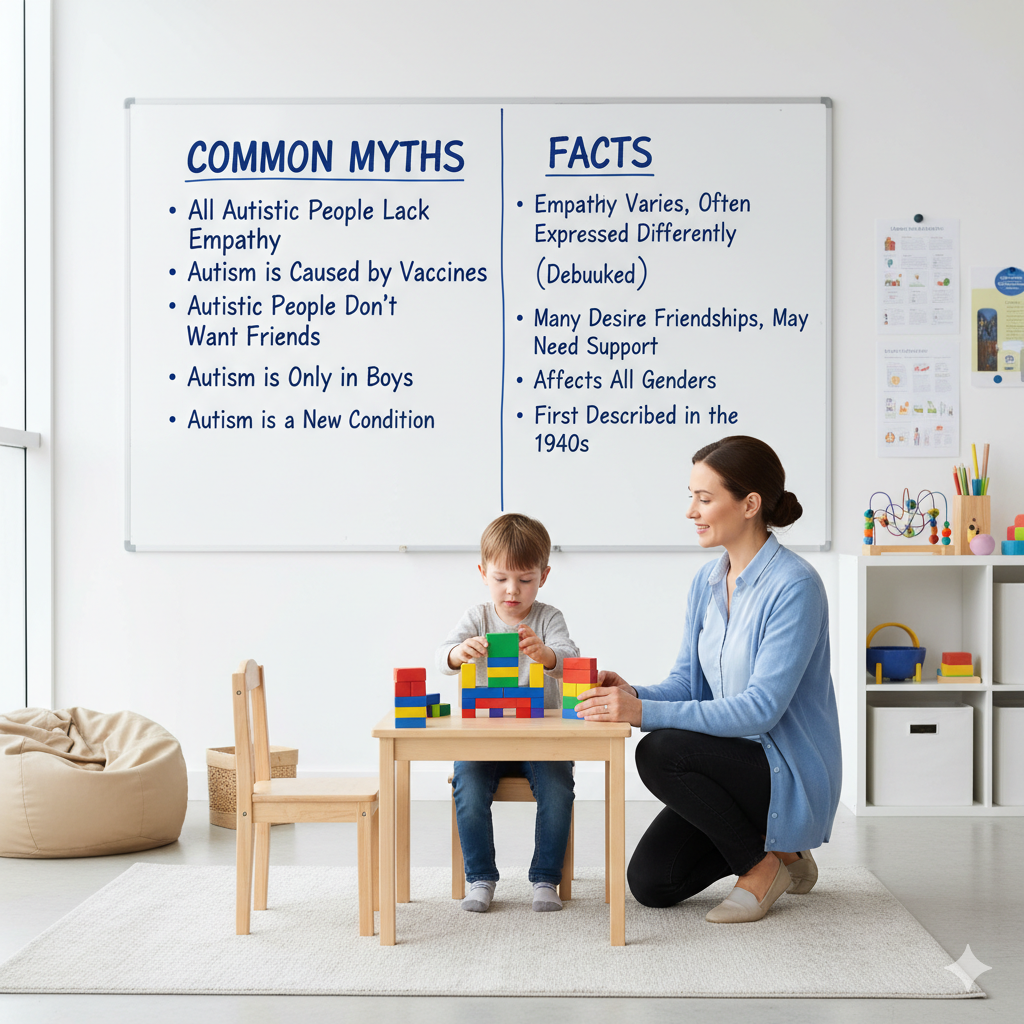
Autism Spectrum Disorder (ASD) affects about 1 in 36 children in the U.S., according to the CDC’s 2023 data. Yet, misconceptions persist, often fueled by outdated media portrayals or misinformation online. These “common myths about autism” can stigmatize individuals and families. In this article, we’ll bust the top myths with science-backed truths to foster better awareness.
Myth 1: Autism Is Caused by Vaccines
The Claim: Vaccines, especially the MMR shot, cause autism—a idea popularized by a fraudulent 1998 study later retracted.
The Truth: Decades of research, including a 2019 Danish study of over 650,000 children, show no link. The CDC and WHO confirm vaccines are safe. Autism’s genetic and prenatal roots emerge early, often before vaccinations.
Parents can vaccinate confidently; delaying shots risks preventable diseases like measles.
Myth 2: People with Autism Lack Empathy
The Claim: Autistic individuals are “cold” or emotionless.
The Truth: Many experience intense empathy but struggle with expression due to social processing differences. A 2021 study in Autism Research found autistic people often feel others’ emotions deeply, sometimes overwhelmingly—a trait called “hyper-empathy.”
They connect profoundly once communication barriers are bridged, as seen in neurodiversity advocates like Temple Grandin.
Myth 3: Autism Only Affects Children
The Claim: Kids “outgrow” autism.
The Truth: Autism is lifelong. While early therapies like ABA improve skills, core traits persist into adulthood. The National Autistic Society notes 1.5 million autistic adults in the U.S. face employment gaps (only 21% full-time jobs, per 2022 data).
Support evolves—think vocational training for adults, not “cures.”
Myth 4: All Autistic People Are Savants or Geniuses
The Claim: Inspired by Rain Man, every autistic person has extraordinary talents like math wizardry.
The Truth: Savant skills occur in under 10% of cases, per researcher Darold Treffert. Most autistic individuals have average or below-average IQs, with strengths varying widely across the spectrum.
Celebrate diverse abilities, from pattern recognition to creative problem-solving, without stereotypes.
Myth 5: Autism Means No Eye Contact or Social Skills
The Claim: Autistic people avoid eye contact and can’t form relationships.
The Truth: Eye contact can overwhelm due to sensory intensity, not disinterest. Many build deep friendships and marriages; a 2020 study in Journal of Autism and Developmental Disorders showed 30-40% of autistic adults partner romantically.
Tools like visual cues or social stories help, proving connection is possible.
Myth 6: Bad Parenting Causes Autism
The Claim: “Refrigerator mothers” emotionally distant parents trigger it.
The Truth: This 1950s theory, debunked by Bruno Bettelheim’s era, ignores genetics (heritability up to 90%, per twin studies) and brain differences visible in utero via MRI scans.
Modern views emphasize neurodiversity—autism as a natural variation, not fault.
Myth 7: There’s a ‘Cure’ for Autism
The Claim: Diets, chelation, or bleach therapies “fix” it.
The Truth: No cure exists; dangerous “treatments” like Miracle Mineral Solution harm without helping, as warned by the FDA. Focus on evidence-based supports: speech therapy, occupational therapy, and behavioral interventions enhance quality of life.
Autism isn’t a disease—it’s a difference.
Moving Forward: Embrace Neurodiversity
Busting these common myths about autism promotes inclusion. Early diagnosis, therapies, and acceptance empower autistic individuals to thrive. Share this if you’ve encountered these myths—knowledge changes minds.
Sources: CDC ADDM Network (2023), Autism Speaks, NIH studies. Consult professionals for personalized advice.