


Autism vs ADHD Differences: Key Signs, Symptoms, and Overlaps
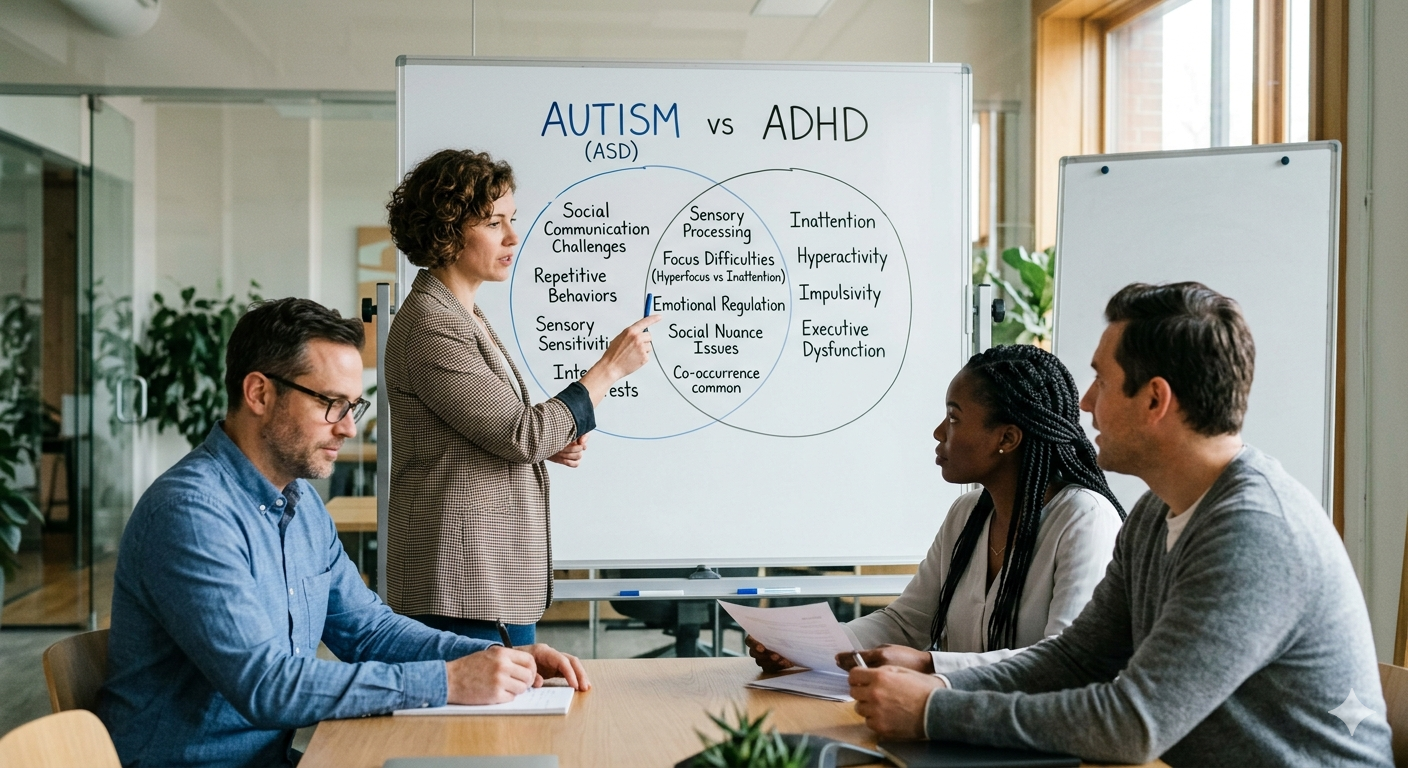
Navigating Autism vs ADHD differences can be confusing for parents, teachers, and even healthcare providers. Both neurodevelopmental conditions affect millions of children and adults, often leading to misdiagnosis or delayed support. While Autism Spectrum Disorder (ASD) and Attention-Deficit/Hyperactivity Disorder (ADHD) share some traits—like social challenges or impulsivity—they’re distinct in core symptoms, diagnosis, and management. This guide breaks down the Autism vs ADHD differences to help you spot the signs early and seek expert advice.
Core Symptoms: Autism vs ADHD Differences at a Glance
Autism centers on social communication hurdles and repetitive behaviors, while ADHD revolves around attention, hyperactivity, and impulse control. Here’s a side-by-side comparison:
These Autism vs ADHD differences highlight why professional evaluation is key—self-diagnosis misses nuances.
Behavioral Overlaps and Why They Confuse Diagnosis
Up to 50-70% of people with Autism also have ADHD traits (per NIH studies), blurring lines. Common overlaps include:
-
Impulsivity: An autistic child might blurt out facts due to excitement; an ADHD child due to poor self-control.
-
Executive Function Struggles: Both face issues with planning, time management, or organization.
-
Emotional Regulation: Meltdowns happen in both, but Autism often ties to sensory overload, while ADHD links to frustration from inattention.
Example: A 7-year-old fixated on Pokémon cards (Autism) vs. one who starts 10 games but finishes none (ADHD).
Misdiagnosis risks? Boys with ADHD get flagged faster due to hyperactivity; girls with Autism often fly under the radar with “quiet” traits.
Causes and Risk Factors: Shared Roots, Different Paths
Neither condition has a single cause, but genetics play a huge role:
-
Autism: Strong heritability (80-90%); prenatal factors like maternal infections or advanced parental age.
-
ADHD: 70-80% genetic; environmental triggers include low birth weight, smoking during pregnancy, or toxin exposure.
Brain imaging shows Autism alters social processing regions, while ADHD impacts dopamine pathways for reward and focus.
Diagnosis and Treatment: Tailored Approaches
Diagnosis involves DSM-5 criteria, behavioral assessments, and ruling out overlaps via tools like ADOS for Autism or Vanderbilt scales for ADHD.
Treatment Differences:
-
Autism: Early intervention therapies (speech, occupational), social skills training, sensory integration. No “cure,” but tools like visual schedules help.
-
ADHD: Stimulant meds (e.g., Adderall, 70-80% effective), behavioral therapy, school accommodations like extra time on tests.
-
Co-Occurring Cases: Combined plans, e.g., ABA therapy for Autism behaviors plus ADHD coaching.
Early action boosts outcomes—kids diagnosed by age 4 show better long-term independence.
When to Seek Help: Spotting Autism vs ADHD Differences in Your Child
Watch for red flags:
-
Autism: No babbling by 12 months, no pointing by 14 months, loss of words.
-
ADHD: Extreme hyperactivity by age 4-5, constant daydreaming affecting school.
Consult a pediatrician, psychologist, or neurologist. In the US, resources like CHADD (for ADHD) or Autism Speaks offer free screeners.
Understanding Autism vs ADHD differences empowers better support. If your child shows signs, professional assessment is the first step—not labels.