
Autism and Nonverbal Communication: Unlocking Hidden Messages
Autism and nonverbal communication often go hand-in-hand, as many individuals on the autism spectrum struggle with traditional verbal expression. Yet, this doesn’t mean they lack a voice—their world brims with subtle cues like gestures, facial expressions, and body language. Understanding autism and nonverbal communication can transform interactions, fostering deeper connections and support. In this article, we’ll explore the challenges, strategies, and breakthroughs in this vital area.
Challenges in Autism and Nonverbal Communication
For about 25-30% of autistic children, nonverbal communication remains a lifelong hurdle, according to the CDC. They might avoid eye contact, not respond to their name, or miss social cues that others take for granted.
-
Eye Contact Aversion: Many autistic individuals find direct gazes overwhelming, interpreting them as intrusive rather than connective.
-
Facial Expressions: Reading sarcasm or subtle emotions can be tricky; a smile might not register as “happy.”
-
Gestures and Body Language: Pointing, nodding, or personal space awareness often differs—what seems like disinterest could be sensory overload.
These aren’t deficits but unique processing styles. Picture a child flapping hands excitedly during a favorite game; it’s their nonverbal cheer, not random movement.
Why Nonverbal Communication Matters in Autism
Mastering autism and nonverbal communication unlocks empathy and independence. Research from the Journal of Autism and Developmental Disorders shows that targeted interventions boost social skills by up to 40%. It reduces frustration—think tantrums from misunderstood needs—and builds relationships at school or home.
In everyday scenarios, like a playground, a nonverbal autistic child might use a toy to “point” at what they want, bridging the gap without words.
Effective Strategies to Support Nonverbal Communication
Therapists and families can make a big difference with proven tools. Here’s how to enhance autism and nonverbal communication:
-
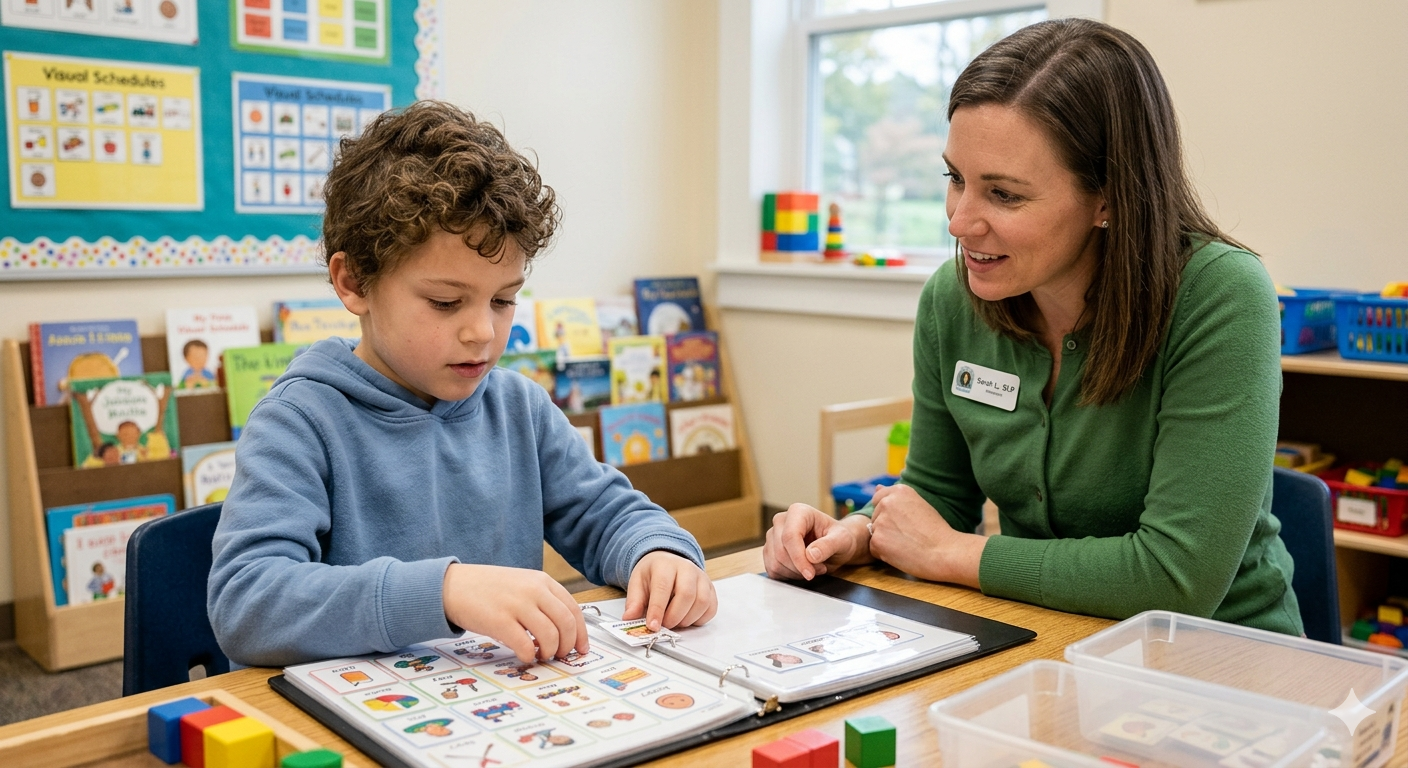
Visual Aids: Use picture exchange systems (PECS) where kids trade images for needs—a burger card for lunch.
-
Sign Language Basics: Teach simple signs like “more” or “stop” to bypass speech delays.
-
Social Stories: Create short narratives with photos showing “waving hello” to practice cues.
-
Tech Tools: Apps like Proloquo2Go turn symbols into speech, empowering self-expression.
-
Sensory Integration: Dim lights or quiet spaces help focus on gestures without overload.
Start small: Model behaviors yourself, like exaggerated thumbs-up for “good job,” and celebrate progress.
Therapies Bridging the Gap
Behavioral therapies shine here. Applied Behavior Analysis (ABA) breaks down skills into steps, while speech therapy incorporates augmentative communication devices.
Occupational therapy refines motor skills for clearer gestures, and physical therapy aids posture for better body language. A study in Pediatrics found 70% improvement in nonverbal autistic kids after 6 months of combined therapy.
Real-Life Success Stories
Consider Alex, a 7-year-old from California, nonverbal until age 5. His team’s PECS and iPad app unlocked sentences like “I want swing.” Today, he navigates school confidently, his pointing finger now a bridge to friends.
These stories highlight hope: With patience, autism and nonverbal communication evolve into strengths.
Moving Forward with Autism and Nonverbal Communication
Embracing autism and nonverbal communication means seeing beyond words to the rich inner world beneath. Early intervention, tailored support, and community awareness pave the way. If your child shows signs, consult a specialist—resources like Autism Speaks offer free toolkits.
Unlocking these hidden messages not only aids the individual but enriches everyone around them.