

Overview of Autism Spectrum Disorder (ASD)
Overview of Autism Spectrum Disorder (ASD)
Autism Spectrum Disorder (ASD) is a neurodevelopmental condition that affects how a person communicates, interacts socially, learns, and experiences the world. It is called a “spectrum” because autism presents differently in every individual. Some children may need significant daily support, while others may live independently with minimal assistance.
ASD is not a disease and it is not caused by poor parenting. It is a lifelong developmental condition that begins in early childhood and continues into adulthood. With early intervention, proper therapy, and family support, children with autism can make meaningful progress and lead fulfilling lives.
What Does “Spectrum” Mean?
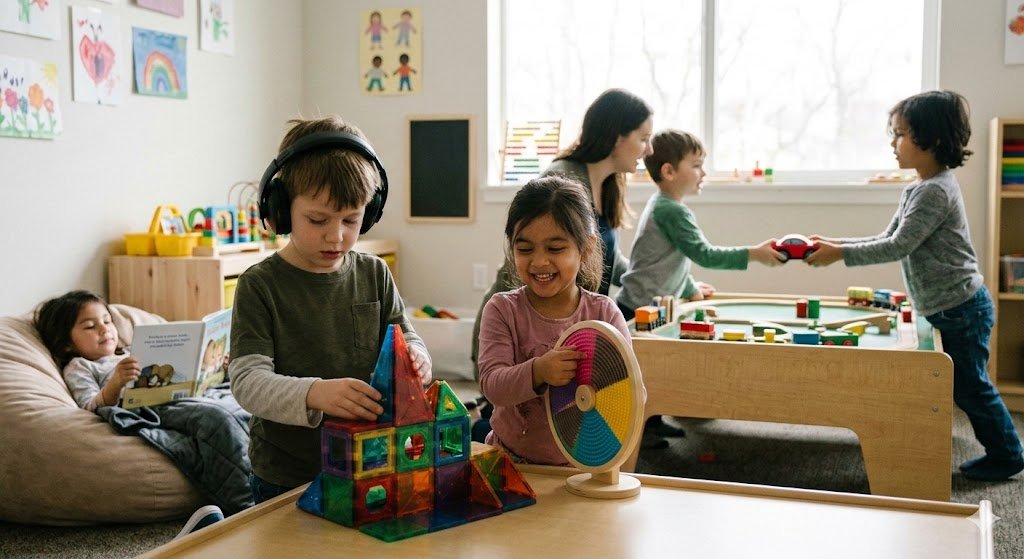
The term “spectrum” refers to the wide range of strengths, challenges, and behaviors that individuals with autism may have.
Some children may:
- Have difficulty speaking or may be nonverbal
- Struggle with social interaction
- Prefer routines and become upset with changes
- Show intense interest in specific topics
Others may:
- Have strong language skills
- Excel in memory, math, art, or technology
- Need support mainly in social situations
Every child with autism is unique.
Common Signs of Autism
Signs of Autism Spectrum Disorder usually appear before the age of three, though some signs may be noticed earlier.
Early Signs (12–24 months)
- Limited eye contact
- Not responding to their name
- Delayed speech or no speech
- Limited gestures (pointing, waving)
- Not engaging in pretend play
Social & Communication Challenges
- Difficulty understanding emotions
- Trouble starting or maintaining conversations
- Repeating words or phrases (echolalia)
- Preference for playing alone
Behavioral Patterns
- Strong need for routine
- Repetitive movements (hand flapping, rocking)
- Sensitivity to sounds, lights, textures, or smells
- Intense focus on specific interests
If parents notice these signs, early evaluation is strongly recommended.
What Causes Autism?
There is no single known cause of autism. Research suggests that autism develops due to a combination of genetic and environmental factors. It is important to understand:
- Autism is NOT caused by vaccines.
- It is NOT caused by parenting style.
- It is NOT contagious.
Autism develops as the brain grows differently during early development.
How is Autism Diagnosed?
Autism is diagnosed through developmental screening and comprehensive evaluation by trained professionals such as:
- Developmental pediatricians
- Child psychologists
- Neurologists
- Autism specialists
There is no blood test or medical scan that confirms autism. Diagnosis is based on observing behavior, communication skills, and developmental history.
Early diagnosis (before age 3) can significantly improve long-term outcomes.
The Importance of Early Intervention
Early intervention plays a crucial role in helping children develop communication, learning, and social skills. Evidence-based therapies may include:
- Applied Behavior Analysis (ABA)
- Speech Therapy
- Occupational Therapy
- Social Skills Training
- Sensory Integration Therapy
The earlier support begins, the better the child’s developmental progress.
Strengths of Children with Autism
While autism presents challenges, many children with ASD have remarkable strengths, such as:
- Strong memory skills
- Attention to detail
- Creative thinking
- Honesty and loyalty
- Deep knowledge in areas of interest
Focusing on strengths helps build confidence and independence.
Supporting a Child with Autism
Parents play the most important role in a child’s development. Support strategies include:
- Creating structured daily routines
- Using clear and simple communication
- Encouraging positive behavior
- Being patient and consistent
- Seeking professional guidance when needed
Remember, progress may be gradual — but every small improvement matters.