

Early Intensive Behavioral Intervention (EIBI) in ABA
Description; Raising a child with autism can be both rewarding and challenging, and finding effective therapies is crucial for their growth and development. One of the most researched and effective approaches is Applied Behavior Analysis (ABA), and within it, Early Intensive Behavioral Intervention (EIBI) has shown remarkable results, especially when started at a young age.
What is EIBI?
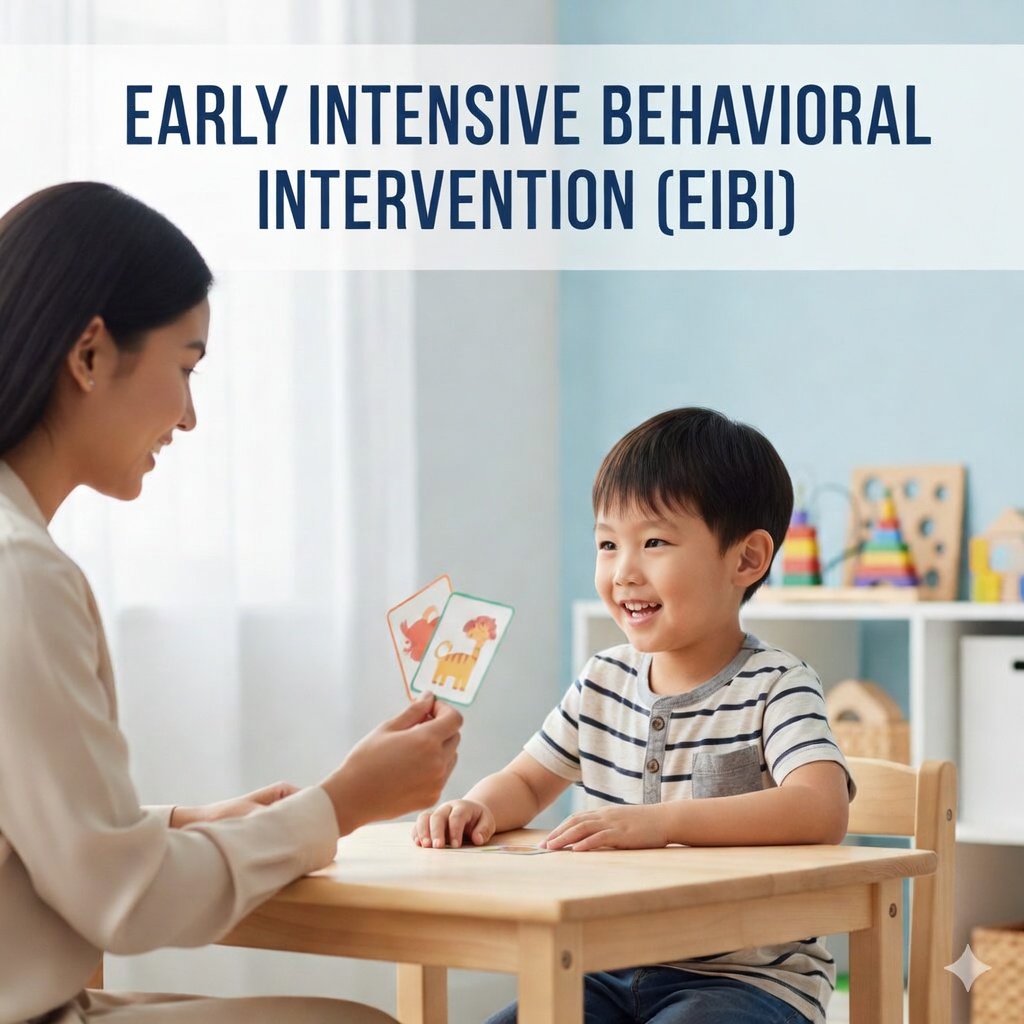
Early Intensive Behavioral Intervention (EIBI) is a structured, individualized therapy designed specifically for young children with autism, usually between 2 and 6 years old. It focuses on teaching essential skills while reducing behaviors that interfere with learning and social interaction. The “early” and “intensive” aspects are key: starting therapy early in life and committing a significant number of hours per week (often 20–40 hours) can lead to the best outcomes.
How Does EIBI Work?
EIBI is based on the principles of ABA, which uses positive reinforcement to encourage desirable behaviors and skills. A typical EIBI program involves:
Assessment and Goal Setting – Therapists begin by evaluating a child’s strengths, weaknesses, and learning style. Individualized goals are set for communication, social skills, self-care, and academics.
Structured Learning Sessions – Therapy is delivered through one-on-one sessions using highly structured activities. Each skill is broken down into small, manageable steps.
Reinforcement and Motivation – Positive reinforcement, such as praise or a favorite toy, encourages the child to repeat and master desired behaviors.
Generalization of Skills – Skills learned in therapy are practiced in different settings to help children use them in everyday life, not just in the therapy room.
Continuous Monitoring – Progress is carefully tracked, and goals are adjusted to meet the child’s evolving needs.
Benefits of EIBI
EIBI has been shown to produce significant improvements in children with autism. Some key benefits include:
Enhanced communication skills, including speaking, understanding language, and expressing needs.
Improved social interaction, such as making eye contact, taking turns, and forming relationships.
Reduction in challenging behaviors, helping children adapt better at home, school, and in the community.
Support for academic learning, preparing children for school and lifelong learning.
Increased independence, enabling children to manage daily tasks with confidence.
Why Early Intervention Matters
Research consistently shows that starting therapy early can make a huge difference. Young brains are highly adaptable, and the skills learned through EIBI can have long-lasting effects. The earlier a child begins, the more likely they are to achieve developmental milestones and integrate successfully into school and social settings.
Tips for Parents
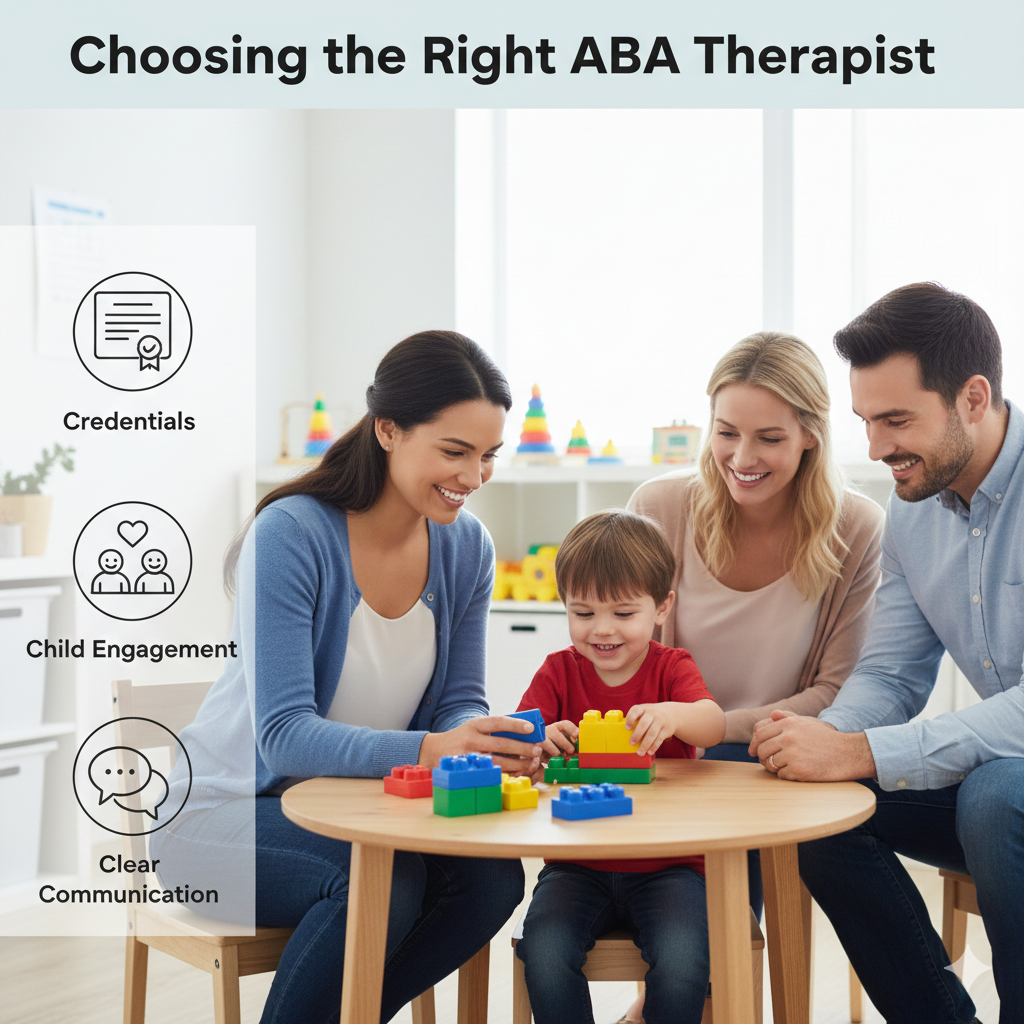
Choose a Qualified Provider – Ensure your child’s EIBI program is overseen by trained ABA therapists.
Consistency is Key – Reinforce skills at home and in daily routines.
Be Patient and Positive – Progress can be gradual. Celebrate small achievements along the way.
Stay Involved – Regular communication with therapists helps you understand your child’s progress and needs.
Conclusion
Early Intensive Behavioral Intervention is a powerful tool in helping children with autism reach their full potential. By starting early, committing to consistent therapy, and collaborating closely with professionals, parents can provide their children with the skills and confidence they need to thrive.
Investing in EIBI is investing in your child’s future — and every small step forward is a victory worth celebrating.