
ABA Therapy at Home vs. Clinic: What Parents Should Know
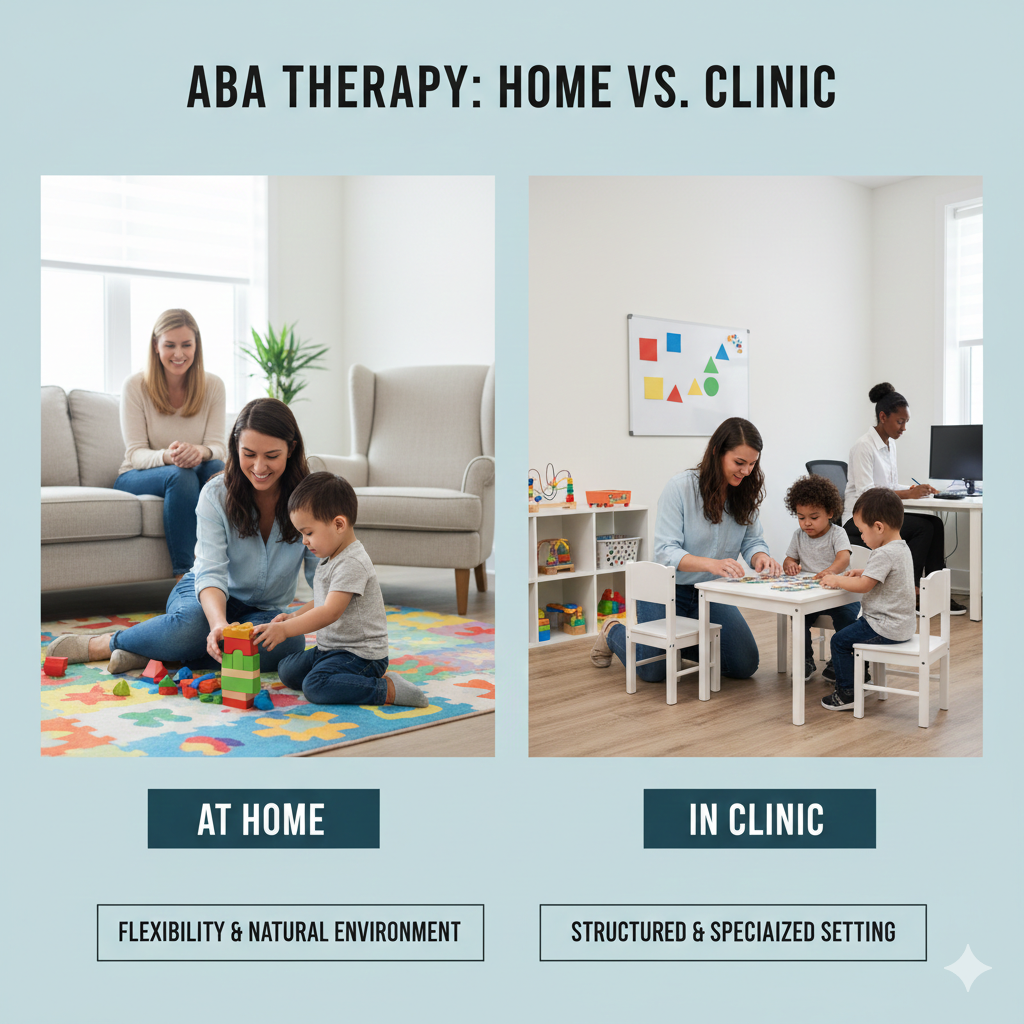
Description; Applied Behavior Analysis (ABA) therapy is widely recognized as an effective approach for children with autism spectrum disorder (ASD) and other developmental challenges. As a parent, choosing the right environment for your child’s therapy—whether at home or in a clinic—can feel overwhelming. Understanding the differences, benefits, and challenges of each setting can help you make an informed decision.
Understanding ABA Therapy
ABA therapy focuses on improving specific behaviors such as communication, social skills, academics, and daily living skills. Sessions are structured, individualized, and rely on positive reinforcement to encourage desirable behaviors while reducing undesired ones. The core principle is to teach skills in small, manageable steps, reinforcing progress along the way.
ABA Therapy at Home
Benefits:
Comfort and Familiarity: Children often feel more relaxed in their home environment, which can reduce anxiety and increase engagement.
Practical Skill Generalization: Skills learned in therapy can be immediately applied to daily routines, such as brushing teeth, dressing, or mealtime behavior.
Parental Involvement: Parents can actively participate in therapy, learning strategies to reinforce skills throughout the day.
Challenges:
Distractions: Homes can have interruptions that make it difficult to maintain focus.
Limited Resources: Unlike clinics, homes may lack specialized equipment or space for certain activities.
Consistency: Maintaining a structured schedule can be more challenging at home.
ABA Therapy in a Clinic
Benefits:
Professional Setting: Clinics are designed to minimize distractions, providing a controlled environment ideal for learning.
Access to Specialists: Clinics often have a team of therapists, including behavior analysts, speech therapists, and occupational therapists.
Peer Interaction: Some clinics provide group activities or social skills sessions, allowing children to interact with peers under guided supervision.
Challenges:
Travel Requirements: Regular trips to a clinic may be time-consuming or stressful for the child and family.
Less Familiar Environment: Some children may take longer to adapt to a clinic setting compared to home.
Cost: Clinic-based therapy can sometimes be more expensive due to overhead costs.
Making the Right Choice
Deciding between home and clinic ABA therapy depends on several factors:
Child’s Needs: Some children thrive in familiar settings, while others benefit from a structured clinic environment.
Family Schedule: Consider how therapy sessions fit into your family’s daily routine.
Therapy Goals: Evaluate whether your goals include generalization of skills in daily life or more intensive, focused skill development.
Resources: Assess what supports, equipment, and professional expertise are available in each setting.
A Combined Approach
Many families find a hybrid approach works best—starting therapy in a clinic for structured learning and gradually incorporating home sessions to reinforce skills. Collaboration between therapists and parents is key, ensuring consistency and progress across both environments.
Final Thoughts
Both home-based and clinic-based ABA therapy offer unique advantages. The best choice depends on your child’s personality, learning style, and family circumstances. Open communication with your child’s therapy team can help tailor a plan that maximizes progress while making the experience positive for your child.
ABA therapy is most effective when it fits seamlessly into your child’s life and your family’s routine, creating an environment where learning, growth, and confidence can flourish.