
“Autism vs Speech Delay: Key Differences Every Parent Should Know”
Autism and speech delay are two very different conditions, but they are often confused because both can show up as “my child isn’t talking yet.” Understanding the difference helps parents seek the right evaluation and the right kind of support early, which makes a big difference in long‑term outcomes.
What is speech delay?
A speech delay means a child’s speech and language skills are developing more slowly than expected for their age, but their understanding of language and social world is usually intact. They may say words later, use short phrases, or be hard to understand, yet they still enjoy interacting, use gestures, make eye contact, and respond to their name and to others.
Common signs of speech delay include:
-
Late talking compared with peers.
-
Trouble making certain sounds clearly (for example, lisping or mixing up sounds).
-
Using simple, short sentences for their age, while still showing interest in people and games.
With speech therapy and early language stimulation, many children with isolated speech delay catch up to their peers over time.
What is autism?
Autism Spectrum Disorder (ASD) is a lifelong neurodevelopmental condition that affects social communication, social interaction, and behavior across situations. Speech may be delayed, but the core issue is not just “not talking yet”—it’s how the child understands and uses communication socially, and how they experience and respond to the world.
Key features of autism include:
-
Difficulties with eye contact, sharing attention, and responding to joint play.
-
Repetitive behaviors, strong need for routines, and very focused, narrow interests.
-
Speech that may be absent, delayed, or unusual (for example, repeating phrases, echoing others’ words, or using a flat or robotic tone).
Autism requires a broader intervention plan that often includes speech therapy, social‑skills training, occupational therapy, and behavioral supports, rather than just “speech practice.”
Where do autism and speech delay overlap?
Because both autism and speech delay can involve late talking, limited gestures, and quiet behavior, it can be hard for parents and even some professionals to tell the difference early on. A child may have both: an autism diagnosis and a clear speech delay, or a speech delay with no autism at all.
Important overlaps include:
-
Delayed first words or small vocabulary.
-
Using fewer gestures (pointing, waving, showing).
-
Appearing shy, withdrawn, or hard to engage in infancy and toddlerhood.
This is why a full developmental and speech–language assessment is essential instead of guessing based on “he’s just a late talker.”
How to tell them apart in everyday behavior
Professionals look beyond “how much a child talks” and focus on how they use communication and social skills.
If a child is quiet but still warm, responsive, and gesturing, speech delay is more likely. If they are quiet and also avoid social interaction, struggle with changes, and show repetitive behaviors, autism should be considered and evaluated.
Why early evaluation matters
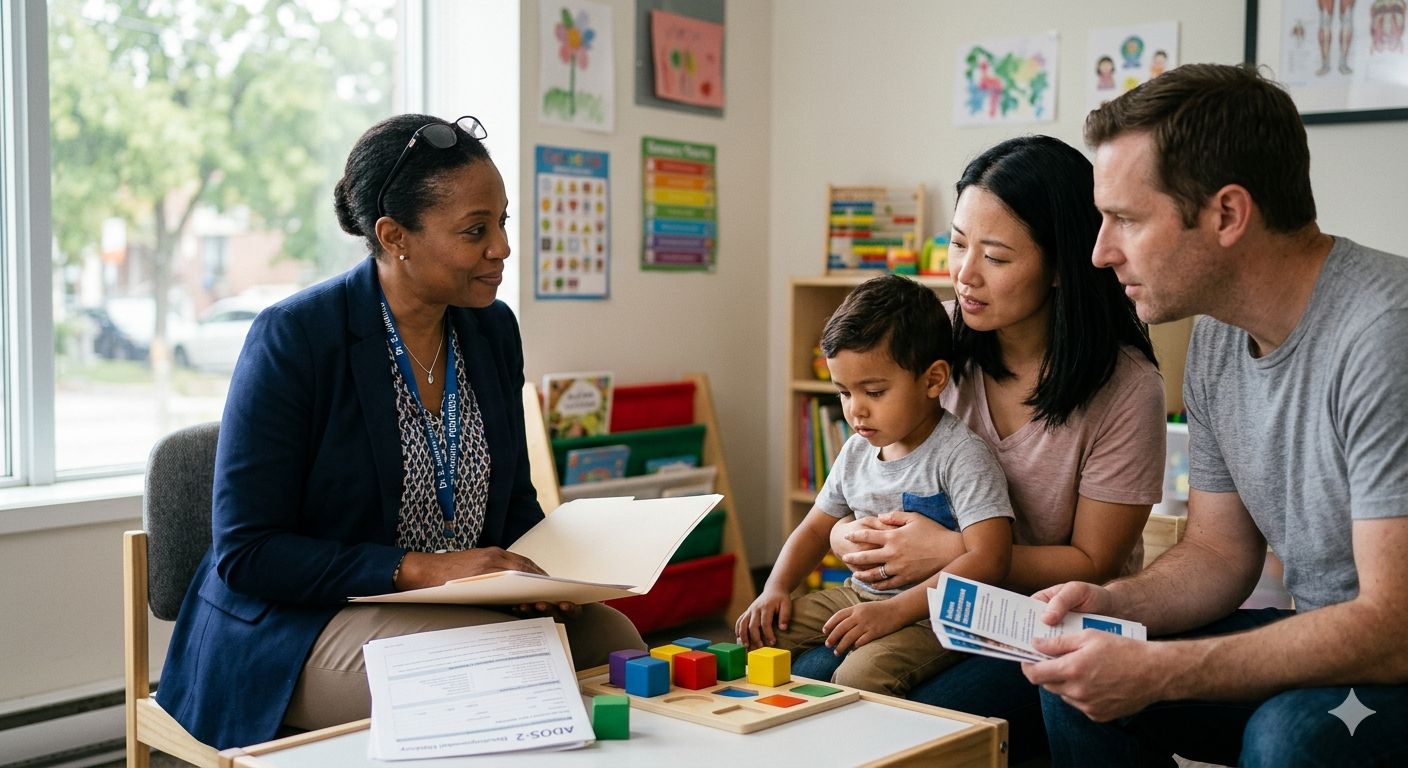
Early identification of autism or speech delay leads to earlier intervention, which improves communication, learning, and social outcomes. A pediatrician, developmental pediatrician, or speech–language pathologist can screen for both conditions and refer for a full autism assessment if needed.
Steps parents can take:
-
Track milestones and note any delays in speech, gestures, or social responses.
-
Request a speech–language evaluation if speech is noticeably behind peers.
-
Seek an autism–specific assessment if social communication, eye contact, or play seem atypical, even if speech improves.
How therapy differs for each
Treatment is tailored to the underlying condition, not just the symptom of “not talking.”
For speech delay:
-
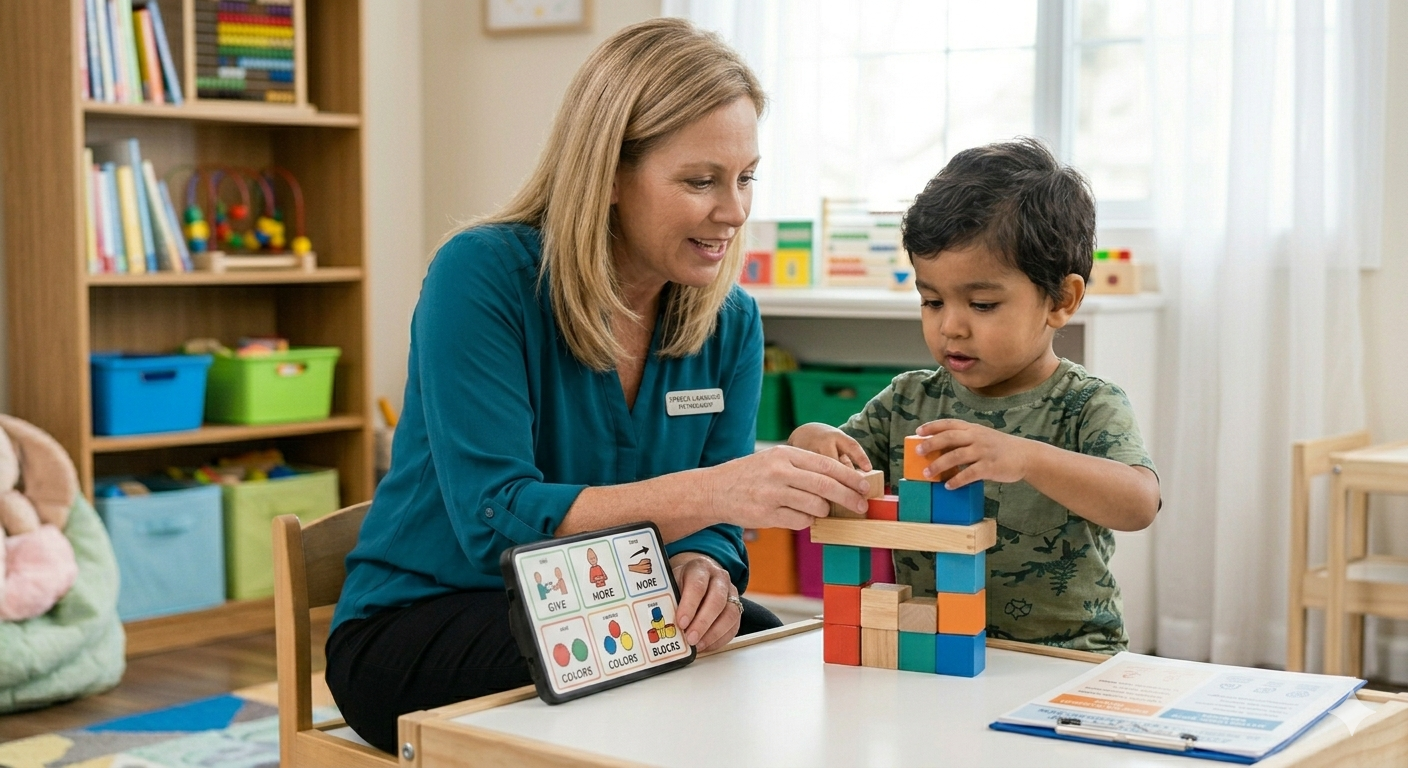
Focus is on articulation, vocabulary, sentence structure, and language routines.
-
A speech–language pathologist helps the child catch up in speech while their social motivation stays strong.
For autism:
-
Speech therapy still plays a key role but is part of a broader plan.
-
Additional supports may include social‑skills groups, occupational therapy (for sensory or motor issues), and behavioral strategies (like ABA or play‑based interventions) to build communication and social understanding.
Practical takeaway for parents
Speech delay and autism are not the same thing, even though late talking can be a red flag for both. If your child is not talking on time, the most important step is to get an evaluation, not to assume “he’ll grow out of it” or “it must be autism.”