
Beginner Topic: Learning Through ABA Methods
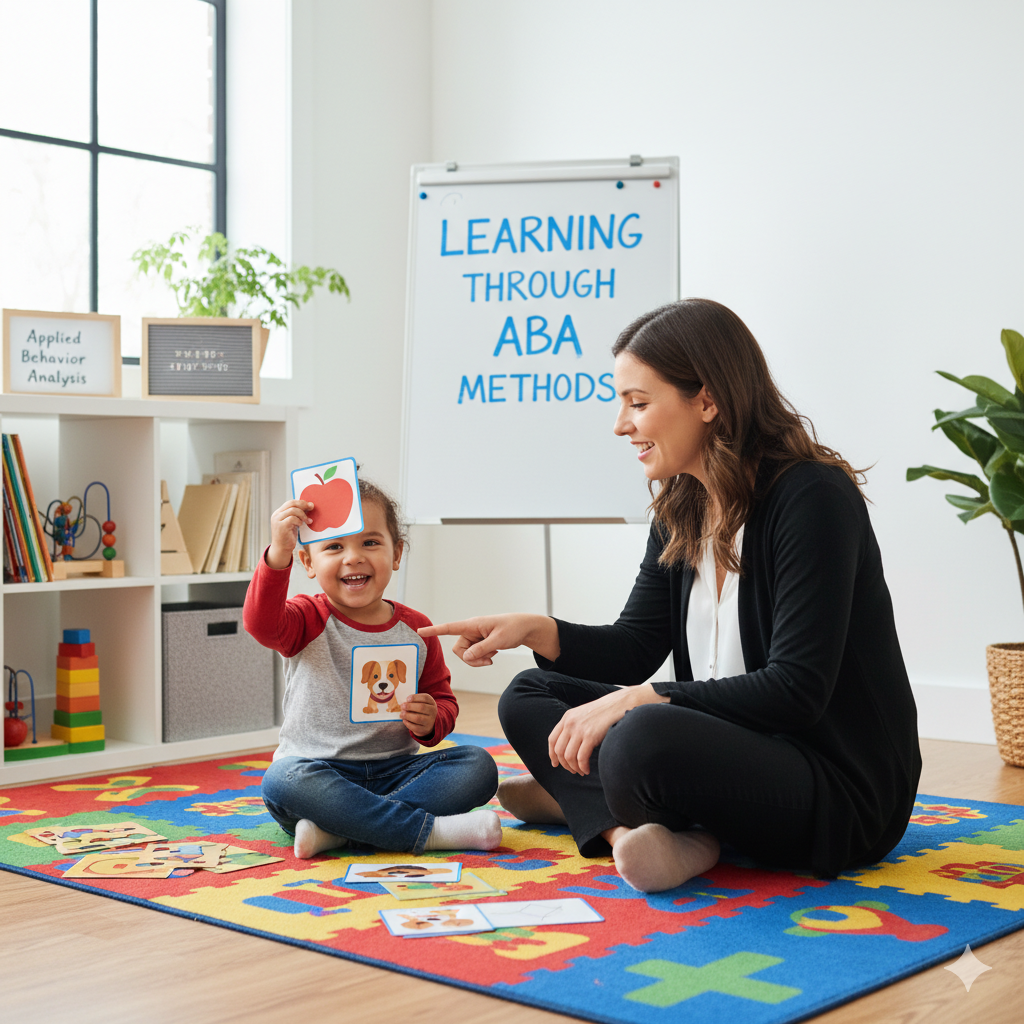
Applied Behavior Analysis (ABA) can feel complex at first, but its core idea is simple: we can teach and support behavior by understanding what happens before and after it. For beginners, “learning through ABA methods” means using structured, evidence-based strategies to help children build skills in language, play, social interaction, and daily life.
What Is ABA?
ABA is a science of behavior. It focuses on how behavior is influenced by the environment and how we can change that environment to support learning.
In practical terms, ABA:
-
Breaks big skills into small, teachable steps
-
Uses positive reinforcement to encourage helpful behavior
-
Collects data to track progress and adjust teaching
-
Teaches skills that matter in real life (communication, self-care, social skills)
ABA is widely used with children on the autism spectrum, but its methods apply to many learners and age groups.
Core Principles Behind Learning Through ABA
Understanding a few key principles helps beginners see how ABA methods support learning:
-
Antecedent–Behavior–Consequence (ABC)
-
Antecedent: What happens right before a behavior
-
Behavior: What the child does
-
Consequence: What happens right after the behavior
By adjusting antecedents and consequences, we can increase helpful behaviors and reduce challenging ones.
-
-
Positive reinforcement
When a behavior is followed by something the child enjoys (praise, a toy, a break), that behavior is more likely to happen again. Reinforcement is the engine that drives learning in ABA. -
Shaping
Instead of waiting for a perfect response, ABA reinforces small steps toward the goal. For example, rewarding any attempt to say “wa…” when teaching “water.” -
Prompting and fading
Adults give help (prompts) to guide a correct response, then gradually fade that help so the child becomes independent. -
Generalization
Skills are taught in multiple settings, with different people and materials, so the child can use what they’ve learned in everyday life—not only at the desk or in therapy.
Common ABA Teaching Methods for Beginners
There are several ways ABA methods are used to help children learn. Here are some of the most common beginner-friendly approaches.
-
Discrete Trial Training (DTT)
DTT breaks skills into small, structured teaching trials:-
Clear instruction (“Touch your nose.”)
-
Child’s response
-
Immediate consequence (praise, token, or corrective feedback)
DTT is especially helpful for early learning, like colors, matching, or simple directions.
-
-
Natural Environment Teaching (NET)
NET uses the child’s daily routines and interests as teaching moments. Instead of sitting at a table, learning happens during play, snack time, or outdoor activities. If a child reaches for bubbles, the therapist might wait for eye contact or a sound, then blow bubbles as a reward. -
Task analysis and chaining
Complex tasks are broken into smaller steps, then taught step by step. For example, handwashing might be broken into: turn on water, wet hands, get soap, scrub, rinse, turn off water, dry hands. ABA uses “chaining” to teach each link in the sequence. -
Functional communication training (FCT)
Many challenging behaviors come from a lack of communication. FCT teaches children to ask for help, breaks, or items in ways they can manage (words, pictures, signs), replacing problem behavior with meaningful communication.
Example: How a Beginner Might Use ABA at Home
Imagine a child who screams whenever they want a snack. Using ABA methods:
-
The parent notices the ABC pattern:
-
Antecedent: Parent in the kitchen
-
Behavior: Screaming
-
Consequence: Parent gives a snack to stop the noise
-
-
The parent changes the environment:
-
Introduces a simple picture card for “snack”
-
Prompts the child to hand the card instead of screaming
-
Immediately gives the snack and praise when the card is used
-
Over time, the screaming decreases and the child learns a clearer way to communicate.
Benefits of Learning Through ABA Methods
For many families and beginners, ABA offers:
-
Clear, step-by-step teaching plans
-
Measurable progress through data collection
-
Practical skills that improve daily life
-
Strategies to reduce challenging behaviors in a humane, structured way
-
A collaborative approach that can include parents, teachers, and therapists
Ethical and Family-Centered Practice
Modern ABA emphasizes respect, dignity, and child- and family-centered goals. Quality programs:
-
Focus on meaningful, functional skills
-
Prioritize the child’s comfort and emotional well-being
-
Include parents in goal setting and decision-making
-
Regularly review data to ensure strategies are effective and appropriate
Parents should look for board-certified behavior analysts (BCBAs) and trained therapists who communicate openly and listen to family values and concerns.
Tips for Parents and Beginners Getting Started
If you are new to learning through ABA methods, a few basic steps can help:
-
Start with simple, clear goals (e.g., asking for help, following one-step directions).
-
Use strong, positive reinforcement: specific praise, favorite toys, short breaks.
-
Keep teaching sessions short and engaging, especially for young children.
-
Practice the same skill in different places and with different people.
-
Ask your ABA provider for parent training so you can use strategies at home.
When to Seek Professional Support
ABA methods are powerful tools, but a trained professional can tailor them to an individual child. It is a good idea to seek an ABA evaluation if:
-
Your child struggles with communication or social interaction
-
Daily routines (meals, sleep, transitions) feel very challenging
-
Behaviors like aggression, self-injury, or intense tantrums affect safety or learning
A qualified ABA team can design a plan that supports both the child and the family using structured, research-based methods.