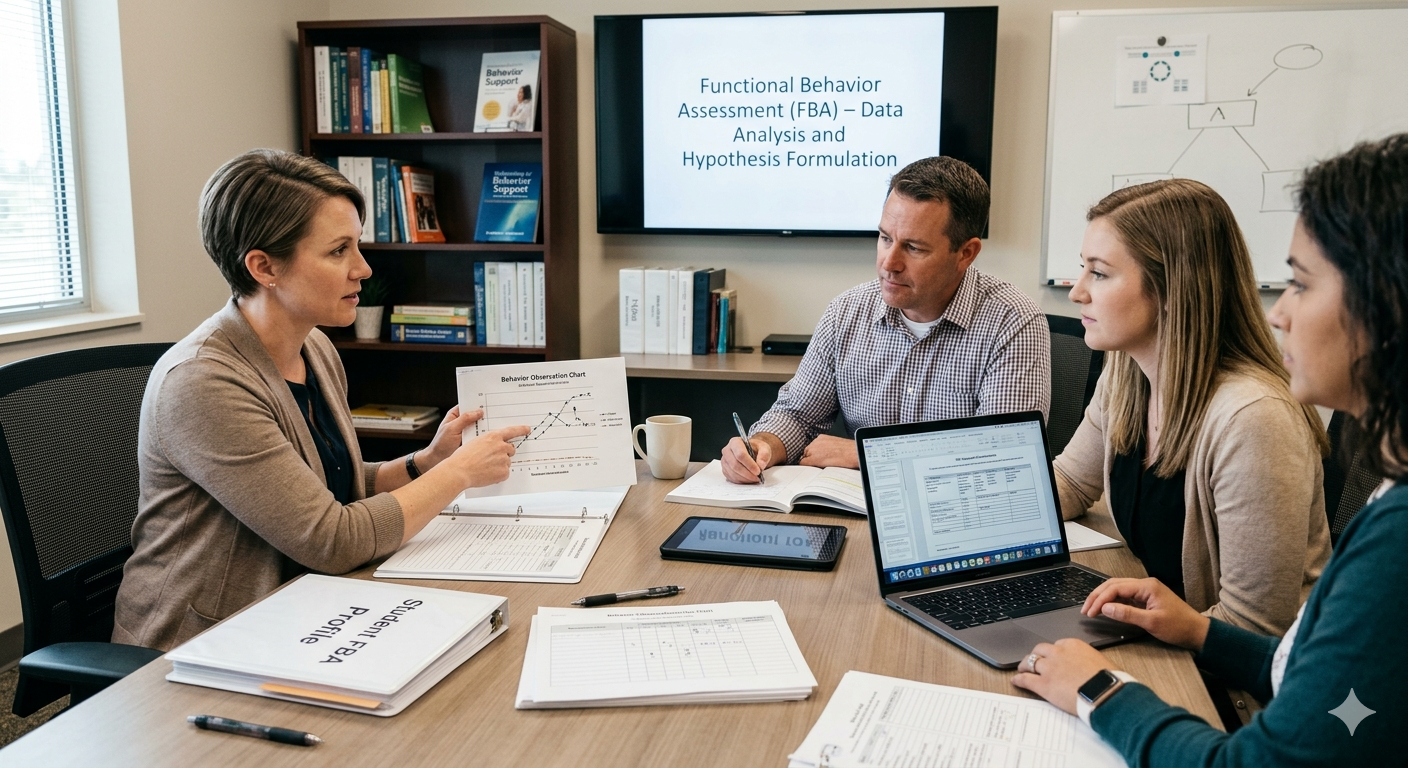


Expert Tips: Discrete Trial Training (DTT) in ABA
Discrete Trial Training (DTT) is a cornerstone of Applied Behavior Analysis (ABA) therapy, breaking skills into small, manageable steps to help children with autism spectrum disorder (ASD) and other developmental challenges learn effectively. As one of the most researched and evidence-based techniques in ABA, DTT uses structured repetition, clear instructions, and immediate reinforcement to build foundational skills like communication, social interaction, and daily living routines. If you’re a parent, teacher, or therapist seeking expert tips on Discrete Trial Training (DTT) in ABA, this guide delivers proven strategies to maximize progress while keeping sessions engaging and child-centered.
What Is Discrete Trial Training (DTT) in ABA?
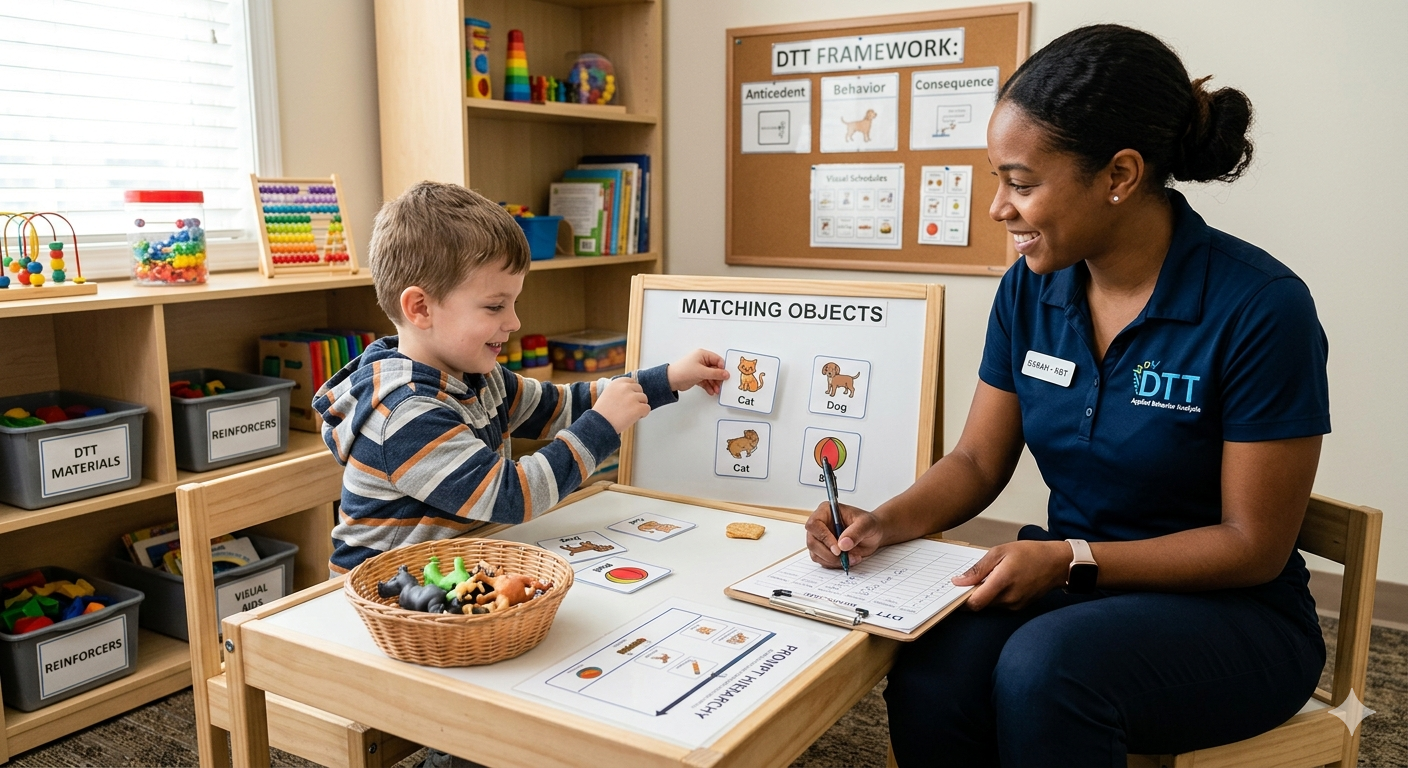
At its core, DTT divides learning into three main components: the antecedent (instruction or prompt), the behavior (child’s response), and the consequence (reward or correction). Each “discrete trial” lasts just seconds to minutes, allowing for high repetition without overwhelming the learner.
For example, teaching a child to identify colors might look like this:
-
Antecedent: Therapist says, “Touch red.”
-
Behavior: Child touches the red card.
-
Consequence: “Great job! Red!” followed by praise or a token.
This structured format, pioneered by Dr. Ivar Lovaas in the 1980s, has shown success rates of up to 47% in eliminating challenging behaviors and improving IQ scores in children with autism, per landmark UCLA studies. DTT shines in early intervention, making it ideal for home, clinic, or school settings.
Why Choose DTT? Key Benefits Backed by Research
DTT isn’t just popular—it’s powerful. Research from the National Autism Center and the Association for Behavior Analysis International highlights its efficacy in:
-
Accelerating skill acquisition through massed trials (10-20 per session).
-
Reducing problem behaviors by replacing them with functional alternatives.
-
Promoting generalization, so skills transfer from therapy to real life.
Unlike naturalistic teaching methods, DTT’s explicit structure suits learners who thrive on predictability, common in ASD. A 2023 meta-analysis in the Journal of Applied Behavior Analysis confirmed DTT boosts expressive language by 30-50% faster than unstructured approaches.
Expert Tip #1: Master Session Setup for Success
Create a distraction-free zone. Use a quiet room with minimal toys or screens—think a simple table, picture cards, and reinforcers like stickers or iPad time. Dim lights and white noise machines help focus, especially for sensory-sensitive kids.
Pro tip: Time sessions for peak attention, like post-snack or morning routines. Start with 10-15 minute blocks, building to 30 as tolerance grows. Track data on a simple sheet: trials attempted, correct responses, and prompts needed. Tools like the ABA Data Sheets app streamline this.
Expert Tip #2: Prompt Strategically to Avoid Prompt Dependency
Prompting is DTT’s secret weapon, but overuse leads to dependency. Follow a fading hierarchy:
-
Full physical: Guide the child’s hand.
-
Partial physical: Light touch on arm.
-
Gestural: Point to the target.
-
Verbal: “Look here.”
-
Independent: No prompt.
Fade prompts every 3-5 correct trials. A study in Behavior Analysis in Practice (2024) found gradual fading increases independence by 65%. If errors spike, introduce errorless learning: Hand-over-hand guide until 80% mastery, then thin prompts.
Example: For matching shapes, start full physical, then gesture. Celebrate independence with high-fives to build momentum.
Expert Tip #3: Supercharge Reinforcement with Personalization
Generic praise works, but individualized reinforcers ignite motivation. Conduct a preference assessment: Offer choices like bubbles, music clips, or sensory toys. Pair with enthusiastic verbal praise—”You’re a shape superstar!”
Use token economies for longevity. Kids earn tokens for correct responses, exchanging 5 for a bigger reward. Rotate reinforcers weekly to prevent satiation. Research from the Journal of Autism and Developmental Disorders shows personalized systems boost session compliance by 40%.
Avoid continuous reinforcement long-term; switch to variable ratios (reward every 3-5 trials) to mimic real-world variability.
Expert Tip #4: Incorporate Error Correction Without Frustration
Mistakes happen—handle them swiftly to keep momentum. Use a neutral “No, try again” followed by the correct model. Never punish; instead, intersperse known skills (maintenance trials) to end on successes.
Three-strike rule: After three errors, provide a full prompt and move on. Log errors to identify patterns—persistent issues might signal skill gaps upstream. A 2025 review in Autism Research emphasized positive error correction preserves learner confidence.
Expert Tip #5: Promote Generalization and Maintenance
DTT risks “siloed” learning, so generalize deliberately:
-
Vary materials (e.g., real apples vs. cards for “apple”).
-
Change settings (clinic to playground).
-
Involve people (parent joins trials).
Schedule maintenance probes weekly: Test skills without teaching. Apps like RethinkBH track long-term retention. Per CDC guidelines, consistent generalization ensures 80% skill carryover to home and school.
Expert Tip #6: Tailor DTT for Different Ages and Goals
-
Toddlers (2-4): Focus on imitation and manding (requesting). Use play-based DTT, like toy matching.
-
School-age (5-10): Target academics and social skills, like turn-taking scripts.
-
Teens/adults: Adapt for vocational skills, fading to naturalistic DTT.
For verbal behavior, integrate VB-MAPP goals. Always prioritize learner motivation—embed interests like trains or superheroes into trials.
Common DTT Pitfalls and How to Dodge Them
-
Too many trials: Cap at child’s tolerance; quality over quantity.
-
Ignoring motivation: Assess daily—low energy? Shorten or switch tasks.
-
Data neglect: Without tracking, progress stalls. Use Google Sheets for free templates.
Consult a BCBA (Board Certified Behavior Analyst) for customization, especially under insurance like U.S. Medicaid’s Early Start Denver Model.
Getting Started with DTT at Home or School
Parents: Download free DTT kits from Autism Speaks or Understood.org. Start with one skill, like receptively identifying body parts. Film sessions for self-review.
Therapists: Blend DTT with Pivotal Response Training (PRT) for flexibility. Invest in durable materials from Lakeshore Learning.
Ready to implement? DTT transforms lives—one trial at a time.