


Genetic Factors in Autism: What the Science Reveals
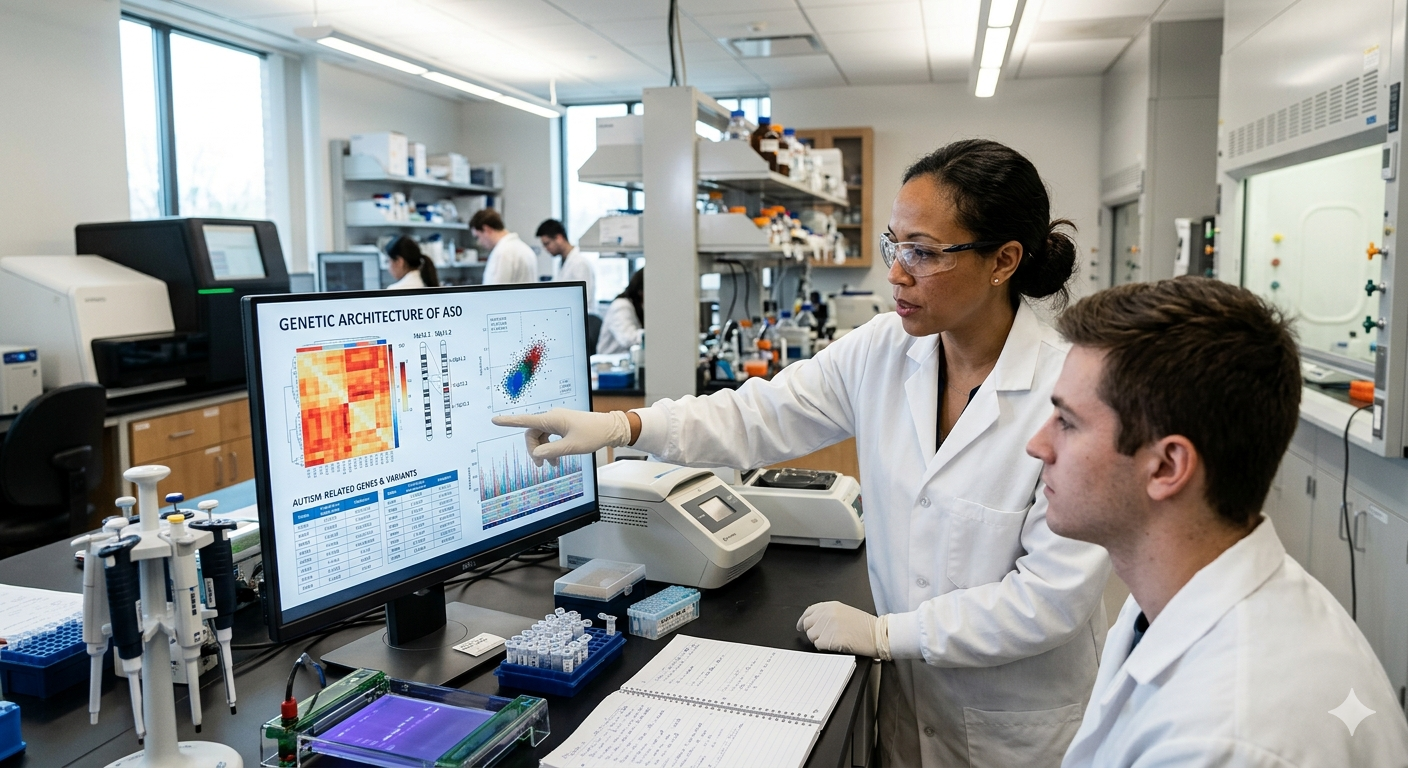
Autism Spectrum Disorder (ASD) affects 1 in 36 children in the U.S., according to the CDC’s 2025 data. While environmental triggers like prenatal exposures play a role, genetic factors in autism dominate the conversation among researchers. Twin studies show heritability rates up to 90%, meaning genes load the gun—but they don’t pull the trigger alone. This article breaks down the genetic puzzle, from common variants to rare mutations, helping parents, educators, and therapists understand the science behind ASD.
The Heritability of Autism: A Family Affair
Genetics isn’t just one gene—it’s a symphony. Identical twins share 100% of their DNA and have an 80-90% concordance rate for autism, per a 2024 meta-analysis in Nature Genetics. Fraternal twins, with 50% shared DNA, show only 10-20% concordance. This stark difference underscores genetic factors in autism as the strongest predictor.
-
Polygenic risk: Most cases involve hundreds of common gene variants, each contributing small effects. Tools like polygenic risk scores (PRS) now predict ASD likelihood with 10-15% accuracy.
-
Family patterns: Siblings of autistic children have a 20% recurrence risk, rising if the first child is male.
These insights guide early screening in families with ASD history.
Key Genes Linked to Autism
Over 1,000 genes are implicated in ASD, identified through large-scale projects like the Simons Foundation Autism Research Initiative (SFARI). Here’s a spotlight on the heavy hitters:
Rare de novo mutations—new changes not inherited from parents—account for 10-20% of cases, often in sperm or egg cells. A 2025 study in Cell highlighted how these disrupt excitatory-inhibitory balance in the brain, leading to ASD traits like repetitive behaviors.
Copy Number Variations (CNVs): Big Deletions, Big Effects
CNVs are DNA chunks duplicated or deleted, spanning thousands of genes. They’re found in 10-15% of ASD cases:
-
16p11.2 deletion/duplication: Increases ASD risk 20-fold; tied to intellectual disability.
-
22q11.2 (DiGeorge syndrome): 20% of carriers develop autism.
Advanced testing like chromosomal microarray detects these, enabling targeted therapies. For instance, CNV-related ASD often responds well to behavioral interventions like ABA therapy.
Gene-Environment Interactions: Not Genes Alone
Genetic factors in autism set the stage, but environment directs the play. Epigenetics—chemical tags on DNA—explains how stress, pollution, or maternal infections “turn on” ASD genes. A 2024 EPIC study found that kids with high genetic risk plus advanced parental age face 2-3x higher odds.
(Image: A DNA helix intertwined with neural networks, symbolizing gene-brain links.)
Implications for Diagnosis and Treatment
Genetic testing via whole-exome sequencing (WES) is now recommended for all ASD diagnoses, per American College of Medical Genetics guidelines. It identifies causes in 30-40% of cases, opening doors to precision medicine:
-
Gene therapies: CRISPR trials for SHANK3 mutations began in 2025.
-
Pharmacogenomics: Tailoring meds like risperidone based on CYP2D6 gene variants reduces side effects.
-
Early intervention: Knowing genetic profiles predicts therapy response—e.g., CHD8 carriers benefit from speech therapy.
The Road Ahead for Autism Genetics
Research explodes with AI-driven genome analysis. The 2025 Autism Sequencing Consortium mapped 5,000+ ASD genomes, revealing sex differences: females need stronger genetic hits to “show” autism due to protective factors.
If your child shows ASD signs, consult a geneticist. Early genetic insights empower therapies like occupational and behavioral interventions.
Ready to explore therapies? Check our guides on ABA Therapy or Speech Therapy for Autism. Share your story below!