

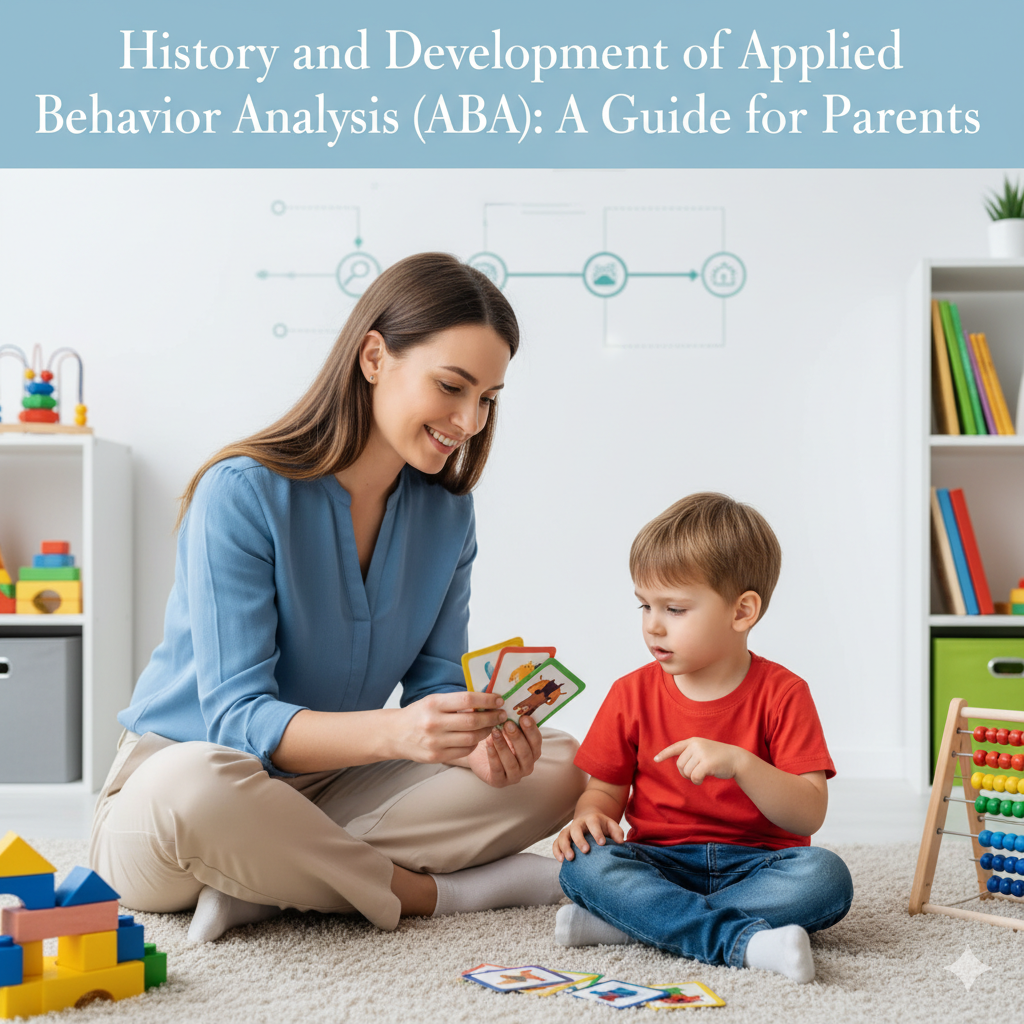
History and Development of Applied Behavior Analysis (ABA): A Guide for Parent
Description;
Applied Behavior Analysis (ABA) is one of the most widely used and researched approaches for helping children develop important skills and improve behaviors. Many parents of children with developmental challenges, especially autism, hear about ABA therapy but may not know where it came from or how it developed. Understanding the history of ABA can help parents feel more confident when choosing the right support for their child.
What Is Applied Behavior Analysis?
Applied Behavior Analysis is a scientific approach that focuses on understanding how behavior works and how it is influenced by the environment. ABA helps children learn useful skills such as communication, social interaction, daily living skills, and academic abilities. At the same time, it helps reduce behaviors that may interfere with learning or everyday life.
ABA works by observing behavior, identifying what triggers it, and using positive strategies to encourage helpful behaviors.
Early Foundations of Behavior Science
The roots of ABA come from early studies in psychology during the early 20th century. Scientists began studying how learning happens through interactions with the environment.
One of the key ideas was that behavior can be learned and changed through reinforcement. Reinforcement means giving a reward or positive outcome after a desired behavior, which increases the chances that the behavior will happen again.
These early discoveries laid the foundation for behavior analysis.
Development of Modern ABA
ABA began to develop as a formal scientific field in the 1950s and 1960s. Researchers started applying behavior principles to real-life situations such as education, therapy, and child development.
A major milestone occurred in 1968 when the Journal of Applied Behavior Analysis was established. This journal provided a platform for researchers to share studies about how behavior analysis could help individuals in everyday settings.
During this time, therapists and researchers began using ABA techniques to help children with developmental disabilities improve communication, learning, and social skills.
ABA and Support for Children with Autism
In the late 20th century, ABA became widely recognized for its effectiveness in supporting children with autism. Researchers found that structured ABA programs could help children develop language, social skills, and independence.
ABA programs are usually personalized. Therapists assess each child’s needs and create a plan designed specifically for them. The focus is on teaching skills step by step and celebrating progress.
Many parents have seen positive improvements in their children through consistent ABA therapy.
How ABA Has Improved Over Time
Over the years, ABA has continued to evolve. Early programs were often highly structured, but modern ABA approaches are more flexible, natural, and child-centered.
Today’s ABA therapy focuses on:
Encouraging learning through play and everyday activities
Building strong communication skills
Supporting emotional development
Involving parents and families in the therapy process
Parent training is now considered a very important part of ABA because children learn best when skills are practiced both in therapy sessions and at home.
Why Parents Should Understand ABA
When parents understand the principles behind ABA, they can better support their child’s development. Parents can learn simple strategies such as using praise, setting clear routines, and encouraging positive behavior.
Being involved in the process also helps parents build stronger relationships with therapists and ensures that therapy goals match the child’s needs.
Final Thoughts
The history and development of Applied Behavior Analysis show how scientific research can lead to practical solutions that improve lives. Over the decades, ABA has grown into a powerful and evidence-based approach for helping children develop essential life skills.
For parents, learning about ABA can be the first step toward providing effective support for their child. With the right guidance, patience, and collaboration, ABA can help children reach their full potential and lead more independent, confident lives.