
How ABA Therapy Works in Real Life (2026 Guide for Parents and Caregivers)
Applied Behavior Analysis (ABA) therapy is one of the most researched, evidence‑based approaches for helping children with autism and other developmental challenges learn everyday skills, communicate, and reduce challenging behaviors. In 2026, ABA looks less like a “clinic‑only” intervention and more like a natural extension of daily life—woven into routines at home, school, and in the community. This guide explains how ABA actually feels and functions in real‑life settings, so you can see what it really means for your child.
What Is ABA Therapy in Simple Terms?
ABA therapy is a learning‑based method that uses the “ABCs” of behavior:
-
Antecedent – what happens before the behavior
-
Behavior – what the child does
-
Consequence – what happens right after
Therapists use this pattern to figure out why a behavior occurs and then teach better alternatives. For example, if a child hits when asked to turn off a screen, ABA looks at the trigger (being told “time’s up”), the behavior (hitting), and the outcome (screen stays on or child gets extra time), then designs a new response that leads to the same or better outcome in a kinder way.
How ABA Looks During a Typical Day
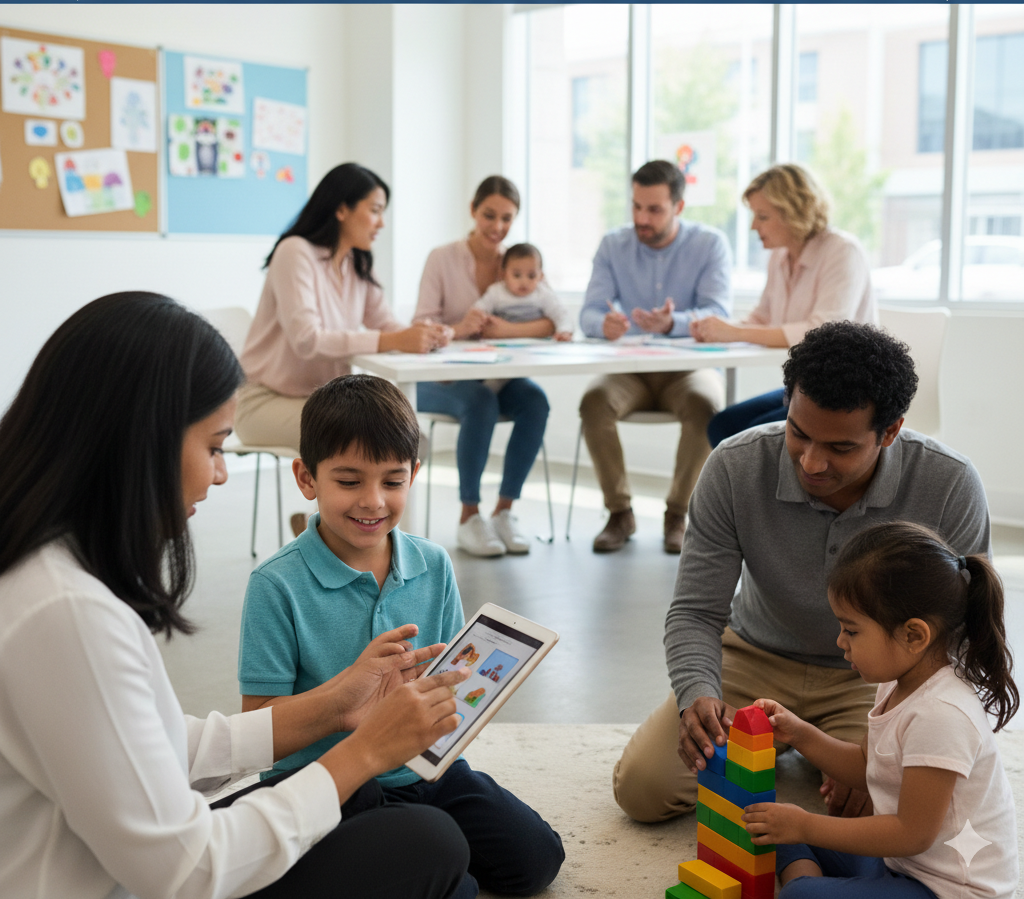
In real life, ABA often feels like intentional play, teaching moments, and consistent routines rather than a “formal” therapy session. For many families in 2026, ABA is:
-
At home:
A therapist or parent might break toothbrushing into small steps, reward each step with praise or a favorite song, and adjust prompts until the child can do it independently. -
At school:
A child who struggles to join games learns turn‑taking through role‑play, video modeling, and a small reward system for waiting and sharing toys. -
In the community:
ABA might involve practicing ordering food at a café, responding to a cashier’s questions, and using a calm‑down strategy when the noise feels overwhelming.
The goal is not to “look” like therapy but to make skills transfer directly into real‑world situations the child already experiences.
Common ABA Strategies You’ll See in Real Life
Several core ABA techniques pop up naturally in everyday moments:
-
Positive reinforcement:
When a child uses a polite “please” or lines up instead of pushing, they get something they truly value—praise, a high‑five, a short video, or a favorite toy. Over time this makes the desired behavior more likely. -
Prompting and fading:
A parent might gently hold the child’s hand to help them button a shirt, then slowly reduce help until the child does it alone. -
Shaping:
A child who only says single words gradually learns phrases through rewarding small improvements (“cup,” then “my cup,” then “I want my cup”).
These methods are not meant to control the child; they help build independence by meeting the child where they are and moving them toward skills that matter in real life.
Managing Challenging Behaviors the ABA Way
In 2026, many ABA programs focus on understanding the function of problem behavior (to get attention, escape a task, gain access to a toy, or meet a sensory need) and replacing it with a better way to get that need met.
For example:
-
A child who throws a tantrum to leave the classroom learns to ask for a “break” with a card or phrase, and is rewarded when they use it appropriately.
-
A child who hits when frustrated is taught to use a calm‑down corner, a stress ball, or a short walk, again with reinforcement for using the new strategy.
Research shows that function‑based ABA interventions can reduce problem behaviors by around 80% across many settings, leading to smoother days at home and school.
Progress That Parents Actually Notice
Parents often report changes that feel quietly meaningful rather than dramatic:
-
Daily routines: The child can dress themselves, wash hands without reminders, or help pack a backpack.
-
Social moments: The child makes eye contact, says “hi,” or joins a small group at the park with less prompting.
-
Communication: The child uses words, picture cards, or signs to say what they want instead of crying or grabbing.
These seemingly small milestones add up to real independence—more confidence for the child and less stress for the family.
What ABA Is Not (And Why It Matters)
Despite misconceptions, modern ABA in 2026 is:
-
Individualized: Goals and methods are tailored to the child’s age, interests, and family culture.
-
Respectful: Quality programs prioritize the child’s comfort, choices, and dignity, pausing or adjusting when a strategy isn’t a good fit.
-
Flexible: ABA can be done in clinics, homes, schools, or even telehealth sessions, as long as it builds skills that carry over into daily life.
ABA is not about “forcing” compliance or eliminating all stimming or quirks; it’s about helping children communicate, connect, and function more easily in their own lives.
How to Know If ABA Is Right for Your Child in 2026
If you’re considering ABA therapy, ask:
-
Does the team explain the ABC model and show you how today’s skills relate to tomorrow’s routines?
-
Are goals written in simple language (e.g., “ask for help,” “wait in line,” “eat meals at the table”)?
-
Do you see gradual progress in real‑world situations, not just in the therapy room?
When ABA is implemented thoughtfully, it becomes less of a “therapy label” and more of a practical toolkit families use every day to support their child’s growth.