
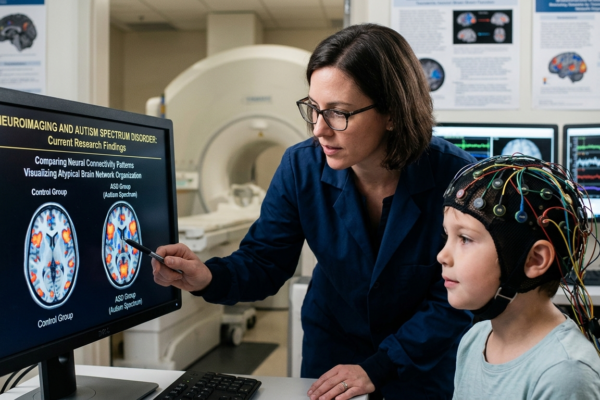
Autism and Brain Scans: What Neuroimaging Reveals About the Spectrum

Autism Spectrum Disorder (ASD) affects how people communicate, socialize, and process the world around them. While diagnosis often relies on behavioral observations, autism and brain scans are opening new doors to understanding the condition at a neurological level. Advanced imaging like MRI and fMRI shows distinct brain differences in autistic individuals, from enlarged brain volumes in toddlers…


Read More

Autism Identification Challenges

Autism identification can be difficult because the signs vary widely from one person to another, and some traits overlap with other developmental or mental health conditions. Early diagnosis is also complicated by differences in screening quality, clinician experience, co-occurring conditions, gender differences, and access to services. Introduction Autism spectrum disorder, or ASD, is a neurodevelopmental…

Read More

Autism and Developmental Milestones: A Guide for Parents and Caregivers

Every child grows at their own pace, but when it comes to autism and developmental milestones, early awareness can make all the difference. Autism Spectrum Disorder (ASD) affects how children communicate, socialize, and process the world around them, often showing subtle signs in key developmental areas. If you’re a parent wondering whether your child’s delays might…

Read More

The Vital Role of Pediatricians in Autism: Early Detection, Diagnosis, and Ongoing Support

Pediatricians play a pivotal role in autism spectrum disorder (ASD), serving as the first line of defense for early identification, diagnosis, and lifelong management. In the US, where about 1 in 36 children is diagnosed with autism according to the CDC’s latest data, these frontline healthcare providers bridge the gap between concern and comprehensive care….

Read More

How Autism is Diagnosed

Autism Spectrum Disorder (ASD) diagnosis relies on behavioral observations and developmental history rather than a single medical test. This comprehensive process helps identify early intervention opportunities for children and adults. Early Screening Tools Screening often begins with tools like the Modified Checklist for Autism in Toddlers (M-CHAT), used around 18-24 months to spot social communication…

Read More

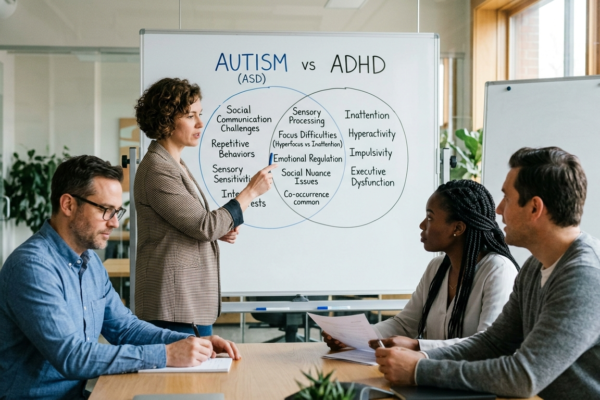
Autism vs ADHD Differences: Key Signs, Symptoms, and Overlaps

Navigating Autism vs ADHD differences can be confusing for parents, teachers, and even healthcare providers. Both neurodevelopmental conditions affect millions of children and adults, often leading to misdiagnosis or delayed support. While Autism Spectrum Disorder (ASD) and Attention-Deficit/Hyperactivity Disorder (ADHD) share some traits—like social challenges or impulsivity—they’re distinct in core symptoms, diagnosis, and management. This guide breaks…

Read More

Autism Diagnosis Criteria: DSM-5 Essentials Explained

Autism diagnosis criteria provide a standardized framework to identify Autism Spectrum Disorder (ASD), helping professionals support early intervention. These guidelines, primarily from the DSM-5, ensure consistent evaluation across healthcare settings. Core DSM-5 Criteria The DSM-5 outlines five key criteria (A-E) for diagnosing ASD. Criterion A requires persistent deficits in all three areas of social communication:…

Read More