Behavior Assessment Techniques: A Comprehensive Professional Guide
Understanding human behavior requires more than casual observation. In professional settings, behavior must be measured, analyzed, and interpreted using structured methods that reduce guesswork and increase accuracy. This is where behavior assessment techniques become essential.
These techniques help professionals translate everyday actions into meaningful data. Whether in classrooms, clinical environments, workplaces, or therapy settings, behavior assessment provides the foundation for effective decision-making and targeted intervention.
This guide presents a clear, practice-oriented overview of the most widely used behavior assessment techniques and how they are applied in real-world situations.
 What Is Behavior Assessment?
Behavior assessment is a systematic process used to observe, measure, and interpret behavior within specific environments. Its purpose is not only to describe what a person does, but to understand why the behavior occurs and what maintains it.
A complete assessment typically focuses on:
- The exact behavior being displayed
- When and where it occurs
- How often and how long it lasts
- What happens before the behavior
- What happens after the behavior
- The function or purpose of the behavior
Because of this structured approach, behavior assessment is widely used in psychology, education, therapy, and organizational settings where accurate understanding of human behavior is essential.
Importance of Behavior Assessment in Practice
Behavior influences learning, communication, emotional stability, and workplace performance. Without structured assessment, interventions often rely on assumptions rather than evidence.
Professionals use behavior assessment to:
- Identify behavioral concerns early
- Design individualized intervention strategies
- Improve academic, social, and emotional outcomes
- Support mental health evaluation and treatment planning
- Reduce challenging or disruptive behaviors
- Strengthen positive behavior patterns
- Track measurable progress over time
In short, it ensures that decisions are based on evidence rather than subjective interpretation.
Major Types of Behavior Assessment
Behavior assessment methods are generally divided into two categories:
| Type | Description |
| Indirect Assessment | Information gathered through interviews, questionnaires, rating scales, and reports |
| Direct Assessment | Information collected through real-time observation and measurement |
Most professionals rely on a combination of both approaches to ensure accuracy and depth.
Core Behavior Assessment Techniques
- Direct Observation
Direct observation involves systematically watching and recording behavior as it occurs in natural or structured environments such as classrooms, homes, or workplaces.
Observers typically document:
- Frequency of behavior
- Duration
- Intensity
- Context and setting
Strengths
- Provides real-time, firsthand information
- Reduces reliance on assumptions
- Helps identify environmental influences
Limitations
- Time-consuming
- Behavior may change due to observation
- Requires trained observers for reliability
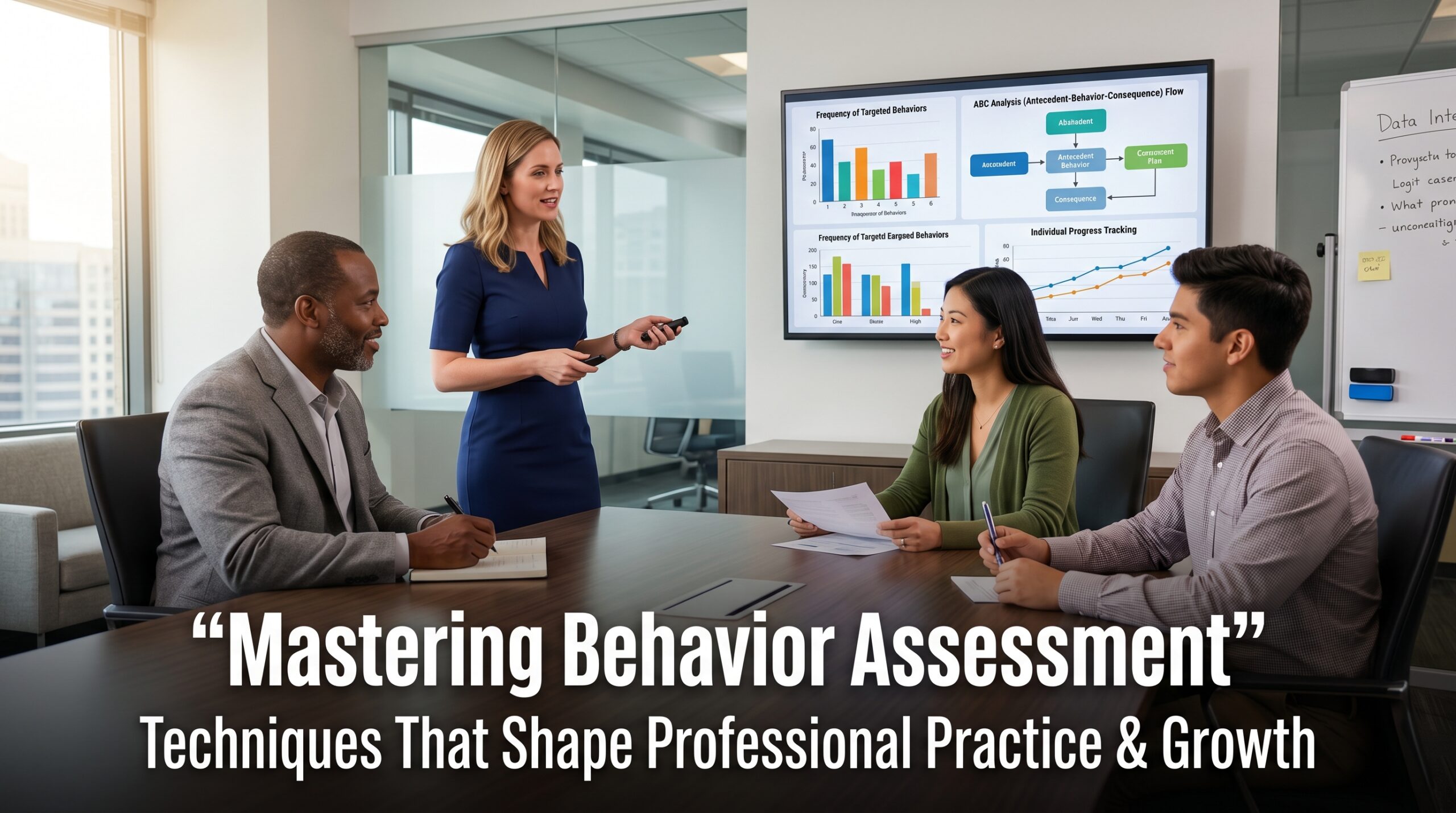
- ABC Analysis (Antecedent–Behavior–Consequence)
ABC analysis is a widely used framework that examines what happens before, during, and after a behavior.
- Antecedent: Events or conditions before the behavior
- Behavior: The observable action
- Consequence: What follows the behavior
Example:
| Antecedent | Behavior | Consequence |
| Difficult assignment given | Student throws pencil | Task removed |
This method helps identify behavioral triggers and reinforcement patterns that maintain the behavior over time.
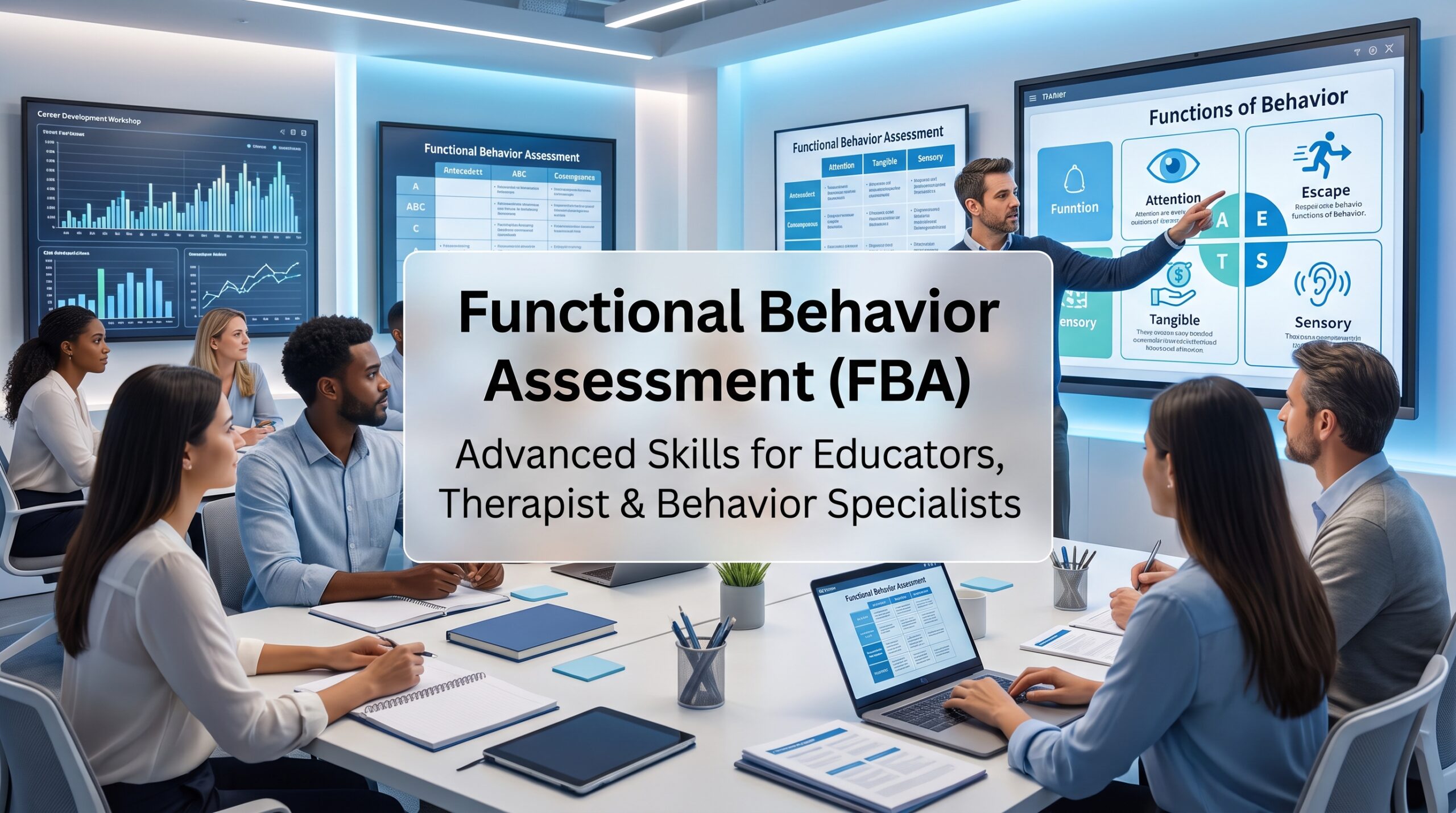
- Functional Behavior Assessment (FBA)
Functional Behavior Assessment is a more in-depth approach used to identify the purpose a behavior serves for an individual.
Common behavioral functions include:
- Gaining attention
- Avoiding or escaping tasks
- Accessing preferred items or activities
- Sensory stimulation or emotional regulation
FBA Process
- Clearly define the behavior
- Collect data using multiple methods
- Identify patterns and triggers
- Develop a hypothesis about function
- Design intervention strategies
FBA is especially valuable in educational planning and behavioral intervention programs.
- Frequency Recording
Frequency recording measures how often a behavior occurs within a defined period.
Example:
- Monday: 12 incidents of leaving seat
- Tuesday: 9 incidents
- Wednesday: 6 incidents
This method is useful for tracking progress and identifying trends over time.
- Duration Recording
Duration recording focuses on how long a behavior lasts rather than how often it occurs.
Example:
| Day | Duration |
| Monday | 20 minutes |
| Tuesday | 15 minutes |
| Wednesday | 10 minutes |
It is particularly useful for behaviors that vary in length, such as tantrums or emotional outbursts.
- Interval Recording
Interval recording divides observation time into smaller segments to measure behavior occurrence.
Types include:
- Partial Interval: Behavior occurs at any point in the interval
- Whole Interval: Behavior occurs throughout the entire interval
- Momentary Time Sampling: Behavior checked at specific moments
This method is widely used in structured environments like classrooms and therapy sessions.
- Event Recording
Event recording tracks each occurrence of a clearly defined behavior.
Common examples include:
- Hand raising
- Task completion
- Instances of aggression
- Verbal requests
It is most effective when behaviors have a clear beginning and end.
- Rating Scales and Checklists
Rating scales provide standardized tools for evaluating behavior based on structured criteria.
Examples include:
- Behavioral rating inventories
- ADHD screening tools
- Autism behavior assessments
- Emotional regulation scales
Advantages
- Quick and easy to use
- Standardized scoring
- Useful for comparisons across time or groups
- Behavioral Interviews
Interviews gather qualitative insights from individuals familiar with the behavior.
Sources may include:
- Parents and caregivers
- Teachers and support staff
- Clinicians and therapists
- Supervisors or employers
Interviews help identify:
- Behavioral history
- Environmental triggers
- Previous interventions
- Situational influences
They provide context that quantitative data alone may not reveal.
- Self-Monitoring
Self-monitoring involves individuals tracking their own behavior using structured tools.
Examples include:
- Journals
- Behavior logs
- Habit trackers
- Mobile applications
This method encourages awareness, accountability, and long-term behavior change, especially in adolescents and adults.
 Characteristics of Effective Behavior Assessment
A strong behavior assessment should be:
- Objective: Based on observable facts rather than opinions
- Reliable: Produces consistent results across observers
- Valid: Measures the intended behavior accurately
- Comprehensive: Uses multiple sources of data
- Ethical: Respects privacy, consent, and dignity
Benefits of Behavior Assessment
When properly conducted, behavior assessment offers significant advantages:
- Clear understanding of behavior patterns
- Improved intervention planning
- Continuous progress monitoring
- Individualized support strategies
- Better collaboration among professionals and caregivers
- Evidence-based decision-making
Challenges and Limitations
Despite its value, behavior assessment presents practical challenges:
- Requires time and consistent effort
- Risk of observer bias
- Behavior may vary across environments
- Complex data interpretation
- Incomplete information may reduce accuracy
These limitations highlight the importance of structured procedures and multiple data sources.
Key Factors Influencing Behavior Assessment
Several contextual elements must always be considered:
- Cultural expectations and norms
- Environmental conditions (home, school, workplace)
- Developmental stage and age
- Medical or neurological conditions
- Communication abilities and limitations
Ignoring these factors can lead to incomplete or misleading conclusions.
Real-World Applications
Education
Teachers use behavior assessment to improve classroom management and learning outcomes.
Example: A student frequently leaves their seat during lessons. Data shows this occurs during difficult tasks, leading to instructional adjustments.
Applied Behavior Analysis (ABA)
Behavior analysts use assessment to identify behavior functions and design targeted interventions.
Example: A child engages in disruptive behavior to avoid tasks, so a communication-based alternative is introduced.
Mental Health Services
Clinicians use behavior assessment to support diagnosis, treatment planning, and progress monitoring.
Workplace Settings
Organizations use behavior analysis to improve:
- Productivity
- Team collaboration
- Leadership effectiveness
- Safety compliance
Professional Best Practices
Experts recommend the following approaches:
- Define behaviors in clear, observable terms
- Collect data across multiple settings and times
- Combine multiple assessment methods
- Focus on the function of behavior, not just the behavior itself
- Review and update data regularly
Common Mistakes to Avoid
- Making assumptions without data
- Using vague behavior definitions
- Ignoring environmental influences
- Collecting limited or incomplete observations
- Overlooking positive behaviors
- Failing to update assessments over time
Future Trends in Behavior Assessment
Behavior assessment continues to evolve with technological advancements:
- Mobile applications for real-time data collection
- Artificial intelligence for behavioral pattern analysis
- Wearable devices for physiological monitoring
- Telehealth-based remote assessments
- Predictive analytics for intervention planning
- Personalized behavior support systems
These developments are making assessment more efficient, accessible, and precise.
Frequently Asked Questions (FAQs)
- What is behavior assessment?
It is a structured process used to observe and analyze behavior to understand its causes and patterns. - Why is it important?
It supports accurate intervention planning and improves behavioral outcomes. - What is the difference between direct and indirect assessment?
Direct assessment involves observation, while indirect uses interviews and reports. - What is ABC analysis?
A method that studies what happens before and after a behavior to understand its cause. - What is Functional Behavior Assessment?
A structured process used to determine why a behavior occurs. - Who uses behavior assessment techniques?
Educators, psychologists, therapists, counselors, and workplace professionals. - What is frequency recording?
A method that counts how often a behavior occurs. - Is it useful for developmental challenges?
Yes, it is widely used in educational and clinical support systems. - Is it only for problematic behavior?
No, it also helps understand positive behaviors and skill development. - How often should assessments be updated?
Regularly, especially when behavior patterns change or interventions evolve.
Final Perspective
Behavior assessment is a critical component of modern psychological, educational, and organizational practice. By combining structured observation, data-driven analysis, and functional understanding, it allows professionals to move beyond assumptions and toward meaningful insight.
When applied correctly, these techniques support more effective learning environments, improved mental health outcomes, and stronger human development strategies across a wide range of settings.