Individualized Education Program (IEP): A Practical Guide for Parents, Educators, and Support Teams
Students do not learn in the same way, at the same speed, or with the same support needs. In many classrooms, some children may quietly struggle with reading, writing, attention, communication, or processing instructions without those challenges being immediately visible.
An Individualized Education Program (IEP) is designed to address this gap. It is a structured, legally supported education plan that helps students with identified learning or developmental needs access education in a fair and meaningful way.
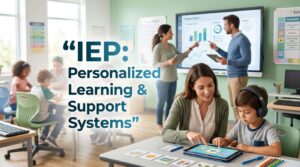
An IEP is not simply a document. It is a coordinated framework that brings together families, teachers, and specialists to design personalized goals and supports. When implemented effectively, it helps students build academic skills, confidence, and independence in a way that aligns with their individual abilities.
What Is an Individualized Education Program (IEP)?
An Individualized Education Program is a tailored learning plan created for students who qualify for special education services. It outlines what a student will learn, how instruction will be delivered, and what supports are needed to help them succeed.
A comprehensive IEP typically includes:
- Current academic and functional performance levels
- Specific, measurable learning goals
- Special education instruction and services
- Classroom accommodations and modifications
- Related services such as therapy or counseling
- Methods for tracking and reporting progress
The purpose is not to reduce expectations but to remove barriers so students can access learning in a way that is realistic and equitable.
Why an IEP Matters in Education
An IEP plays an essential role in ensuring that students who need additional support are not left behind in mainstream education systems.
Equal access to learning
Some students understand concepts but struggle to show their knowledge due to differences in communication, attention, processing, or sensory regulation. An IEP adjusts instruction and environment so these barriers do not block participation.
Clear direction for learning
With structured goals and timelines, teachers and families can clearly see what progress should look like and how to support it consistently.
 Emotional stability and confidence
When learning tasks are appropriately adjusted, students often experience less frustration and more willingness to engage with schoolwork.
Coordinated adult support
An IEP ensures that parents, teachers, and specialists work from the same plan instead of using separate or inconsistent approaches.
How an IEP Is Developed
Creating an IEP is a structured, collaborative process that follows several stages.
- Referral and assessment
Concerns about a student’s learning or development lead to formal evaluation. This may include academic testing, classroom observation, and specialist input.
- Eligibility determination
A multidisciplinary team reviews the assessment results to determine whether the student qualifies for special education services under established criteria.
- Team-based planning meeting
The IEP team typically includes:
- Parents or guardians
- Special education teachers
- General education teachers
- School psychologists or therapists
- School administrators
Each member contributes observations and insights about the student’s needs and strengths.
- Plan development
The team creates individualized goals, support services, and accommodations based on the student’s learning profile.
- Implementation
The plan is applied across relevant school settings, including classrooms and support sessions.
- Monitoring and review
Progress is tracked regularly, with formal reviews at least once a year. Adjustments are made whenever the student’s needs change.
Core Elements of an Effective IEP
A strong IEP is clear, measurable, and practical in daily school life.
Present level of performance
This section describes the student’s current academic, social, and functional abilities as a starting point for planning.
Measurable annual goals
Goals should be specific and achievable within a defined timeframe, focusing on meaningful skill development.
Special education services
These may include:
- Individualized instruction
- Small-group learning support
- Targeted teaching strategies
Accommodations and modifications
Common examples include:
- Extended time for assignments or tests
- Reduced or adjusted workload
- Assistive technology or learning tools
- Simplified instructions or adapted materials
Related services
Depending on needs, support may involve:
- Speech and language therapy
- Occupational therapy
- Physical therapy
- Counseling or behavioral support
Progress monitoring
Teachers use assessments, observations, and reports to track progress toward goals and adjust instruction when needed.
Benefits of a Well-Designed IEP
When implemented thoughtfully, an IEP can significantly improve a student’s learning experience.
Personalized learning support
Instruction is adapted to match the student’s strengths, challenges, and learning pace.
Improved academic progress
Targeted interventions help build foundational skills in a structured and manageable way.
Greater participation in school
Students are more likely to engage when tasks are accessible and appropriately supported.
Increased confidence
Consistent small achievements help build motivation and self-belief over time.
Stronger home–school communication
Regular updates ensure families remain informed and actively involved in learning support.
Challenges in Implementing an IEP
While effective, IEPs can face real-world implementation challenges.
Inconsistent application of supports
Accommodations may not always be applied consistently across classrooms or staff members.
Communication gaps
Limited coordination between home and school can reduce the effectiveness of support strategies.
Resource limitations
Some schools may lack sufficient staffing, time, or specialized tools.
Unclear goals
Vague or overly broad goals make it difficult to measure meaningful progress.
Delayed updates
When not reviewed regularly, an IEP may stop reflecting the student’s current needs.
 Key Considerations for Successful Outcomes
An effective IEP is flexible and evolves with the student.
Key factors include:
- Understanding real learning needs, not assumptions
- Setting clear and measurable goals
- Ensuring consistency across environments
- Including student input when appropriate
- Reviewing and adjusting strategies regularly
Because every student is different, flexibility is essential to long-term success.
Real-Life Examples of IEP Support
Reading support
A student who struggles with reading receives simplified texts and guided reading sessions. With consistent support, comprehension gradually improves.
Writing support
A student with handwriting difficulties uses a keyboard and receives extra time for assignments, allowing clearer expression of ideas.
Attention support
A student with attention challenges benefits from structured breaks and strategic seating placement to reduce distractions and improve focus.
Communication support
A non-speaking student uses a speech-generating device to participate in classroom discussions and communicate independently.
Professional Recommendations for Effective IEPs
Experienced educators often emphasize the following practices:
- Set practical and achievable goals
- Maintain clear communication between all team members
- Use data and observation to guide decisions
- Involve parents as equal partners in planning
- Recognize and build on student strengths
- Review progress regularly, not only annually
A strong IEP is not static—it adapts as the student grows.
Common Mistakes to Avoid
- Writing goals that are vague or too broad
- Focusing only on challenges while ignoring strengths
- Excluding parents or caregivers from planning
- Delaying updates or revisions
- Treating the IEP as fixed rather than adaptable
Avoiding these issues improves both student outcomes and team collaboration.
The Future of Individualized Education Programs
Education systems are moving toward more personalized and technology-supported learning. IEPs are evolving alongside these changes.
Key emerging trends include:
- Greater use of assistive technology
- More data-informed progress tracking
- Increased student involvement in goal setting
- Stronger integration of therapy and classroom learning
- More inclusive classroom practices
These developments are making individualized education more responsive and practical.
Frequently Asked Questions (FAQs)
- Who qualifies for an IEP?
Students with learning, developmental, or functional challenges that significantly affect school performance may qualify after formal evaluation.
- Does an IEP only focus on academics?
No. It can also support communication, behavior, social skills, and daily functioning.
- How often is an IEP reviewed?
At least once a year, with additional reviews if needed.
- Can parents request changes to an IEP?
Yes. Parents are active members of the IEP team and can request meetings or adjustments.
- Does an IEP follow a student to a new school?
In most education systems, the plan transfers with the student.
- What is the difference between an IEP and a 504 Plan?
An IEP includes specialized instruction, while a 504 Plan primarily provides classroom accommodations.
- Can a student lose their IEP?
Yes. If evaluations show the student no longer meets eligibility criteria, support may be revised or discontinued.
- Do all students with disabilities need an IEP?
No. Support depends on individual needs and eligibility.
- How long does the IEP process take?
It typically takes several weeks, depending on evaluation and planning timelines.
- Should students attend IEP meetings?
Yes, especially as they get older. Student participation is encouraged.
Final Thoughts
An Individualized Education Program provides a structured and purposeful way to support students with diverse learning needs. Its strength lies in personalization—adapting education to the learner rather than expecting the learner to fit a single system.
When educators, families, and specialists work together consistently, an IEP becomes more than a plan. It becomes a practical framework that supports growth, inclusion, and meaningful educational progress.