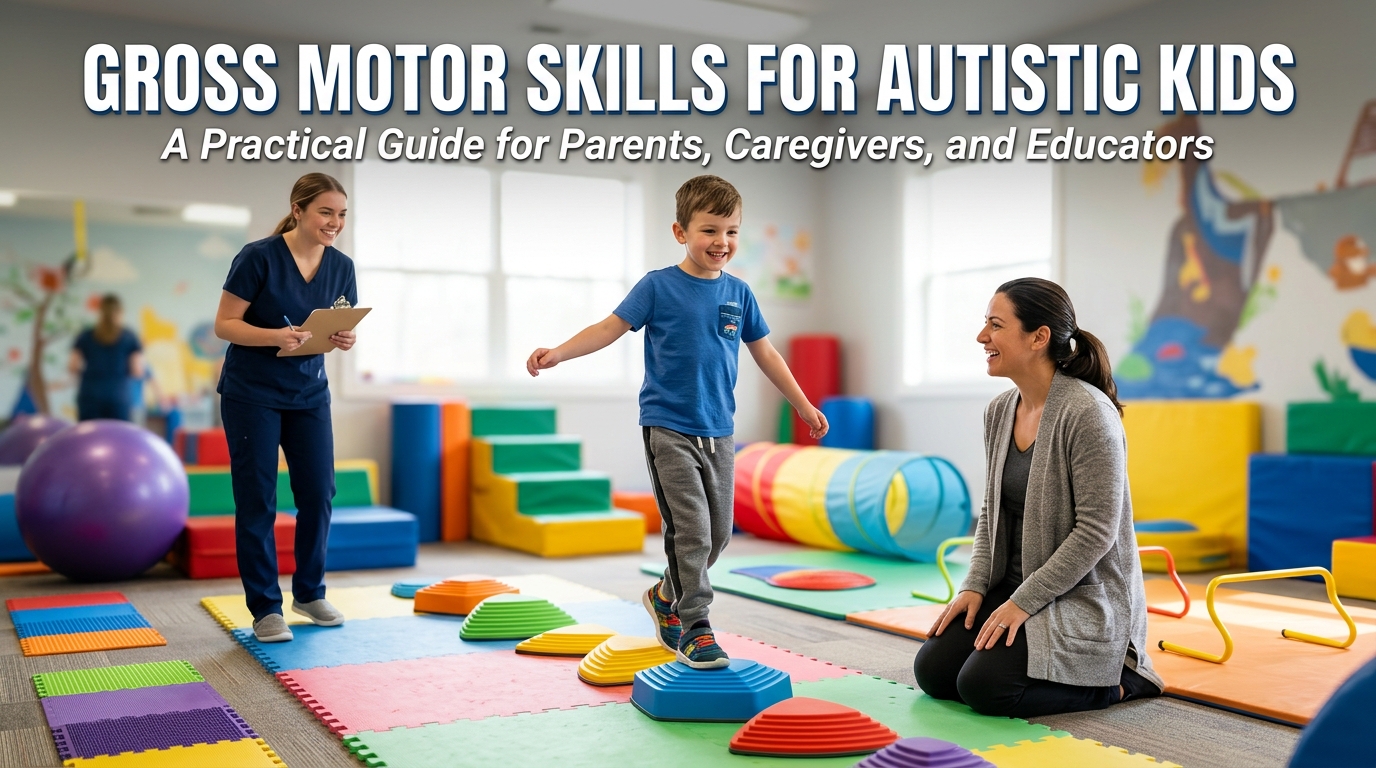
Gross Motor Skills for Autistic Kids: A Practical Guide for Parents, Caregivers, and Educators
Movement is a vital part of childhood. From taking first steps to climbing playground equipment, children build physical abilities that support independence, learning, confidence, and social interaction. These abilities, known as gross motor skills, are essential for everyday life and continue to develop throughout childhood.
For autistic children, gross motor development can follow many different paths. Some develop movement skills similarly to their peers, while others may experience differences in balance, coordination, muscle tone, posture, or motor planning. These variations are common and do not define a child’s potential. Instead, they highlight the importance of individualized support that respects each child’s strengths, interests, and developmental pace.
Supporting gross motor development is about more than helping a child run faster or jump higher. It is about making everyday activities easier, encouraging participation in play, improving physical confidence, and creating opportunities for greater independence. With consistent practice, positive experiences, and the right support, autistic children can continue developing movement skills that enhance their daily lives.
This guide explains what gross motor skills are, why they matter, the challenges some autistic children experience, and practical strategies that parents, caregivers, educators, and therapists can use to encourage healthy motor development.
What Are Gross Motor Skills?
Gross motor skills are movements that involve the body’s large muscle groups, including the arms, legs, shoulders, back, hips, and core. These muscles work together to help children control posture, maintain balance, and perform everyday physical activities.
Gross motor development begins during infancy and continues throughout childhood as strength, coordination, body awareness, and movement control improve.
Examples of gross motor skills include:
- Rolling over
- Sitting independently
- Crawling
- Walking
- Running
- Jumping
- Climbing stairs
- Hopping
- Skipping
- Throwing and catching a ball
- Kicking a ball
- Riding a bicycle
- Swimming
- Maintaining balance while standing or walking
These foundational skills support participation in school, recreation, sports, self-care, and many daily routines.
Why Gross Motor Skills Matter
Gross motor development influences nearly every aspect of a child’s growth, extending well beyond physical movement.
Physical Health
Active movement strengthens muscles, bones, joints, and the cardiovascular system. It also encourages healthy activity patterns that can continue into adulthood.
Daily Independence
Children rely on gross motor skills for countless everyday tasks, including climbing stairs, carrying a backpack, getting dressed, getting into a vehicle, and safely navigating their environment.
Learning and School Participation
Strong posture, balance, and core stability help children sit comfortably, transition between classroom activities, and participate more confidently in physical education and outdoor play.
Social Development
Many childhood friendships develop through active play. Running games, playground activities, and recreational sports create opportunities to build communication, cooperation, and social confidence.
Emotional Well-Being
Successfully learning new physical skills often increases self-confidence and encourages children to explore new activities without fear of failure.
 Understanding Gross Motor Development in Autistic Children
Autism affects every child differently, and so does motor development. While some autistic children reach physical milestones within expected timeframes, others may require additional support to develop certain movement skills.
Motor differences may stem from a combination of neurological development, sensory processing, muscle tone, coordination, and movement planning. These challenges are not related to intelligence or motivation. Many children understand what they want to do but require more time, practice, or guidance to perform the movement.
Common areas where autistic children may experience differences include:
| Area | Examples of Challenges |
| Balance | Standing on one foot, walking on uneven ground, maintaining stability |
| Coordination | Throwing, catching, kicking, or combining multiple movements |
| Muscle Tone | Reduced endurance, lower muscle strength, or fatigue during physical activity |
| Motor Planning | Learning new movement sequences or following multi-step physical instructions |
| Bilateral Coordination | Using both sides of the body together while climbing, skipping, or jumping |
| Postural Control | Sitting upright comfortably or maintaining stable posture during activities |
| Body Awareness | Judging distances, avoiding obstacles, or understanding body position in space |
Some autistic children actively seek movement by climbing, spinning, jumping, or running, while others may avoid physical activities because they are physically demanding or involve overwhelming sensory experiences.
For example, a child who is sensitive to loud sounds may avoid crowded playgrounds, while another may hesitate to walk on grass because of tactile sensitivity. Understanding these individual preferences helps adults create supportive environments where movement feels safe and enjoyable rather than stressful.
Core Components of Gross Motor Development
Gross motor skills develop through several interconnected abilities that work together during everyday movement.
Balance
Balance allows children to stay stable while standing, walking, running, or changing direction.
Activities that support balance include:
- Standing on one foot
- Walking along a straight line
- Using balance beams
- Stepping over obstacles
- Playing hopscotch
Coordination
Coordination enables different parts of the body to work together efficiently.
Children strengthen coordination through activities such as:
- Throwing and catching balls
- Kicking a soccer ball
- Dancing
- Jumping rope
- Obstacle courses
Muscle Strength
Strength provides the foundation for safe and controlled movement.
Activities that build strength include:
- Climbing playground structures
- Crawling through tunnels
- Animal walks such as bear crawls or crab walks
- Jumping games
- Carrying lightweight objects
Core Stability
Core muscles support posture, balance, and overall body control. Good core strength helps children sit comfortably during classroom activities and maintain stability during movement.
Body Awareness
Body awareness, often called proprioception, helps children understand where their body is in relation to surrounding objects.
Well-developed body awareness supports:
- Moving through crowded spaces
- Avoiding collisions
- Judging distances
- Adjusting body position during movement
Motor Planning
Motor planning is the ability to think about, organize, and perform new movements.
Children use motor planning when:
- Riding a bicycle
- Completing obstacle courses
- Learning dance routines
- Playing sports
- Following movement games
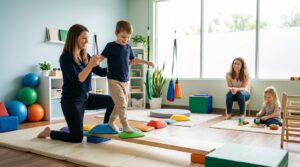 Benefits of Improving Gross Motor Skills
Developing gross motor skills can positively influence many areas of a child’s daily life.
Potential benefits include:
- Better balance and coordination
- Improved posture and body control
- Increased physical strength and endurance
- Greater independence with everyday activities
- Increased confidence during play
- Better participation in school activities
- More opportunities for social interaction
- Improved body awareness
- Increased willingness to explore new environments
- Better emotional regulation through enjoyable physical activity
Regular movement also supports healthy routines and provides opportunities for children to develop problem-solving skills, resilience, and confidence through play.
Common Challenges Autistic Children May Experience
Motor development is highly individual, but certain challenges are seen more frequently among autistic children.
Balance Difficulties
Some children find it difficult to maintain stability while walking on uneven surfaces, climbing playground equipment, or changing direction quickly.
Low Muscle Tone
Reduced muscle tone may affect posture, endurance, and the amount of effort required to complete physical activities.
Motor Planning Challenges
Children may understand a task but struggle to organize the sequence of movements needed to complete it smoothly.
Sensory Differences
Sensitivity to sounds, lights, textures, or crowded environments can reduce interest in physical activities, especially in unfamiliar settings.
Preference for Routine
Children who prefer predictable routines may need extra time and encouragement when introduced to new games or sports.
Fatigue
Physical activities may require greater effort for some children, making regular breaks and appropriately paced sessions beneficial.
Recognizing these challenges allows adults to provide support without placing unrealistic expectations on a child’s performance.
Supporting Gross Motor Development
There is no single approach that works for every child. Successful support is flexible, individualized, and focused on meaningful progress rather than perfection.
The following strategies can make movement activities more successful:
- Build activities around the child’s interests and favorite games.
- Introduce one new skill at a time.
- Break complex movements into smaller, achievable steps.
- Demonstrate movements visually instead of relying only on verbal instructions.
- Keep routines consistent while allowing room for gradual progression.
- Provide extra time for processing and practice.
- Reduce unnecessary sensory distractions during new activities.
- Praise effort, persistence, and improvement rather than perfect performance.
- Encourage daily opportunities for active play, both indoors and outdoors.
- Collaborate with occupational therapists, physical therapists, teachers, and healthcare providers when additional support is appropriate.
Simple activities such as walking in the park, playing with balloons, dancing to music, building obstacle courses with household items, or visiting an accessible playground can provide valuable opportunities to strengthen gross motor skills while keeping movement enjoyable.
The most effective activities are those a child looks forward to doing consistently.
Important!
Gross motor development is an essential part of childhood, supporting independence, physical health, learning, and social participation. For autistic children, progress may follow a unique timeline, and movement skills often develop differently from one child to another.
Rather than focusing solely on milestones, it is more helpful to celebrate meaningful progress, encourage enjoyable physical activity, and create opportunities that match each child’s interests and abilities. Small improvements—whether balancing for a few extra seconds, climbing one more step, or confidently joining a playground game—can have a lasting impact on everyday life.
With patience, encouragement, and individualized support, autistic children can continue developing the movement skills that help them participate more fully in school, play, family life, and their communities.