What Is Autism Spectrum Disorder (ASD)? A Complete Guide to Understanding Autism
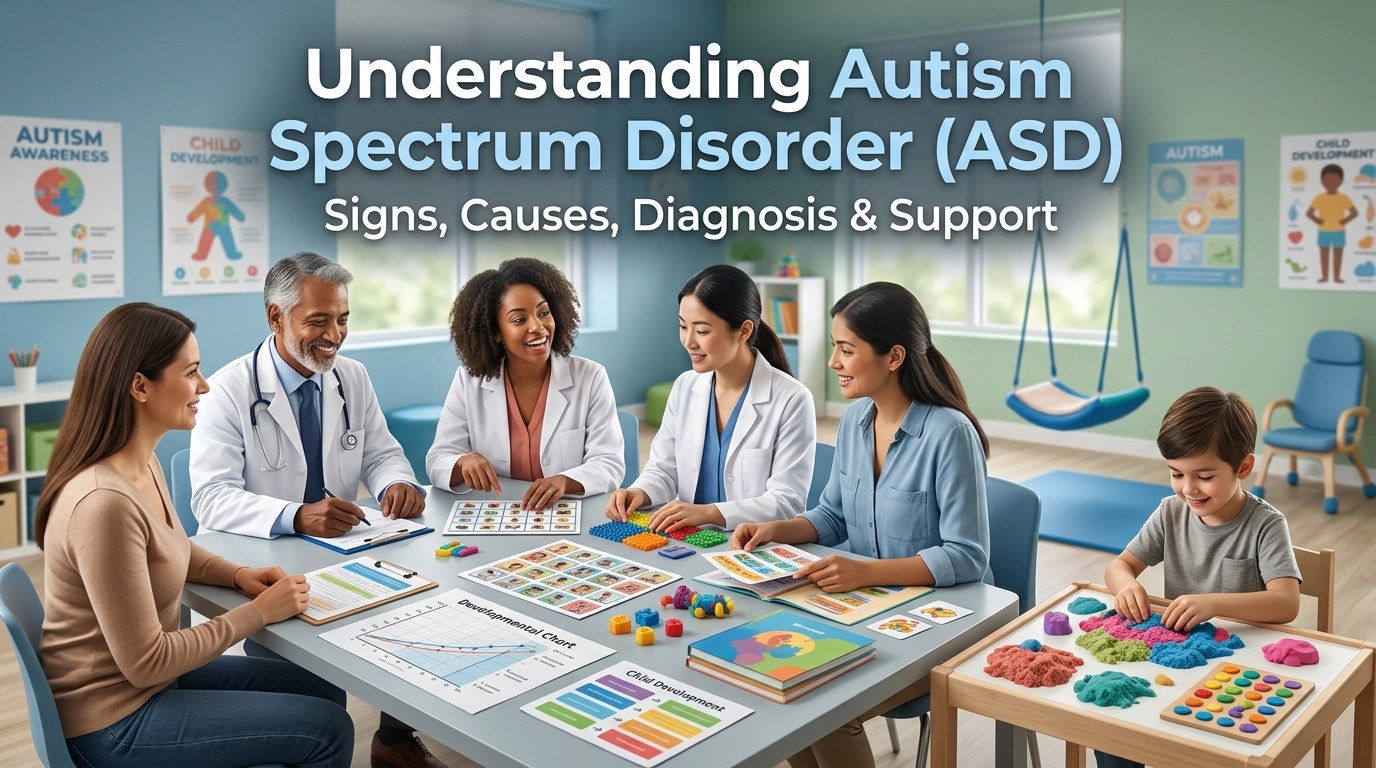
Autism Spectrum Disorder (ASD) is a lifelong neurodevelopmental condition that influences how people communicate, interact with others, process information, and experience the world around them. Rather than representing a single set of symptoms, autism exists on a spectrum, meaning every autistic person has a unique combination of strengths, challenges, interests, and support needs.
Over the past few decades, public awareness of autism has increased significantly. More children are being identified earlier, adults are receiving long-overdue diagnoses, and society is gradually becoming more inclusive. Even so, many misconceptions remain. Some people mistakenly believe autism is an illness that needs to be cured, while others assume every autistic person shares the same abilities or challenges. Neither is true.
Accurate information helps families make informed decisions, supports early identification, and encourages communities to become more understanding and inclusive. Whether you are a parent, teacher, caregiver, healthcare professional, or simply want to learn more, understanding Autism Spectrum Disorder is the first step toward supporting autistic individuals throughout every stage of life.
This guide provides a clear, evidence-based overview of Autism Spectrum Disorder, including its characteristics, causes, diagnosis, and why early recognition and individualized support can make a meaningful difference.
What Is Autism Spectrum Disorder (ASD)?
Autism Spectrum Disorder (ASD) is a neurodevelopmental condition that affects how the brain develops and processes information related to communication, social interaction, behavior, learning, and sensory experiences. It is present from early development, although its signs may become noticeable at different ages depending on the individual.
Autism is not a disease, a mental illness, or something that develops because of parenting style or personal choices. Instead, it reflects natural differences in brain development that influence how a person understands and responds to the world.
The term “spectrum” highlights the wide range of ways autism can present. Some autistic individuals require substantial daily support, while others live independently, pursue higher education, maintain successful careers, and build families of their own.
Although every autistic person is unique, many experience differences in areas such as:
- Social communication and interaction
- Verbal and nonverbal communication
- Repetitive behaviors or movements
- Preference for routines and predictability
- Highly focused interests
- Sensory processing
- Learning and problem-solving styles
Autism is a lifelong condition, but with appropriate support, many autistic individuals continue to develop new skills, gain independence, and lead fulfilling lives.
 Why Understanding Autism Matters
Understanding Autism Spectrum Disorder benefits not only autistic individuals but also the families, educators, employers, healthcare providers, and communities who support them.
Greater awareness can help:
- Recognize developmental differences earlier.
- Encourage timely professional evaluation and diagnosis.
- Improve access to educational and therapeutic services.
- Reduce stigma and misinformation.
- Promote acceptance instead of judgment.
- Strengthen communication between families and professionals.
- Create more inclusive schools, workplaces, and public spaces.
Early understanding often leads to earlier support, which can improve communication, learning, emotional well-being, and independence. Equally important, greater awareness encourages society to recognize autistic individuals for their strengths rather than defining them solely by their challenges.
Understanding the Autism Spectrum
One of the most misunderstood aspects of autism is the meaning of the word “spectrum.”
The spectrum does not represent a simple line from “mild” to “severe.” Instead, it reflects the wide variety of characteristics that can appear in different combinations and at different levels of intensity.
For example:
- One child may have limited spoken language and need daily assistance with personal care.
- Another child may speak fluently but struggle with understanding social cues or adapting to unexpected changes.
- An adult may thrive in a technical profession yet find crowded social situations mentally exhausting because of sensory overload.
Support needs can also vary across different areas of life. A person who communicates confidently at work may still need assistance with daily organization or managing sensory challenges.
This diversity is why individualized assessment and personalized support are essential. Autism cannot be understood through stereotypes or assumptions.
Core Characteristics of Autism Spectrum Disorder
Healthcare professionals generally identify Autism Spectrum Disorder based on two broad areas of development: differences in social communication and interaction, and restricted or repetitive patterns of behavior, interests, or activities.
These characteristics vary considerably from person to person.
- Differences in Social Communication and Interaction
Autistic individuals often communicate and interact in ways that differ from those of non-autistic people. These differences are not signs of a lack of interest in relationships. Rather, they reflect a different way of understanding and responding to social situations.
Common characteristics may include:
- Limited or inconsistent eye contact
- Difficulty interpreting facial expressions and body language
- Challenges understanding social expectations
- Preference for clear, direct communication
- Literal interpretation of language
- Difficulty initiating or maintaining conversations
- Delayed speech development in some children
- Challenges understanding sarcasm, humor, or implied meanings
Communication styles vary widely. Some autistic people speak fluently, while others communicate using sign language, picture-based systems, communication devices, or other forms of augmentative and alternative communication (AAC).
Recognizing and respecting different communication styles is an important part of creating inclusive environments.
- Repetitive Behaviors and Preference for Routine
Many autistic individuals rely on routines and repetitive behaviors to create predictability, manage anxiety, or regulate sensory experiences.
Examples include:
- Hand flapping
- Rocking
- Repeating words or phrases (echolalia)
- Arranging objects in a particular order
- Following structured daily routines
- Becoming distressed by unexpected schedule changes
- Developing intense interests in specific topics
These behaviors often serve a meaningful purpose. For example, repetitive movements may help an individual remain calm during stressful situations, while predictable routines can reduce anxiety by making daily life feel more manageable.
Rather than trying to eliminate these behaviors automatically, families and professionals should first understand why they occur and determine whether they interfere with safety or everyday functioning.
 Sensory Processing Differences
Many autistic individuals experience the world differently through their senses. Everyday sights, sounds, textures, tastes, smells, or movements may feel either much more intense or much less noticeable than they do for others.
These sensory differences can influence learning, communication, behavior, and emotional regulation.
Sensory Sensitivities
Some autistic people become overwhelmed by sensory input such as:
- Loud or unexpected noises
- Bright fluorescent lighting
- Strong perfumes or food odors
- Certain clothing fabrics or seams
- Busy public places
- Specific food textures
For example, a crowded shopping mall that feels ordinary to one person may feel physically overwhelming to someone with heightened sensory sensitivity.
Sensory-Seeking Behaviors
Others actively seek additional sensory input by:
- Enjoying spinning or swinging
- Seeking deep pressure, such as weighted blankets or firm hugs (when welcomed)
- Watching moving lights or objects
- Exploring different textures
- Listening repeatedly to particular sounds
- Rocking or pacing
Neither sensory sensitivity nor sensory-seeking behavior is inherently negative. Understanding an individual’s sensory profile allows parents, teachers, and employers to make simple adjustments that improve comfort, participation, and overall well-being.
Common Signs of Autism
Autism affects each individual differently, and no single characteristic confirms a diagnosis. However, certain developmental patterns commonly lead families to seek professional evaluation.
The table below summarizes some frequently observed characteristics.
| Developmental Area | Possible Characteristics |
| Communication | Delayed speech, unusual speech patterns, difficulty maintaining conversations, literal interpretation of language |
| Social Interaction | Limited eye contact, reduced response to name, difficulty understanding social cues, challenges forming friendships |
| Behavior | Repetitive movements, strong routines, highly focused interests, resistance to unexpected change |
| Sensory Processing | Overreaction or underreaction to sounds, lights, textures, smells, or touch |
| Play and Learning | Preference for repetitive play, organizing objects, deep interest in specific subjects |
| Emotional Regulation | Difficulty managing frustration, transitions, or sensory overload |
Some children display several of these characteristics during infancy or toddlerhood, while others become more noticeable as social expectations increase during school years.
Importantly, every autistic individual presents differently. Some may have significant communication challenges, while others communicate fluently but experience subtle social or sensory differences.
What Causes Autism Spectrum Disorder?
Researchers agree that Autism Spectrum Disorder develops through a complex combination of genetic and biological factors that influence early brain development. Despite decades of research, there is no single known cause.
Current scientific evidence indicates that:
- Genetics play a significant role in autism.
- Multiple genes likely contribute to its development.
- Certain prenatal and early developmental factors may influence risk.
- Autism is not caused by parenting style, emotional neglect, or personality traits.
Researchers continue to study how genetic and environmental influences interact during early development. However, no single environmental exposure has been identified as the sole cause of autism.
One of the most widely discussed myths is the claim that routine childhood vaccines cause autism. This claim has been thoroughly investigated in numerous large-scale scientific studies. The evidence consistently shows no credible link between recommended childhood vaccinations and Autism Spectrum Disorder.
Understanding the current evidence helps families make informed healthcare decisions while avoiding misinformation that may delay appropriate medical care or developmental support.