Understanding Autism as a Neurodevelopmental Difference
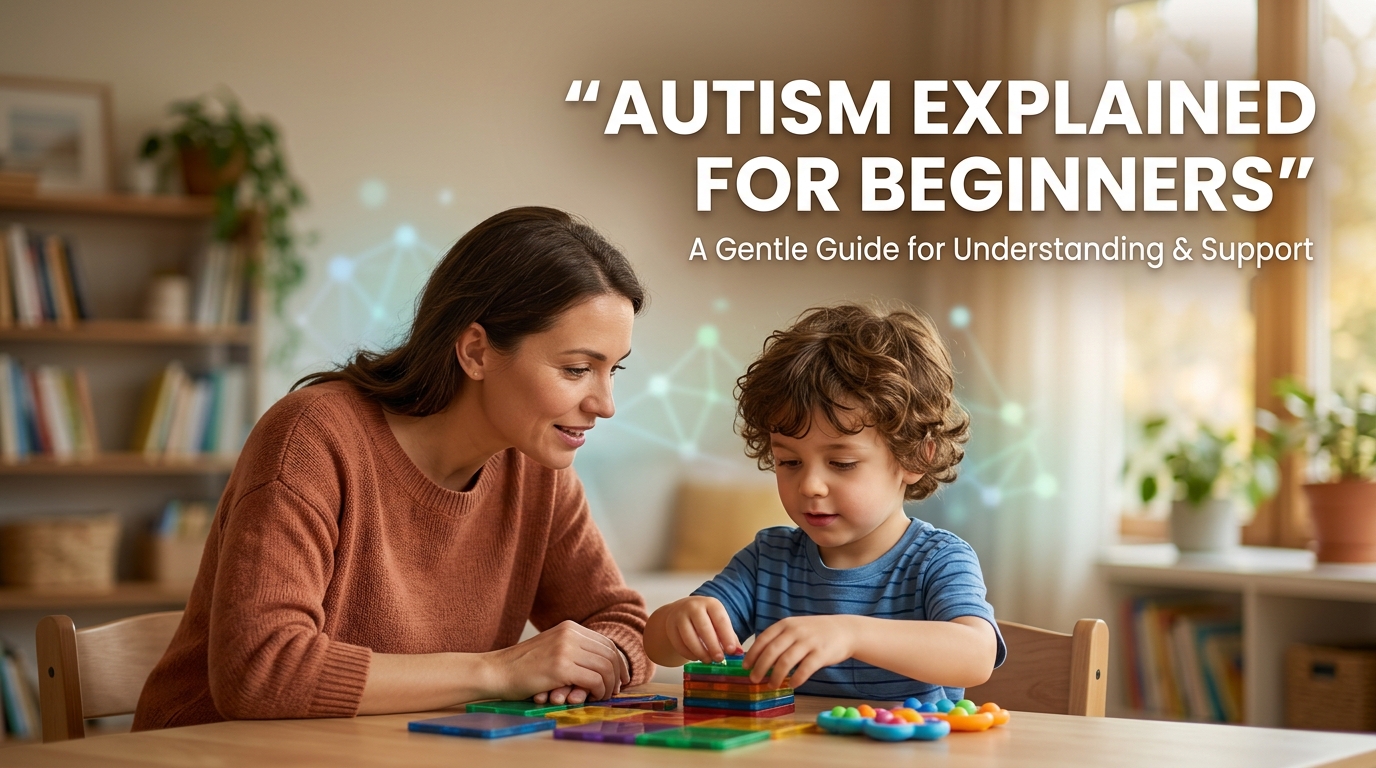
Autism Explained for Beginners
Autism is a lifelong neurodevelopmental condition that shapes how a person communicates, processes information, and experiences their surroundings. It is not an illness or something that requires “fixing.” Instead, it reflects natural variation in how the human brain develops and functions.
Many people first encounter autism through simplified descriptions, but the reality is more nuanced. It affects individuals in different ways, and no two autistic people experience the world in exactly the same manner. That’s why autism is described as a spectrum rather than a single, uniform condition.
What Autism Actually Means
Autism, or Autism Spectrum Disorder (ASD), refers to a broad range of differences in development that typically begin early in life. These differences influence behavior, communication, and sensory processing in unique ways.
Autism may affect:
- Verbal and non-verbal communication styles
- Interpretation of facial expressions, tone, and social cues
- Sensitivity to sound, light, texture, or other sensory input
- Preference for routines, predictability, and structure
- Depth of focus on specific interests or topics
Some autistic individuals require significant daily support, while others live independently and manage daily life with minimal assistance. This wide variation is central to understanding autism.
In many cases, signs appear in early childhood, though some individuals are identified later when their traits become more noticeable or better understood.
 Why Understanding Autism Matters in Everyday Life
Understanding autism is not just a clinical or educational concern—it plays a meaningful role in how people interact in schools, workplaces, families, and communities.
Greater awareness helps to:
- Reduce stigma and incorrect assumptions
- Improve communication between autistic and non-autistic individuals
- Support early recognition and access to appropriate support
- Encourage inclusive learning and working environments
- Build more respectful and informed social interactions
Misinterpretation of autistic behavior can lead to unnecessary frustration on both sides. Awareness helps replace assumptions with clarity.
How Autism Influences Brain Function and Behavior
Autism is linked to differences in how the brain processes and organizes information. It is not caused by parenting style, lifestyle choices, or external factors such as vaccines. Research points to a combination of genetic influences and early brain development differences.
Key Areas of Difference
Communication Styles
Communication may develop differently:
- Some children may begin speaking later than expected
- Others may speak fluently but find everyday conversation structure challenging
- Figurative language, sarcasm, or implied meanings may be difficult to interpret
Social Interaction and Relationships
Social experiences can feel complex or overwhelming:
- Reading facial expressions and tone may require conscious effort
- Building and maintaining friendships can take extra energy or guidance
- Some individuals prefer solitude, while others enjoy social interaction in specific, predictable settings
Sensory Processing Differences
Sensory input may be experienced more intensely or less noticeably:
- Everyday sounds, lights, textures, or smells may feel overwhelming
- Certain environments may cause discomfort or fatigue
- Sensory preferences vary widely between individuals
Need for Routine and Predictability
Structure often provides comfort and stability:
- Repetitive actions or routines may help reduce stress
- Predictable schedules can make daily life easier to manage
- Sudden changes may require additional time to adjust
Focused and Intense Interests
Many autistic individuals develop strong areas of interest:
- Deep engagement with specific topics or hobbies
- Strong knowledge and attention to detail in preferred areas
- Long-term focus and sustained curiosity
Key Characteristics of Autism
Although autism varies widely, several general characteristics are commonly observed:
- It exists on a spectrum with different levels of support needs
- It is a lifelong neurodevelopmental condition, not a disease
- Early developmental differences are often present in childhood
- Communication, behavior, and sensory processing are commonly affected
- Individual experiences vary significantly from person to person
Strengths Often Seen in Autistic Individuals
Autism is not defined only by challenges. Many autistic individuals show strengths that reflect unique cognitive styles.
Common strengths may include:
- Strong attention to detail and pattern recognition
- Deep focus and persistence in areas of interest
- Direct and honest communication style
- Strong memory within preferred subjects
- Creative and unconventional problem-solving approaches
These strengths are not universal, but they highlight why autism should be understood through a balanced perspective rather than a deficit-focused lens.
 Challenges That May Arise
Depending on the environment and level of support, some autistic individuals may experience challenges such as:
- Difficulty navigating complex or unstructured social situations
- Sensory overload in noisy, bright, or crowded environments
- Misunderstanding or being misunderstood in communication
- Stress or anxiety when routines change unexpectedly
- Lack of awareness or accommodation from others
- Difficulty adapting to rigid educational or workplace systems
Many of these challenges are influenced not only by individual differences but also by how inclusive or accommodating an environment is.
Important Principles for Understanding Autism
A few guiding ideas help create a more accurate understanding of autism:
- Autism looks different in every individual
- Diagnosis is based on developmental patterns, not a single test
- Environment plays a major role in daily experiences
- Support should be individualized rather than standardized
- Strengths and challenges should be viewed together, not separately
Real-Life Examples of Autism Traits
Concrete examples often make the concept easier to understand.
Sensory Sensitivity
A child may cover their ears in a classroom because everyday noise feels overwhelming or even painful.
Preference for Routine
An adult may follow the same morning routine daily because it provides structure and reduces uncertainty.
Communication Differences
A person may prefer in-depth discussions about specific topics but find casual small talk confusing or uninteresting.
Literal Interpretation
Someone may interpret language very literally and miss implied meanings or subtle hints, preferring direct communication.
Practical Approaches for Better Interaction and Support
Small adjustments in communication and environment can make a meaningful difference:
- Use clear, direct, and specific language
- Allow extra time for processing information or responses
- Respect sensory needs and personal boundaries
- Maintain consistency in routines when possible
- Support special interests rather than discouraging them
- Avoid pressuring behaviors like forced eye contact
- Prioritize understanding over social expectations
Common Misconceptions About Autism
Several misunderstandings continue to circulate:
- Autism is not caused by parenting style or upbringing alone
- It is different from intellectual disability, though the two can co-occur
- Autistic individuals are not a single, uniform group
- Autism is not something that can be “trained away”
- Media portrayals often simplify or misrepresent real experiences
Accurate understanding depends on moving beyond these assumptions.
The Future of Autism Awareness and Support
Global understanding of autism continues to evolve. Current progress is focused on:
- Earlier and more accurate identification
- Education systems that support different learning styles
- Workplaces designed with neurodiversity in mind
- Assistive technologies for communication and daily living
- Ongoing research into brain development and sensory processing
- Greater acceptance and reduced social stigma
The overall direction is toward inclusion, accessibility, and individualized support.
Frequently Asked Questions
- Is autism a disease?
No. Autism is a neurodevelopmental condition, not a disease.
- Can autism be cured?
No. Autism is lifelong, but support and accommodations can improve quality of life.
- What causes autism?
There is no single cause. Genetics and early brain development play key roles.
- When is autism usually diagnosed?
It is often identified in early childhood, though some people are diagnosed later.
- Do all autistic individuals experience the same traits?
No. Autism is a spectrum, and experiences vary widely.
- Can autistic people live independently?
Yes. Many do, depending on their individual support needs.
- Does autism affect intelligence?
Not necessarily. Intelligence varies across autistic individuals, just as it does in the general population.
- Why is eye contact difficult for some autistic individuals?
Eye contact can feel overwhelming, distracting, or uncomfortable due to sensory and cognitive processing differences.
- Does autism change over time?
Core traits remain lifelong, but individuals may develop coping strategies and skills.
- How can I support someone with autism?
Use clear communication, respect sensory needs, be patient, and avoid assumptions.
- Why are more people being diagnosed with autism today?
Increased awareness and improved diagnostic understanding have led to more accurate identification.
Final Perspective
Autism is a natural and meaningful variation in human neurodevelopment. It reflects differences in how people perceive, communicate, and engage with the world around them.
When environments are designed with understanding and flexibility, autistic individuals are better able to participate fully, express their strengths, and navigate daily life with dignity and confidence.