Hand Strength Development: Building Essential Skills for Independence, Learning, and Daily Function
 Hand strength is one of the core building blocks of functional development in childhood. It influences how a child writes, draws, eats, dresses, and interacts with everyday objects. From holding a pencil correctly to opening a water bottle or fastening a button, nearly every routine task depends on the coordinated effort of small muscles in the hands and fingers.
When these muscles are still developing, even simple activities can feel physically demanding. Writing may lead to early fatigue, cutting with scissors may feel unsteady, and self-care tasks may take longer to complete. Over time, these challenges can affect a child’s confidence and willingness to participate in learning and daily routines.
However, hand strength is not just about force. It reflects a combination of endurance, control, coordination, and precision. When supported properly, it becomes a strong foundation for independence, academic progress, and participation in everyday life.
What Is Hand Strength Development?
Hand strength development refers to the gradual improvement of muscle power, control, and endurance in the hands, fingers, and wrists. These muscle groups work together to support both strong grasping and delicate, precise movements.
It includes several key abilities:
- Grip strength: The ability to hold and carry objects securely without dropping them
- Pinch strength: Using the thumb and fingers together for small, controlled movements
- Finger control: Independent movement of fingers for precise tasks
- Wrist stability: Maintaining a steady wrist during hand activities
- Muscular endurance: Sustaining hand activity over time without fatigue
These abilities develop through everyday interaction with the environment—playing, eating, drawing, dressing, and exploring objects. While development often occurs naturally, some children benefit from intentional, supportive activities that encourage stronger and more coordinated hand use.
Hand strength also works alongside fine motor skills. Fine motor skills focus on precision and coordination, while hand strength provides the physical foundation that allows those skills to be performed efficiently and without strain.
Why Hand Strength Matters in Daily Life
Hand strength affects far more than physical capability. It directly influences learning, independence, and participation in daily experiences.
Academic Learning and Classroom Tasks
Many school activities rely heavily on hand strength, including:
- Writing sentences and drawing diagrams
- Cutting paper accurately with scissors
- Using rulers, glue sticks, and classroom tools
- Handling worksheets and learning materials
When hand muscles tire quickly, children may slow down, lose focus, or avoid tasks that require sustained writing or manual effort.
Daily Living and Independence
Strong and coordinated hands make everyday routines more manageable, such as:
- Dressing and managing buttons, zippers, and shoelaces
- Using utensils during meals
- Opening containers, bottles, and lunchboxes
- Carrying school bags or personal items safely
As these tasks become easier, children naturally gain confidence and independence.
 Play and Creative Development
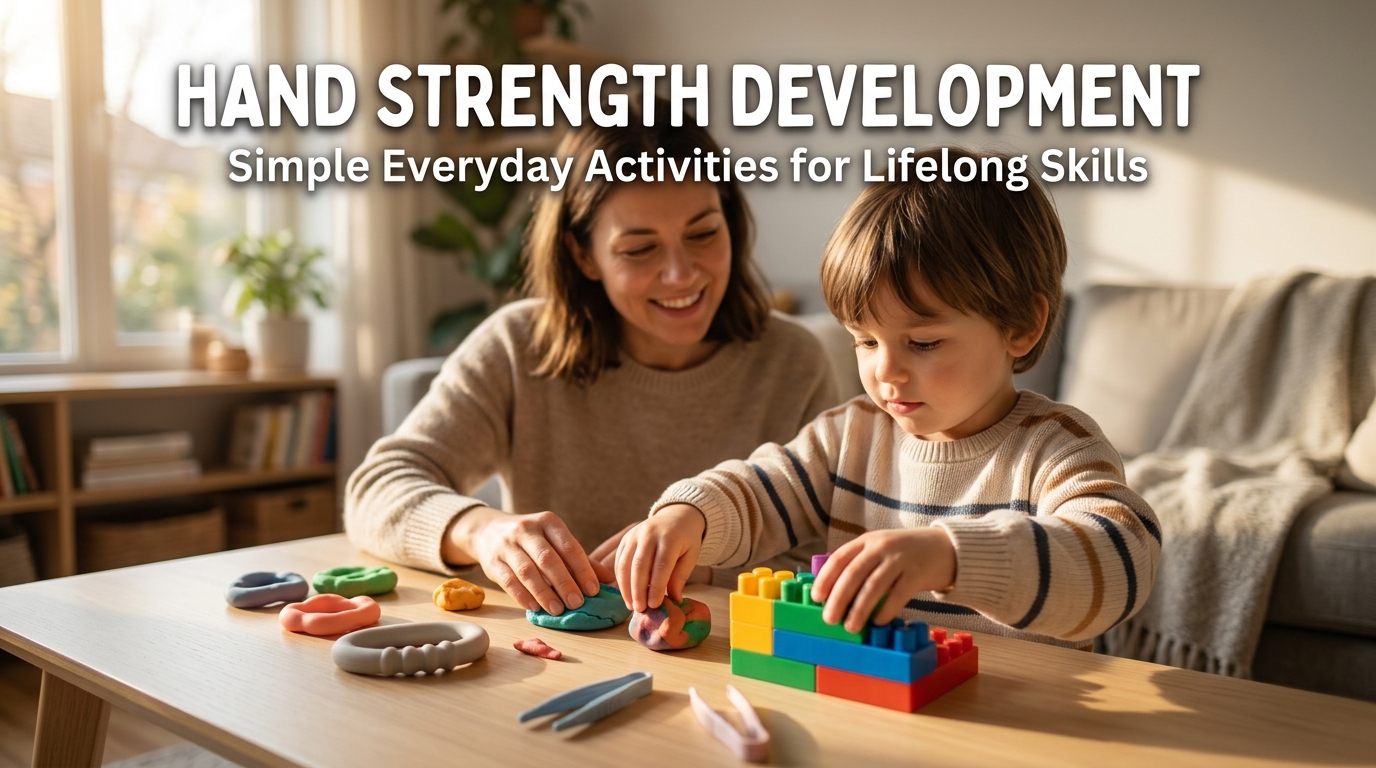
Play is one of the most effective and natural ways to build hand strength. Activities such as building blocks, drawing, sculpting clay, or climbing all involve repeated hand use in a meaningful and enjoyable way.
Confidence and Emotional Well-Being
When children struggle with hand-based tasks, frustration can build quickly. As strength and control improve, tasks feel less overwhelming, allowing confidence to grow through repeated success and reduced effort.
How Hand Strength Develops Over Time
Hand strength develops gradually through consistent use and interaction with everyday environments. It begins in early childhood and continues refining throughout school years and beyond.
Several factors influence this development:
Natural Growth and Muscle Maturation
As children grow, their muscles and coordination systems develop together. Small hand muscles strengthen alongside overall motor development, improving control and stability.
Functional Everyday Use
Daily activities provide natural opportunities for strengthening, such as:
- Picking up and stacking objects
- Feeding oneself with utensils
- Turning pages in books
- Holding crayons, pencils, or markers
- Playing with sand, water, or textured materials
These repeated movements gradually build endurance and improve coordination.
Brain–Hand Connection
Hand strength is not purely physical. It also depends on how the brain processes sensory feedback. Learning how much pressure to apply—whether a light touch or firm grip—is essential for efficient and controlled movement.
Play-Based Learning Experiences
Play offers some of the most effective opportunities for strengthening hands without pressure or stress. Activities involving squeezing, pulling, pinching, or manipulating objects are especially beneficial.
Examples include:
- Construction toys and building sets
- Modeling clay or dough activities
- Stress balls or squeeze toys
- Water play using sponges or spray bottles
- Drawing, coloring, and tracing activities
Core Components of Hand Strength
Hand strength is made up of several interconnected abilities that work together during movement.
Grip Strength
Grip strength allows the hand to hold objects firmly and securely. It is essential for carrying items, using tools, and controlling writing instruments.
Pinch Strength
Pinch strength involves coordination between the thumb and fingers. It is important for tasks such as buttoning clothes, picking up small objects, and turning pages.
Finger Dexterity
Dexterity refers to the ability to move fingers independently and with precision. It plays a major role in writing, typing, and detailed handwork.
Wrist Stability
A stable wrist provides a foundation for controlled hand movement. Without stability, tasks such as writing or cutting can become inefficient and tiring.
Muscular Endurance
Endurance refers to how long hand muscles can perform tasks before becoming fatigued. It is especially important for school activities that require sustained effort.
Benefits of Strong Hand Development
Developing hand strength supports multiple areas of growth and daily functioning.
Improved Writing and School Performance
Stronger hands help children achieve:
- Better pencil grip and control
- More consistent and legible handwriting
- Reduced fatigue during writing tasks
Greater Independence in Daily Life
Children become more capable of managing everyday routines such as dressing, eating, and organizing personal belongings.
 Improved Coordination
Better hand strength supports smoother coordination between visual input and hand movement, improving accuracy and control.
Increased Participation
Children are more likely to engage in classroom activities, crafts, and play when physical tasks feel manageable.
Reduced Frustration and Avoidance
As physical effort decreases, children are more willing to attempt challenging tasks and persist longer during activities.
Common Challenges in Hand Strength Development
Some children may experience delays or difficulties due to various physical, sensory, or environmental factors.
Low Muscle Tone
Low muscle tone can make it difficult to maintain grip strength or sustain hand activity over time.
Limited Hands-On Experience
Children who have fewer opportunities for active play or fine motor activities may develop strength more slowly.
Sensory Sensitivities
Avoidance of certain textures or messy materials can reduce opportunities for natural hand strengthening.
Coordination Difficulties
Even when strength is adequate, some children may struggle to coordinate movements effectively.
Early Fatigue
Some children become tired quickly during writing or craft activities, limiting practice time and slowing development.
Key Factors That Influence Development
Hand strength development is shaped by both individual abilities and environmental opportunities.
Important factors include:
- Regular use of hands in daily routines
- Variety of play-based fine motor activities
- Encouragement and supportive feedback
- Age-appropriate expectations
- Access to hands-on learning materials
- Comfort with different sensory experiences
Progress is typically gradual. Consistency and repetition are more effective than intensive or high-pressure exercises.
Everyday Examples of Hand Strength in Action
Hand strength is present in many routine activities, often without being noticed:
- Opening lunchboxes or food packaging
- Using scissors during classroom tasks
- Squeezing toothpaste onto a toothbrush
- Turning door handles or knobs
- Carrying grocery bags
- Completing puzzles or building sets
- Writing school assignments
Each of these tasks involves a combination of grip, coordination, and endurance working together.
Practical Strategies to Support Development
Hand strength can be improved through simple, everyday activities without specialized tools or structured programs.
Helpful approaches include:
- Encouraging construction play with blocks or modeling materials
- Using tools like tongs, tweezers, or droppers in playful activities
- Providing regular opportunities for drawing, coloring, and tracing
- Involving children in simple household tasks
- Offering sensory-rich play such as sand or water activities
- Keeping activities short, consistent, and enjoyable
The focus should remain on frequent use rather than intensity. Natural repetition is what gradually builds strength and control.
Important!
Hand strength development is a gradual and natural process shaped by everyday experiences, play, and consistent use. When children are given regular opportunities to engage their hands in meaningful activities, strength, coordination, and endurance develop over time.
The goal is not to rush progress or achieve perfection. It is to create an environment where children feel encouraged to explore, practice, and build confidence through daily routines.
With steady support and practical opportunities, hand strength becomes a reliable foundation for independence, learning, and long-term functional success.