Individualized Family Service Plan (IFSP): A Complete Guide to Early Childhood Intervention and Family-Centered Support
Introduction
The first three years of life are a period of rapid and sensitive development. During this stage, children build the foundations for communication, movement, thinking, and social interaction. When delays or developmental concerns appear, timely support can significantly influence long-term outcomes.
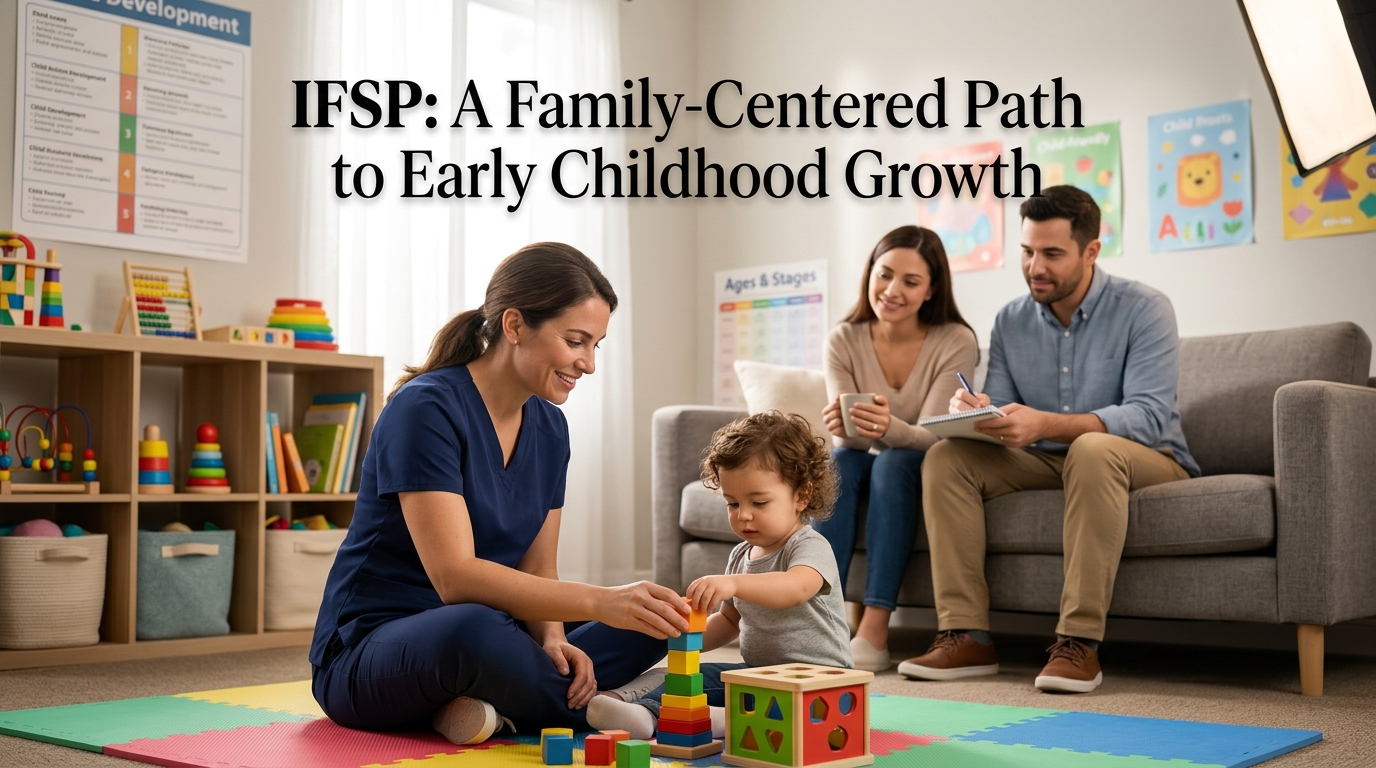
An Individualized Family Service Plan (IFSP) is an early intervention framework designed for infants and toddlers who show developmental delays or are at risk of them. It connects families and professionals in a structured, collaborative process focused on helping the child develop essential skills through everyday routines and natural environments.
Unlike traditional service models that focus primarily on the child in isolation, the IFSP recognizes a simple reality: young children learn best through relationships, daily experiences, and consistent interaction with caregivers.
 What Is an Individualized Family Service Plan (IFSP)?
An IFSP is a legally guided, family-centered early intervention plan created for children from birth to age three. It outlines the supports, services, and strategies needed to help a child develop essential functional skills while actively involving the family in the process.
A complete IFSP typically includes:
- A clear summary of the child’s current developmental abilities
- Family concerns, priorities, and daily-life challenges
- Functional, real-world developmental goals
- Early intervention services such as therapy or developmental support
- Frequency, location, and method of service delivery
- Progress monitoring methods and review timelines
- Transition planning for services beyond age three
Rather than focusing on academic benchmarks, the IFSP emphasizes practical life skills such as communication, feeding, movement, play, and social interaction.
Why the IFSP Matters in Early Childhood Development
Early childhood is a stage where the brain is highly adaptable. Experiences during this time strongly influence how children learn and interact later in life.
Supports development at a critical stage
Early intervention helps address developmental concerns when learning pathways are still forming. The goal is steady progress through consistent support rather than rapid change.
Learning happens in everyday environments
Infants and toddlers learn best in familiar settings—home, daycare, or community spaces. The IFSP uses daily routines like feeding, dressing, and play as natural learning opportunities.
Families play a central role
Parents and caregivers are not observers; they are active partners. They learn strategies that can be used throughout the day, making learning continuous and meaningful.
Reduces future developmental barriers
Early, consistent support can help reduce the need for more intensive services later by addressing challenges during a highly responsive stage of development.
How an IFSP Is Developed
The IFSP process is structured, collaborative, and guided by early intervention professionals working closely with the family.
- Referral and initial screening
Concerns may be identified by parents, pediatricians, or caregivers. A referral is made for developmental screening or evaluation.
- Comprehensive developmental assessment
Specialists evaluate key developmental areas, including:
- Communication and language
- Gross and fine motor skills
- Cognitive development
- Social and emotional skills
- Adaptive (daily living) skills
- Eligibility determination
The evaluation results are reviewed to determine whether the child qualifies for early intervention services.
- IFSP team meeting
The planning team usually includes:
- Parents or primary caregivers
- Early intervention coordinator or service manager
- Speech, occupational, or physical therapists (if needed)
- Developmental specialists
- Plan development
The team creates a personalized plan that includes goals, services, and strategies tailored to both the child’s needs and family routines.
- Ongoing review and updates
The IFSP is reviewed at least every six months, with a full annual evaluation to ensure it remains aligned with the child’s development.
Core Components of an IFSP
A well-designed IFSP is practical, flexible, and grounded in real-life development.
Present levels of development
A clear description of the child’s current abilities across developmental domains.
Family priorities and concerns
Families define what matters most in daily life, such as communication, mobility, feeding, or social engagement.
Functional developmental outcomes
These goals focus on meaningful, everyday skills such as:
- Expressing needs through words, sounds, or gestures
- Engaging in play with caregivers or peers
- Improving feeding and self-care abilities
- Developing balance, movement, and coordination
Early intervention services
Depending on the child’s needs, services may include:
- Speech-language therapy
- Occupational therapy
- Physical therapy
- Developmental intervention
- Parent coaching and family support
Service delivery plan
This section defines:
- Frequency of services
- Location (home, daycare, or community settings)
- Strategies used to support caregivers and daily routines
Transition planning
As the child approaches age three, the IFSP includes preparation for transition into preschool special education or other early learning programs.
Benefits of an IFSP
When consistently implemented, an IFSP can meaningfully support early development.
Strengthens early learning foundations
Early intervention supports critical developmental pathways during a highly responsive stage of brain growth.
Empowers families in daily learning
Parents gain practical tools that can be applied during everyday routines rather than relying only on formal therapy sessions.
Encourages natural, play-based learning
Skills are developed through interaction and play, which are more effective for young children than structured instruction alone.
Supports communication and social growth
Many children show improved interaction, understanding, and expression when support is consistent and integrated into daily life.
Builds caregiver confidence
Families often feel more capable when they understand how to support development in real-world situations.
Challenges in IFSP Implementation
While effective, the IFSP process can face practical challenges.
Limited access to services
In some regions, availability of specialists or early intervention programs may be restricted.
Scheduling and coordination demands
Balancing therapy sessions with family routines can require flexibility and planning.
Emotional adjustment for families
Understanding a developmental delay can be emotionally challenging and may require time to process.
Inconsistent follow-through
Progress depends heavily on how consistently strategies are applied outside formal sessions.
 Key Factors That Influence Success
The effectiveness of an IFSP depends on how well it is integrated into daily life.
Key success factors include:
- Active and consistent family involvement
- Clear communication between professionals and caregivers
- Practical, realistic, and meaningful goals
- Regular monitoring and timely adjustments
- Supportive and structured home routines
- Consistent application of strategies across environments
In early childhood development, consistency is often more impactful than intensity.
Real-Life Applications of an IFSP
Supporting communication development
A toddler with delayed speech receives therapy while parents are coached to reinforce language during play, feeding, and daily interaction.
Supporting motor development
A child working on walking practices balance and coordination through guided play and movement activities at home.
Supporting feeding and self-care
An occupational therapist helps improve chewing and self-feeding while guiding parents on safe texture progression and routines.
Supporting social engagement
Structured play activities encourage eye contact, turn-taking, and shared attention during everyday interactions.
Professional Guidance for Families
Early intervention specialists often emphasize practical and consistent strategies:
- Use daily routines as learning opportunities
- Repeat simple words and gestures naturally
- Integrate learning into play-based activities
- Follow through on recommended strategies at home
- Acknowledge small but meaningful progress
- Stay engaged in planning and decision-making
Development in early childhood is gradual, and consistency supports long-term progress.
Common Mistakes to Avoid
- Relying solely on therapy sessions without home involvement
- Missing learning opportunities in everyday routines
- Expecting rapid or dramatic progress
- Applying strategies inconsistently
- Hesitating to ask questions or seek clarification
Avoiding these issues helps create a more effective and supportive intervention process.
The Future of IFSP and Early Intervention
Early intervention continues to evolve with improved understanding of child development and family-centered practices.
Key emerging trends include:
- Wider use of teletherapy and remote coaching
- More individualized, data-informed goal setting
- Greater caregiver training and involvement
- Digital tools for tracking developmental progress
- Improved coordination between healthcare and early education systems
These advancements are making early intervention more flexible and accessible for families.
Frequently Asked Questions (FAQs)
- Who qualifies for an IFSP?
Children from birth to age three with developmental delays or diagnosed conditions affecting development may qualify after evaluation.
- What age group does an IFSP serve?
It applies to infants and toddlers from birth until their third birthday.
- Is an IFSP only for severe delays?
No. It supports a wide range of developmental needs, from mild to significant.
- Who is involved in creating the IFSP?
Parents, caregivers, early intervention professionals, therapists, and a service coordinator.
- Are parents part of the decision-making process?
Yes. Parents are central to goal setting and planning.
- How often is the IFSP reviewed?
At least every six months, with a full review annually.
- Where are IFSP services provided?
Usually in natural environments such as home, daycare, or community settings.
- What happens after age three?
Children typically transition to preschool special education or other early learning services.
- Are IFSP services always free?
This depends on local systems, but many services are publicly funded or low-cost.
- Can the IFSP be changed?
Yes. It is a flexible plan that is updated as the child’s needs change.
Final Thoughts
An Individualized Family Service Plan is a structured yet adaptable approach to early childhood support. Its effectiveness comes from combining professional expertise with the everyday experiences of family life.
When implemented consistently, it becomes more than a service plan—it becomes a practical framework that supports early development, strengthens family involvement, and builds a foundation for lifelong learning, communication, and independence.