
Introduction to Speech Therapy: A Complete Guide to Communication Development
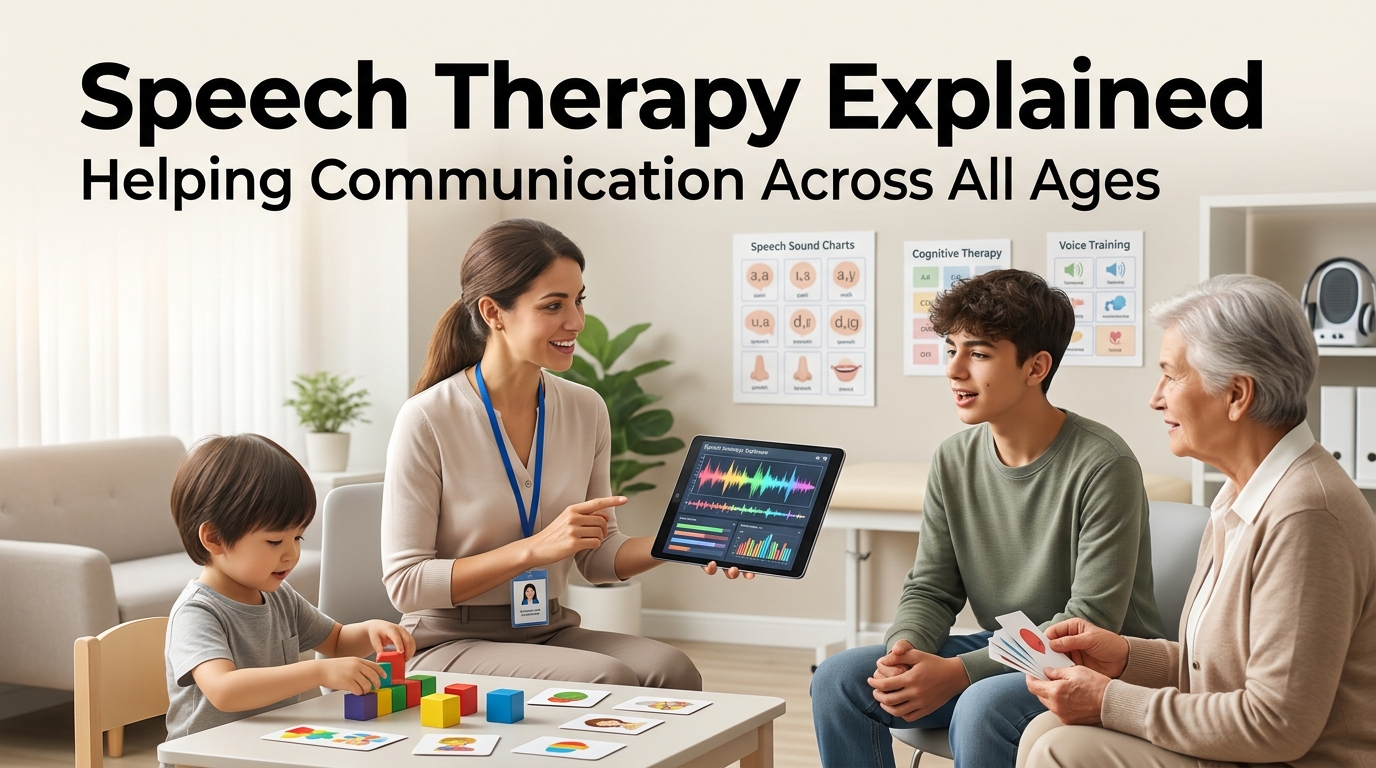
Communication shapes how we learn, build relationships, and navigate daily life. When speech or language skills develop differently or more slowly than expected, it can affect confidence, school performance, and social interaction. Speech therapy offers structured, evidence-based support to help individuals strengthen these essential communication abilities.
It is used across all age groups—from young children with delayed speech to adults recovering from neurological conditions. Beyond pronunciation, speech therapy covers language development, fluency, voice control, and social communication skills.
This guide explains speech therapy in a clear, practical way so parents, educators, and caregivers can better understand how it works and why it matters.
What Is Speech Therapy?
Speech therapy is a clinical and educational intervention designed to improve communication abilities. It is delivered by trained specialists known as speech-language pathologists (SLPs).
The purpose is to help individuals communicate more effectively in everyday life, whether through spoken language, improved understanding, or alternative communication methods when needed.
Speech therapy may focus on:
- Speech clarity and sound production
- Understanding and using language
- Voice quality, pitch, and tone control
- Fluency and stuttering management
- Social communication skills
- Non-verbal and assistive communication systems
Each therapy plan is individualized, based on specific needs rather than a standard approach.
 Why Is Speech Therapy Important?
Communication difficulties can influence nearly every part of a person’s development, from early learning to long-term independence. Speech therapy helps reduce these barriers in a structured way.
Its value is seen in several areas:
- Supports early language development in children
- Improves classroom participation and learning outcomes
- Builds confidence in social situations
- Reduces frustration linked to communication challenges
- Helps individuals express needs, thoughts, and emotions clearly
- Strengthens long-term academic and professional growth
When introduced early and supported consistently, progress is often more stable and meaningful.
How Speech Therapy Works
Speech therapy follows a step-by-step process tailored to each individual.
1. Assessment and Evaluation
A speech-language pathologist begins by assessing communication skills, which may include:
- Speech sound accuracy
- Language comprehension and expression
- Oral motor function
- Voice quality and control
- Social communication behavior
This evaluation helps identify specific strengths and areas needing support.
2. Goal Setting
Based on the assessment, clear and measurable goals are developed. These may focus on improving articulation, expanding vocabulary, building sentences, or enhancing conversation skills.
3. Therapy Sessions
Sessions are interactive and adapted to age and ability. They may include:
- Structured speech exercises
- Language-building activities
- Play-based learning for children
- Reading, storytelling, and conversation practice
- Breathing and voice control techniques
The aim is to make learning engaging while targeting specific communication goals.
4. Home Practice
Progress improves significantly when learning continues at home. Parents and caregivers are often guided to reinforce skills through simple daily activities.
5. Progress Monitoring
Therapists regularly review progress and adjust goals or strategies based on improvement and ongoing needs.
 Conditions That May Require Speech Therapy
Speech therapy supports a wide range of communication challenges, including:
- Delayed speech development
- Articulation difficulties (speech sound errors)
- Stuttering and fluency disorders
- Autism-related communication challenges
- Hearing-related speech difficulties
- Language disorders affecting understanding or expression
- Voice disorders such as strain or hoarseness
- Neurological conditions affecting speech after injury or illness
Each condition requires a tailored approach.
Key Areas of Speech Therapy
| Area | Focus |
|---|---|
| Speech | Sound clarity and pronunciation |
| Language | Vocabulary, grammar, and comprehension |
| Voice | Pitch, tone, and vocal strength |
| Fluency | Smoothness of speech and stuttering management |
| Social Communication | Conversation and interaction skills |
Benefits of Speech Therapy
Speech therapy offers meaningful improvements in both communication and overall development:
- Clearer and more effective speech
- Better academic engagement and performance
- Increased confidence in social settings
- Improved emotional expression
- Stronger listening and comprehension skills
- Greater independence in daily life
For children, these improvements often influence learning behavior and classroom participation as well.
Common Communication Challenges
Individuals who benefit from speech therapy may experience:
- Delayed speech milestones
- Limited vocabulary for age level
- Difficulty forming sentences
- Trouble understanding instructions
- Frustration during communication attempts
- Reduced participation in social interactions
These challenges are not linked to intelligence but to differences in communication development.
Factors That Influence Progress
Progress in speech therapy depends on several elements:
- Age at which therapy begins
- Consistency of sessions
- Family involvement and home practice
- Underlying developmental or medical conditions
- Individual learning pace
- Communication environment at home and school
Improvement is usually gradual and varies from person to person.
Real-Life Applications of Speech Therapy
Speech therapy is used in many practical situations:
1. School Support
Helping children follow instructions and participate in classroom activities.
2. Early Intervention
Supporting toddlers with delayed speech and language development.
3. Autism Support
Building functional communication skills using speech or alternative methods.
4. Rehabilitation After Injury or Stroke
Helping adults regain communication abilities after neurological conditions.
5. Social Communication Training
Improving conversation skills and social interaction confidence.
Expert Tips for Supporting Communication
- Use clear, simple language in daily conversations
- Encourage all forms of communication (speech, gestures, visuals)
- Read and talk regularly with children
- Allow time for responses without rushing
- Use visual supports when needed
- Avoid over-correcting early speech attempts
- Acknowledge and encourage small progress
A supportive communication environment can significantly improve outcomes.
Common Mistakes to Avoid
- Delaying evaluation when concerns appear
- Comparing progress with other children or individuals
- Repeating corrections too frequently
- Ignoring hearing or sensory issues
- Expecting rapid results
- Limiting communication to spoken words only
A patient and informed approach leads to better long-term development.
Future of Speech Therapy
Speech therapy continues to evolve with modern tools and approaches:
- Digital therapy applications
- Online and teletherapy sessions
- AI-assisted communication tools
- Improved early screening methods
- Integration into school-based learning systems
These developments are making therapy more accessible and adaptable to individual needs.
Frequently Asked Questions (FAQs)
1. What is speech therapy?
Speech therapy helps improve communication skills, including speech, language, and voice.
2. Who needs speech therapy?
Children and adults with speech delays, language difficulties, stuttering, or communication challenges.
3. When should therapy start?
As soon as communication concerns or delays are noticed.
4. How long does speech therapy take?
It varies depending on individual needs and progress.
5. Does speech therapy guarantee results?
It improves communication skills, but progress depends on multiple personal factors.
6. Is speech therapy only for children?
No, adults also benefit from therapy after illness or speech-related conditions.
7. Why is family involvement important?
Home support strengthens learning and improves consistency.
8. Can speech therapy help autism?
Yes, it supports communication development in autistic individuals.
9. What happens in a session?
Activities may include exercises, games, speaking practice, and language tasks.
10. Is speech delay always serious?
Not always, but evaluation helps ensure proper development.
11. How do I know if therapy is needed?
If speech or language milestones are delayed, a professional assessment is recommended.
12. Can speech therapy be done at home?
Yes, but it should follow guidance from a qualified professional.
Important:
Speech therapy is a structured, practical, and evidence-based approach to improving communication skills at any age. It supports individuals in developing clearer speech, stronger language abilities, and greater confidence in everyday interaction.
Communication develops differently for everyone. With timely support, consistent practice, and a supportive environment, meaningful progress is not only possible but often long-lasting.
At its core, speech therapy is about more than speech—it is about helping people connect, understand, and express themselves more confidently in daily life.