Understanding Autism in Children: A Complete Guide for Parents, Teachers, and Caregivers
Autism in children is a neurodevelopmental condition that influences how a child communicates, behaves, learns, and interacts with the world around them. It is not a single, fixed pattern. Instead, it presents differently in every child—some may need ongoing support in daily life, while others develop strong academic, creative, or technical abilities and grow toward independence.
For many families, the early signs of autism can feel confusing or overwhelming. Questions often arise about speech delays, social differences, or unusual behaviors, and it is not always easy to know what is typical development and what needs further attention. This guide is designed to offer clear, balanced, and practical information so parents, teachers, and caregivers can understand autism in children and respond with confidence.
 What Is Autism in Children?
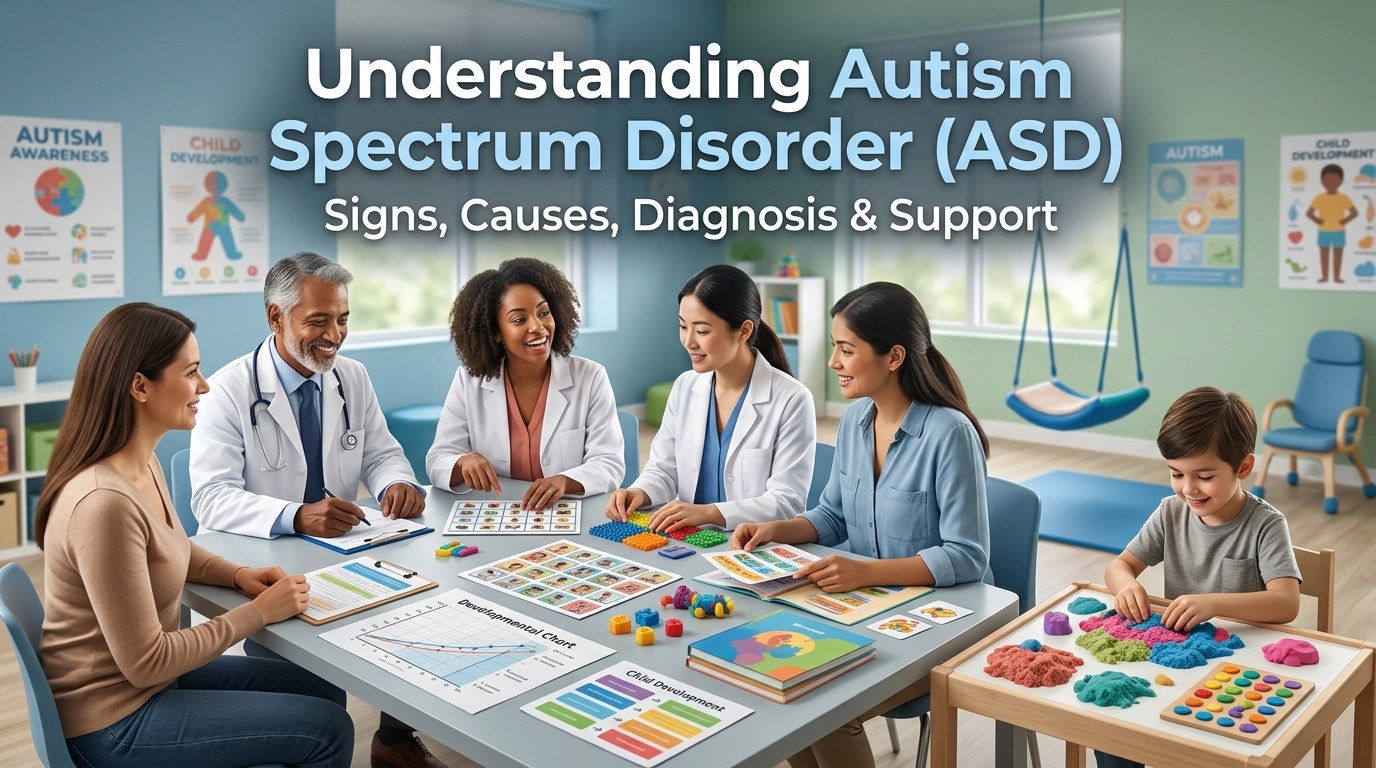
Autism Spectrum Disorder (ASD) is a developmental condition that begins early in life and affects how the brain processes communication, social interaction, behavior, and sensory information.
The word “spectrum” is important. It reflects the fact that autism does not look the same in every child. One child may struggle with speech but excel in visual thinking, while another may speak fluently but find social situations or changes in routine challenging.
Autism is not an illness, infection, or result of parenting style. It is a natural variation in neurodevelopment that influences how a child experiences and responds to their environment.
Common areas affected include:
- Speech and language development
- Social interaction and understanding social cues
- Sensory processing (sound, light, texture, smell)
- Behavior patterns and routines
- Attention span and learning style
Understanding this helps shift the focus from “fixing a problem” to supporting a child’s individual developmental profile.
Why Understanding Autism in Children Matters
Early understanding can make a meaningful difference in a child’s development and in the family’s overall experience.
It helps to:
- Identify developmental differences earlier
- Access therapy and educational support sooner
- Reduce stress and uncertainty for families
- Improve learning experiences in school
- Strengthen communication between parents and professionals
- Promote inclusion and acceptance
When autism is understood early, support strategies can be introduced at the right time, improving communication, confidence, and daily functioning.
How Autism Affects Children: A Complete Overview
Autism generally influences several key areas of development. While every child is different, these areas are commonly affected:
- Communication Differences
Children with autism may show a wide range of communication styles.
Some may:
- Speak later than expected
- Use limited words or short sentences
- Repeat words or phrases (echolalia)
- Struggle to start or continue conversations
- Prefer gestures, visuals, or non-verbal communication
Others may have strong verbal skills but still find it difficult to interpret tone, sarcasm, or social meaning in conversations.
Communication differences are not related to intelligence—they reflect differences in how language and social meaning are processed.
- Social Interaction Differences
Social interaction may feel different for autistic children.
They might:
- Prefer independent play
- Struggle to understand social rules
- Find friendships difficult to build or maintain
- Show limited or inconsistent eye contact
- Not always respond immediately when their name is called
These behaviors are often misunderstood. Many autistic children do want connection but may express it in less typical ways.
- Behavior Patterns and Routine Needs
Structure and predictability often help autistic children feel secure.
Common patterns include:
- Strong preference for routines
- Distress when plans change suddenly
- Repetitive movements (such as rocking or hand flapping)
- Deep focus on specific interests
These behaviors are often a way of managing stress, uncertainty, or sensory overload—not misbehavior.
- Sensory Processing Differences
Sensory experiences can be either intensified or reduced in autistic children.
Some children may:
- Cover their ears in noisy environments
- Avoid certain fabrics, foods, or textures
- Feel overwhelmed by bright lights or crowded spaces
- Seek movement, spinning, or swinging
- Prefer deep pressure or calming sensory input
Sensory responses can change depending on the child’s mood, environment, or level of fatigue.
Key Characteristics of Autism in Children
| Area | Common Signs |
| Communication | Speech delay, limited conversation, repetition |
| Social Interaction | Difficulty with friendships, reduced eye contact |
| Behavior | Repetitive actions, strong routines |
| Sensory Response | Over- or under-sensitivity to stimuli |
| Learning Style | Strong focus on specific interests |
 Strengths Often Seen in Autistic Children
Autism is not only about challenges. Many children also show valuable strengths, such as:
- Strong focus and attention to detail
- Excellent memory in areas of interest
- Honest and direct communication style
- Creative and original thinking
- Strong visual learning abilities
- Deep knowledge of specific topics
Recognizing these strengths helps build confidence and supports long-term development.
Challenges Some Children May Experience
Some autistic children may need additional support in certain areas, including:
- Speech and language development
- Emotional regulation
- Social skill development
- Coping with changes in routine
- Sensory overload in busy environments
- Structured classroom participation
With the right support, many of these challenges become more manageable over time.
Key Considerations for Parents and Caregivers
- Every child develops at their own pace
- Early support can improve communication and learning
- Predictable routines often reduce anxiety
- Visual tools can improve understanding
- Progress may be gradual and uneven
- Professional assessment provides clarity and direction
Consistency and patience often make a greater difference than pressure or comparison.
Real-Life Examples
Example 1: Communication Delay
A child understands instructions but uses fewer spoken words than peers. With speech therapy and structured support, communication gradually improves.
Example 2: Sensory Sensitivity
A child becomes overwhelmed in noisy, crowded environments but feels calm and focused in quiet spaces.
Example 3: Intense Interests
A child develops a strong fascination with trains, numbers, or animals and learns detailed information beyond typical expectations for their age.
These examples show how autism can shape everyday experiences in unique ways.
Practical Tips for Supporting Children with Autism
- Use simple, clear, and direct language
- Keep daily routines consistent
- Prepare the child for changes in advance
- Use visual schedules or picture-based supports
- Encourage communication in any form
- Celebrate small achievements
- Work closely with teachers and therapists
- Create calm and structured environments
Small, consistent adjustments can significantly improve comfort and learning.
Common Mistakes to Avoid
- Assuming all autistic children are the same
- Ignoring early developmental concerns
- Comparing children with peers or siblings
- Forcing a single communication style
- Overlooking sensory needs
- Relying on myths or unverified information
- Expecting immediate progress
Understanding autism requires flexibility and an individualized approach.
Future Direction in Autism Understanding
Support systems for autistic children continue to improve. Modern approaches increasingly focus on:
- Earlier developmental screening
- Personalized education strategies
- Improved speech and occupational therapies
- Inclusive classroom environments
- Stronger family support systems
The focus is shifting toward recognizing each child’s individuality and creating environments where they can grow with dignity and confidence.
Frequently Asked Questions (FAQs)
- What is autism in children?
It is a developmental condition that affects communication, behavior, and social interaction.
- When can autism first be noticed?
Early signs may appear between 18–24 months, though diagnosis can happen later.
- Can autism be cured?
No. Autism is lifelong, but support can improve skills and independence.
- What causes autism?
It is mainly linked to genetic and developmental factors. No single cause is known.
- Do all autistic children have speech delays?
No. Some speak fluently, while others may have delayed speech.
- Can autistic children attend regular schools?
Yes, many do with appropriate support and accommodations.
- Is autism caused by parenting?
No. Parenting style does not cause autism.
- How is autism diagnosed?
Through professional developmental assessments by qualified specialists.
- Do autistic children feel emotions?
Yes. They experience emotions fully but may express them differently.
- Does early intervention help?
Yes. Early support can significantly improve communication and learning outcomes.
Final Thoughts
Understanding autism in children is about recognizing differences rather than labeling limitations. Each child has a unique way of learning, communicating, and experiencing the world. When parents and educators focus on both strengths and needs, children receive the support they require to grow with confidence.
With early understanding, structured support, and a compassionate approach, autistic children can develop meaningful skills and move toward a future that reflects their abilities and potential.