Functional Behavior Assessment (FBA): A Practical, Evidence-Based Guide to Understanding Behavior
Human behavior rarely appears without context. In schools, therapy rooms, workplaces, and homes, what is often labeled as “challenging behavior” usually reflects an unmet need, a skill deficit, or an attempt to communicate something that words cannot express effectively.
Functional Behavior Assessment (FBA) provides a structured way to understand that reality. Rather than focusing on simply reducing unwanted behaviors, it helps professionals identify why a behavior occurs and what purpose it serves for the individual. This shift from reaction to understanding is what makes FBA a cornerstone of modern behavioral practice.
This guide explains FBA in a practical, real-world way, focusing on how it is conducted, why it matters, and how it leads to meaningful and sustainable behavior change.
What Is Functional Behavior Assessment (FBA)?
Functional Behavior Assessment is a systematic process used to determine the underlying reason or purpose behind a specific behavior. Every behavior serves a function, even when it appears disruptive or unproductive.
At its core, FBA answers a simple but powerful question:
What need is this behavior meeting for the individual?
That need may involve:
- Gaining attention or social interaction
- Avoiding or escaping tasks or situations
- Accessing preferred items or activities
- Regulating sensory input or emotional states
FBA is widely applied in:
- Special education and inclusive classrooms
- Applied Behavior Analysis (ABA) services
- Clinical psychology and counseling
- Autism and developmental support programs
- School-based behavior support systems
- Family and home behavior planning
The emphasis is always on understanding behavior in context—not labeling individuals or making assumptions.
 Why Functional Behavior Assessment Matters
Behavior becomes difficult to manage when its cause is misunderstood. Without clarity, interventions often rely on trial and error, which can lead to frustration for both professionals and individuals.
FBA helps replace uncertainty with structured understanding. It allows teams to:
- Identify the real function behind behavior
- Design more targeted and effective interventions
- Improve academic, social, and emotional outcomes
- Reduce escalation of disruptive behavior
- Support communication development and emotional regulation
- Create consistency across environments and caregivers
Instead of focusing on stopping behavior, FBA shifts attention toward meeting underlying needs in more appropriate ways.
The Core Principle: Every Behavior Serves a Purpose
A foundational idea in FBA is that behavior is functional. It is not random; it serves a role for the individual, even if that role is not immediately obvious.
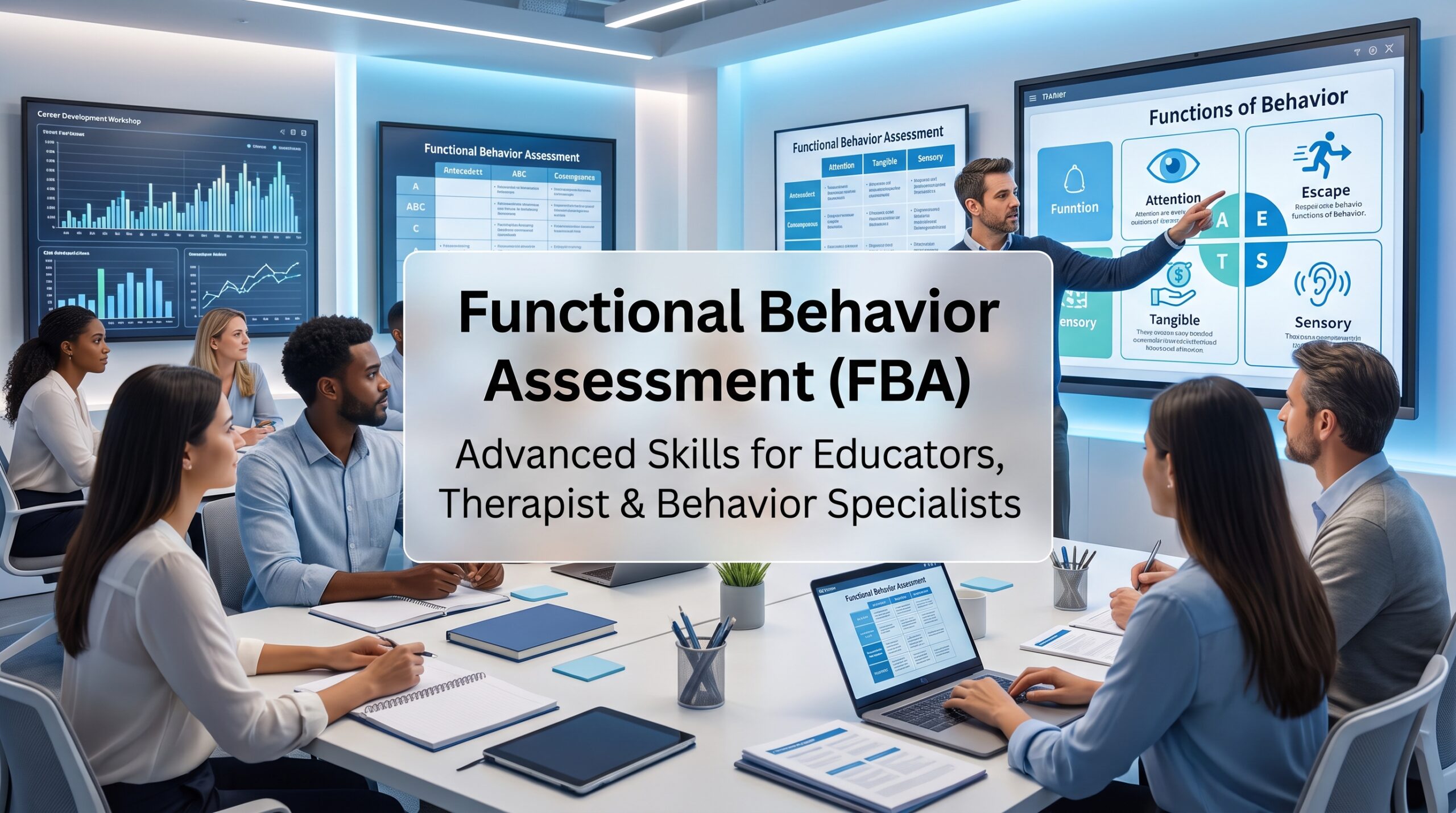
Most behaviors generally fall into four functional categories:
- Attention-Seeking Behavior
The individual engages in behavior to gain attention, interaction, or response from others.
- Escape or Avoidance Behavior
The behavior helps avoid tasks, demands, or uncomfortable situations.
- Tangible-Driven Behavior
The behavior is used to gain access to objects, activities, or privileges.
- Sensory or Internal Regulation Behavior
The behavior provides sensory input or helps regulate internal emotional or physical states.
Understanding these categories helps professionals interpret behavior more accurately and avoid surface-level conclusions.
Step-by-Step Process of Functional Behavior Assessment
FBA is not a single test. It is a structured, multi-step process that combines observation, data collection, and analysis.
- Defining the Behavior Clearly
Accurate assessment begins with precise definitions. Vague descriptions lead to inconsistent data.
Instead of:
- “The student is disruptive”
A measurable definition would be:
- “The student speaks out of turn during independent work for more than 15 seconds without permission”
This clarity ensures that all observers are recording the same behavior in the same way.
- Gathering Information from Multiple Sources
A strong FBA relies on a combination of data sources, including:
- Direct observation in natural settings
- Interviews with teachers, parents, or caregivers
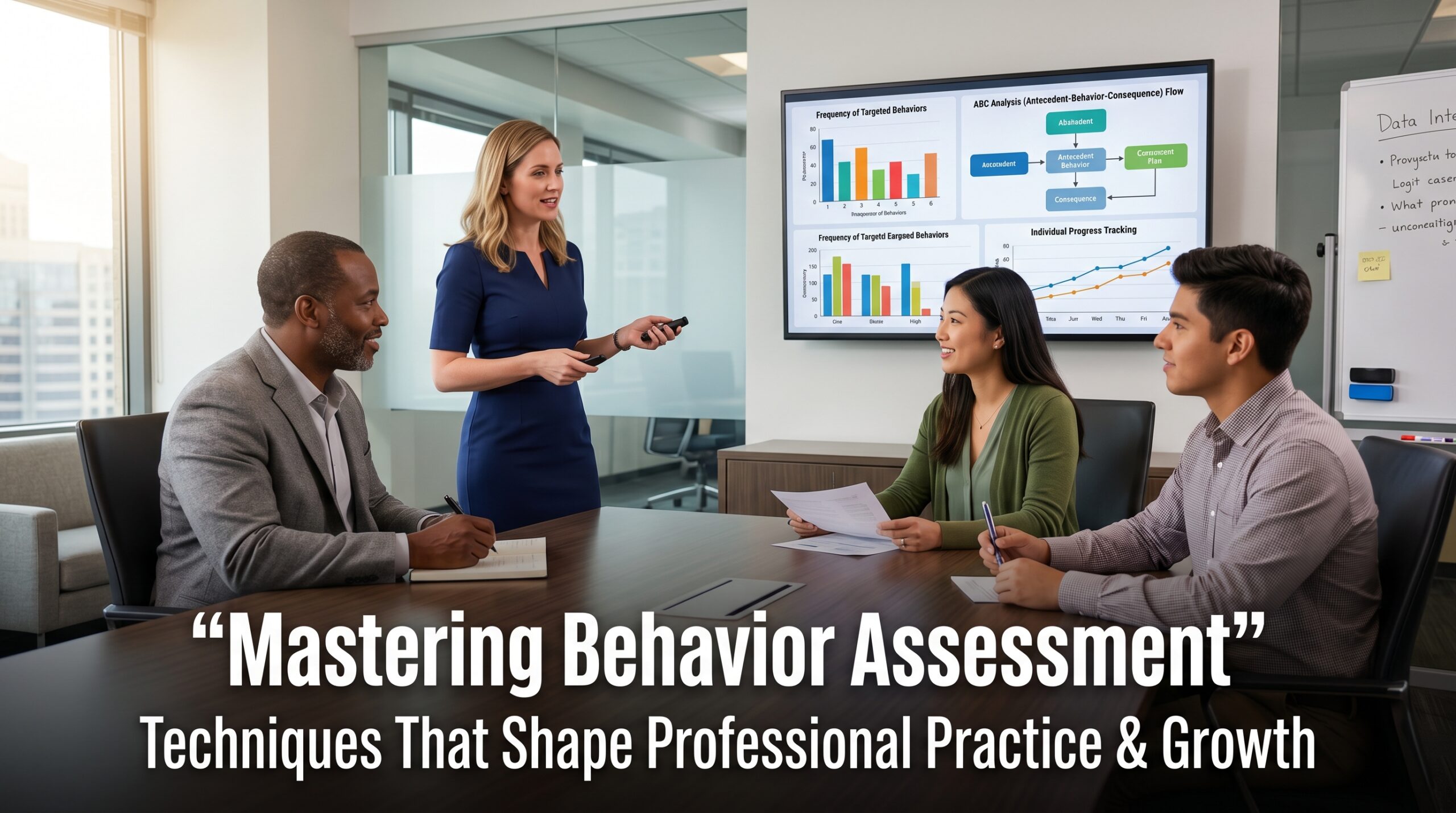
- ABC (Antecedent–Behavior–Consequence) recordings
- Behavior rating scales and structured checklists
- Academic performance and environmental records
Using multiple sources reduces bias and provides a more complete behavioral picture.
- Identifying Patterns in Behavior
Once data is collected, the focus shifts to identifying patterns.
Professionals look for answers such as:
- When does the behavior most frequently occur?
- What situations or demands precede it?
- What happens immediately after the behavior?
- Does the behavior vary across settings or people?
These patterns often reveal consistent triggers and outcomes that suggest the function of the behavior.
- Developing a Functional Hypothesis
Based on identified patterns, professionals develop a working hypothesis about why the behavior occurs.
For example:
“The student engages in task refusal when presented with reading assignments that exceed their current skill level.”
This hypothesis is not a final conclusion—it guides further planning and intervention design.
- Designing a Behavior Intervention Plan
Once the likely function is identified, intervention strategies are developed to address it appropriately.
Common approaches include:
- Teaching replacement behaviors (e.g., communication skills)
- Adjusting task difficulty or structure
- Modifying environmental triggers
- Reinforcing appropriate alternative behaviors
The goal is not suppression, but replacement—helping individuals meet their needs in more functional ways.
Methods Used in Functional Behavior Assessment
Direct Methods
These involve real-time observation and measurable data collection:
- Structured classroom or clinical observation
- Frequency, duration, and interval recording
- Behavior tracking tools and logs
Indirect Methods
These rely on information from people who know the individual well:
- Interviews with caregivers and educators
- Behavior questionnaires and rating scales
- Historical behavior reports
 Functional Analysis (Advanced Application)
In more complex cases, structured environmental conditions may be used to test behavioral responses. This approach requires specialized training and careful ethical consideration.
Characteristics of a High-Quality FBA
An effective Functional Behavior Assessment is:
- Based on observable, measurable behavior
- Supported by multiple and reliable data sources
- Consistent across different settings and observers
- Focused on environmental influences, not assumptions
- Tailored to the individual rather than generalized
These qualities ensure that conclusions are both reliable and actionable.
Benefits of Functional Behavior Assessment
FBA offers practical, real-world advantages:
- Clear understanding of behavioral causes
- More effective and targeted interventions
- Reduced reliance on trial-and-error strategies
- Improved collaboration between professionals and families
- Better long-term behavioral outcomes
- More proactive and preventive support approaches
Its strength lies in linking assessment directly to practical solutions.
Limitations and Challenges
Despite its value, FBA is not without challenges:
- Requires time and consistent data collection
- Depends on accurate and objective observation
- Behavior may differ across environments and people
- Some behaviors serve multiple functions simultaneously
- Interpretation errors can affect intervention quality
These limitations highlight the importance of professional judgment and ongoing review.
Factors That Influence Assessment Accuracy
Several contextual variables must always be considered:
- Home, school, or clinical environment
- Communication abilities of the individual
- Age and developmental stage
- Cultural expectations and norms
- Medical, emotional, or neurological conditions
Ignoring these factors can lead to incomplete or misleading interpretations.
Real-World Applications of FBA
Education
Teachers use FBA to understand behaviors that interfere with learning and participation.
Example: A student avoids math tasks. Assessment reveals difficulty with foundational skills, leading to instructional adjustments and support strategies.
Autism and Developmental Support
FBA is widely used to identify communication-based behaviors and replace them with functional communication alternatives.
Clinical Settings
Therapists use FBA to understand behaviors linked to anxiety, trauma, or emotional regulation difficulties.
Home Environment
Parents often use simplified tracking methods to identify triggers behind tantrums, refusal behaviors, or emotional outbursts.
Expert Recommendations for Effective Practice
Professionals emphasize several best practices:
- Use clear and objective behavior definitions
- Collect data across multiple environments and time periods
- Rely on more than one assessment method
- Focus on behavioral function, not surface appearance
- Maintain consistency across caregivers and professionals
Consistency and clarity often determine the success of intervention planning.
Common Mistakes in Functional Behavior Assessment
- Making assumptions without sufficient data
- Using vague or subjective behavior descriptions
- Ignoring environmental influences
- Overlooking positive or adaptive behaviors
- Failing to update findings as behavior changes
Avoiding these mistakes significantly improves assessment reliability.
Future Direction of Functional Behavior Assessment
FBA continues to evolve with advancements in behavioral science and technology:
- Digital platforms for real-time behavior tracking
- AI-assisted pattern recognition and analysis
- Mobile tools for continuous data collection
- Telehealth-based behavioral assessments
- Wearable devices for behavioral indicators
- Predictive modeling for early intervention planning
These innovations are making behavior assessment more precise, accessible, and responsive.
Frequently Asked Questions (FAQs)
- What is Functional Behavior Assessment?
It is a structured process used to understand the purpose behind a behavior.
- Why is FBA important in schools?
It helps identify behavior causes and design effective support strategies.
- What are the main functions of behavior?
Attention, escape, access to tangibles, and sensory regulation.
- Can FBA be used with adults?
Yes, it applies to individuals of all ages.
- How is FBA different from ABC analysis?
ABC analysis collects data, while FBA is a complete assessment process that includes interpretation and planning.
- Who conducts FBA?
Trained educators, psychologists, behavior analysts, and clinical professionals.
- Is direct observation always required?
Yes, it is typically combined with indirect data sources.
- Can FBA reduce challenging behavior?
Yes, by identifying and addressing its underlying function.
- Is FBA scientifically supported?
Yes, it is widely used in behavioral and educational sciences.
- What follows an FBA?
A behavior intervention plan designed around the identified function.
- Can families participate in FBA?
Yes, caregiver input is often essential for accurate understanding.
- Is FBA a one-time process?
No, it should be revisited as behavior and environments change.
Final Perspective
Functional Behavior Assessment is a structured and practical approach to understanding behavior beyond surface appearance. By focusing on the purpose behind actions, it enables more thoughtful, individualized, and effective support strategies.
When implemented with consistency and accurate data, FBA becomes a reliable foundation for improving learning, communication, and behavioral development across educational, clinical, and home environments.