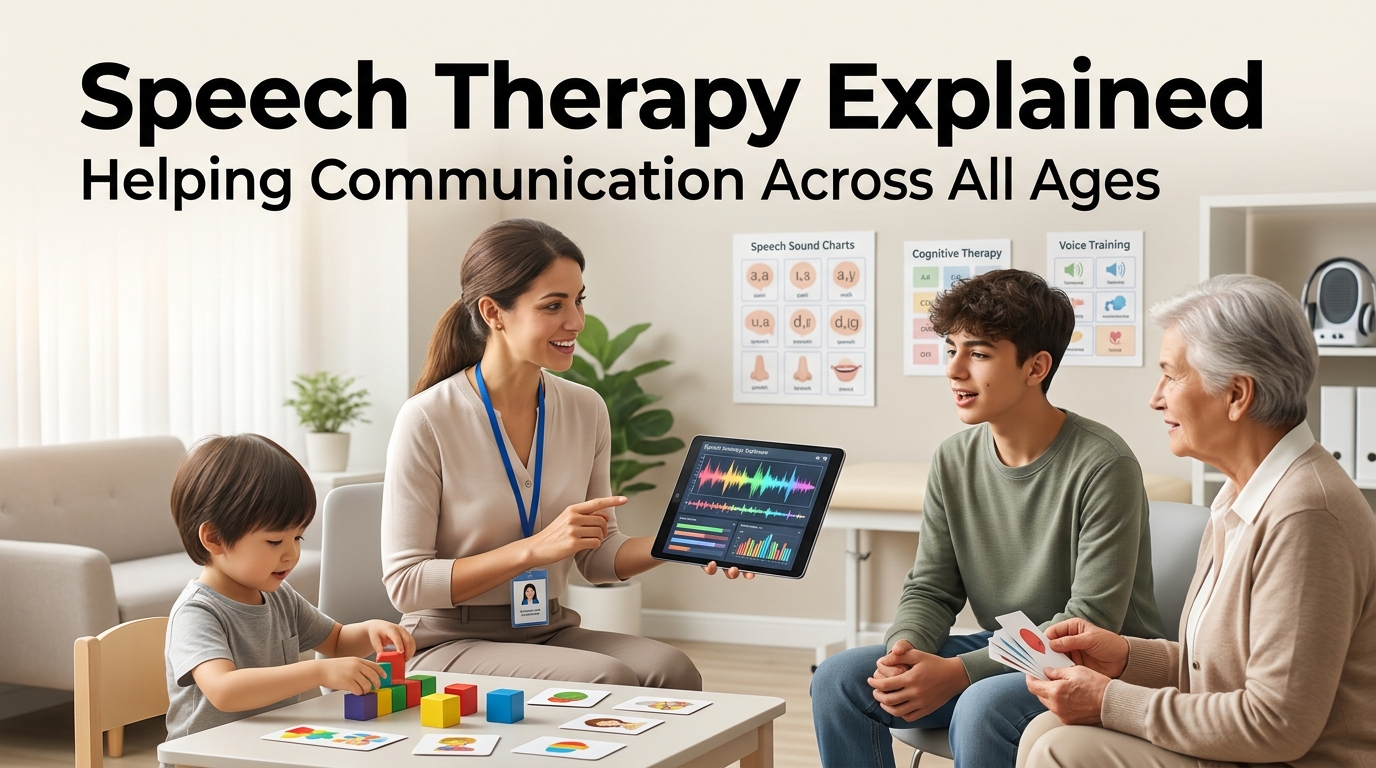
Communication Development: A Comprehensive Guide to Language, Interaction, and Social Growth

Communication is one of the most essential human abilities, shaping how individuals learn, think, and build relationships throughout life. From a baby’s first cry to meaningful adult conversations, communication skills develop step by step and influence emotional, social, and academic growth.
When communication develops smoothly, individuals can express thoughts clearly and understand others with confidence. When delays or difficulties occur, they may affect learning, behavior, and social participation. Recognizing how communication develops helps families, educators, and professionals provide timely and effective support.
This guide presents a clear, practical understanding of communication development and how it evolves from infancy to adulthood.
What Is Communication Development?
Communication development is the ongoing process through which a person learns to understand and express meaning using language, speech, gestures, and social interaction.
It extends beyond speaking. It includes all ways people share and interpret information, such as:
- Understanding spoken and written language
- Expressing thoughts through words and sentences
- Using facial expressions, gestures, and body language
- Interpreting tone, emotion, and context
- Engaging in conversations and group interaction
- Responding appropriately in social situations
Communication begins at birth and continues developing throughout life, becoming more complex as cognitive and social abilities mature.
 Why Communication Development Matters
Strong communication skills shape nearly every area of life, from education to emotional well-being and career success.
It supports:
- Early cognitive and language development
- Academic learning and classroom participation
- Emotional expression and self-regulation
- Healthy relationships with family and peers
- Reduced frustration caused by misunderstandings
- Confidence in social environments
When communication is well developed, it becomes a foundation for lifelong learning and meaningful social connection.
Stages of Communication Development
Communication develops gradually through predictable stages, each building on earlier skills.
1. Early Communication (Birth to 2 Years)
At this stage, communication is mostly non-verbal and instinctive.
Common milestones include:
- Crying to express needs and discomfort
- Responding to voices and familiar sounds
- Babbling and experimenting with sounds
- Recognizing familiar people
- Using gestures such as pointing or waving
These early interactions lay the foundation for later speech and language development.
2. Early Language Development (2 to 4 Years)
Language begins to grow rapidly during toddler years.
Children typically:
- Learn and use single words
- Combine two to three words into short phrases
- Follow simple instructions
- Name familiar objects and people
- Start asking basic questions
Vocabulary expands quickly during this stage, especially in environments rich in interaction.
3. Expanding Language Skills (4 to 7 Years)
Communication becomes more structured and expressive.
Children begin to:
- Form longer and clearer sentences
- Share short stories or describe experiences
- Understand basic grammar rules
- Engage in simple conversations
- Ask and answer more detailed questions
Social communication also strengthens as peer interaction increases.
4. Advanced Communication (7 Years and Beyond)
At this stage, communication becomes flexible and context-aware.
Skills include:
- Understanding abstract ideas and meanings
- Adjusting tone based on situation
- Participating in group discussions
- Understanding humor and figurative language
- Reading social cues more accurately
These abilities continue refining through adolescence and adulthood.
Key Components of Communication Development
| Area | Description |
|---|---|
| Receptive Language | Understanding spoken or written information |
| Expressive Language | Using words and sentences to communicate ideas |
| Non-verbal Communication | Gestures, facial expressions, and body language |
| Social Communication | Conversation skills, turn-taking, and interaction |
| Cognitive Communication | Reasoning, thinking, and understanding context |
 Benefits of Strong Communication Skills
Well-developed communication skills create long-term personal and professional advantages.
Key benefits include:
- Improved academic performance
- Stronger social relationships
- Better emotional awareness and regulation
- Greater confidence in expressing ideas
- Enhanced problem-solving skills
- Increased independence in daily life
These skills also play a significant role in career development and leadership.
Communication Development Challenges
Some individuals may experience delays or difficulties, such as:
- Late speech development
- Limited vocabulary for age level
- Difficulty forming sentences
- Trouble understanding instructions
- Weak social interaction skills
- Frustration during communication attempts
These challenges reflect developmental differences and do not determine intelligence or potential.
 Factors That Influence Communication Development
Several factors shape how communication skills develop over time:
- Exposure to language at home
- Interaction with caregivers and peers
- Hearing ability and sensory processing
- Cognitive development and learning environment
- Emotional and social experiences
- Educational support and stimulation
A consistent, language-rich environment strongly supports healthy development.
Real-Life Examples
Early communication:
A toddler points at water instead of using the word.
Developing communication:
A child says short phrases like “want juice” or “go park.”
Advanced communication:
A school-aged child explains events and participates in conversations.
These examples show how communication gradually becomes more structured and expressive.
Practical Strategies to Support Communication Growth
Daily interaction plays a powerful role in communication development:
- Speak clearly using simple, natural sentences
- Read books together regularly
- Encourage questions and curiosity
- Allow time for responses without pressure
- Use visual support when helpful
- Engage in play-based interaction
- Focus on encouragement rather than constant correction
Consistency and patience matter more than intensity.
Common Mistakes to Avoid
- Comparing one child’s progress to another
- Ignoring early signs of delay
- Repeatedly correcting every speech error
- Reducing natural conversation opportunities
- Assuming late speech always indicates a major issue
- Limiting communication to spoken words only
A supportive environment encourages confidence and natural development.
Future of Communication Support
Communication development support continues to evolve with modern tools and approaches:
- Digital language learning platforms
- AI-assisted communication tools
- Teletherapy and remote support systems
- Early screening and developmental tracking tools
- Inclusive education strategies
These developments are improving access to communication support and making interventions more personalized.
Frequently Asked Questions (FAQs)
1. What is communication development?
It is the process of learning to understand and express thoughts, ideas, and emotions.
2. When does communication development start?
It begins at birth and continues throughout life.
3. What are the main types of communication?
Verbal, non-verbal, receptive, expressive, and social communication.
4. Why is communication development important?
It supports learning, relationships, and emotional well-being.
5. What affects communication development?
Environment, interaction, hearing, and cognitive growth.
6. Can communication delays improve?
Yes, many delays improve with consistent support and practice.
7. How do children learn communication skills?
Through listening, interaction, play, and everyday conversation.
8. What are early signs of delay?
Limited speech, weak response to name, or difficulty understanding instructions.
9. Can adults improve communication skills?
Yes, communication skills can be developed at any age.
10. Is speech the only form of communication?
No, communication also includes gestures, expressions, and context understanding.
11. How can parents support communication development?
By talking regularly, reading together, and encouraging interaction.
12. When should professional help be considered?
If communication delays persist or affect daily life and learning.
Final Thoughts
Communication development is a lifelong process that shapes how people connect, learn, and express themselves. It begins early in life and continues to evolve through experience, interaction, and learning.
Every individual develops at their own pace. Some progress quickly, while others need additional support and time. What matters most is providing a responsive, encouraging environment that supports expression without pressure.
With consistency, patience, and meaningful interaction, communication skills can develop strongly—supporting confidence, relationships, and lifelong learning.