
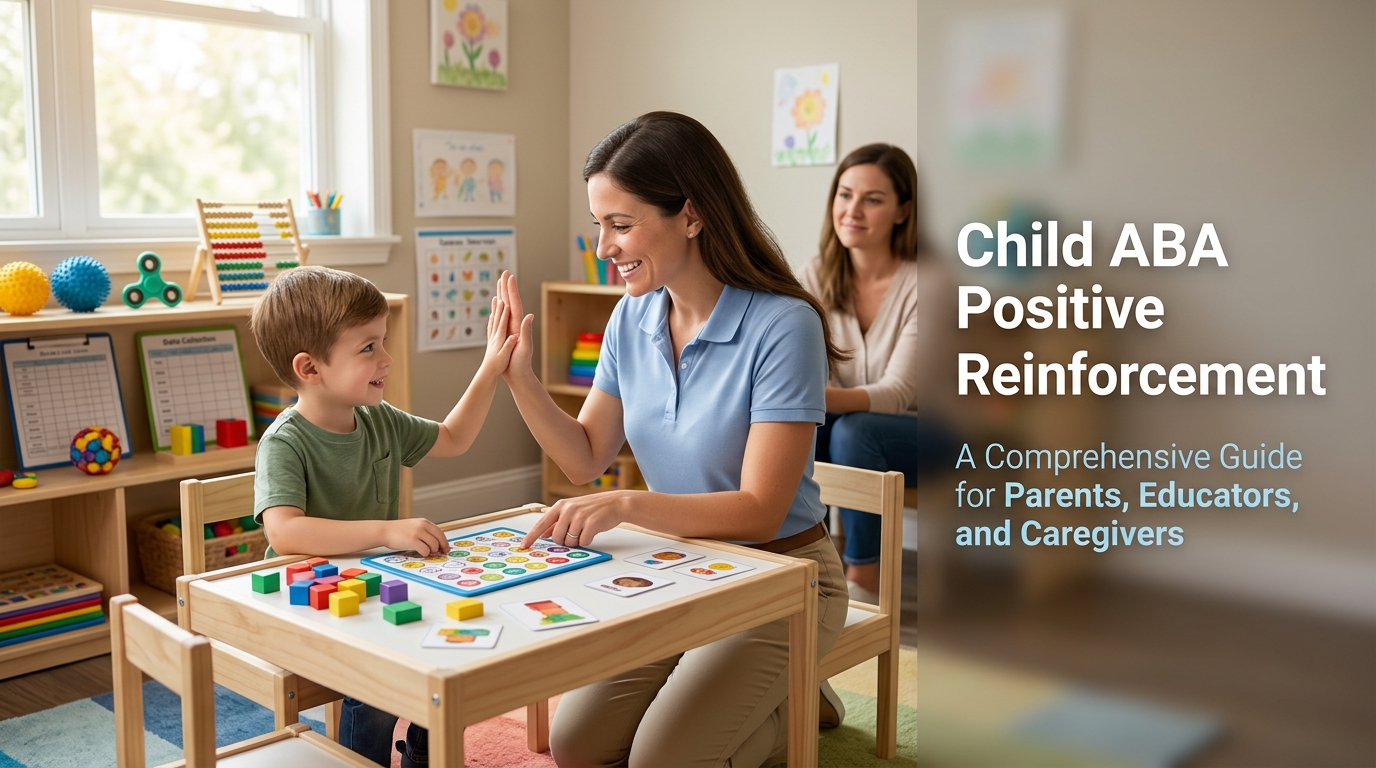
Child ABA Positive Reinforcement: A Comprehensive Guide for Parents, Educators, and Caregivers
Introduction
Helping children learn new skills and develop positive behaviors often requires more than simply telling them what to do. Children learn best when they experience clear, meaningful outcomes from their actions. This principle lies at the heart of positive reinforcement, one of the most widely used and effective strategies in Applied Behavior Analysis (ABA).
Positive reinforcement focuses on recognizing and rewarding desired behaviors so they are more likely to occur again. Rather than concentrating on mistakes or misbehavior, it emphasizes success, encouragement, and skill development. This approach can be particularly beneficial for children learning communication, social skills, self-care routines, academic behaviors, and emotional regulation.
When implemented thoughtfully, positive reinforcement can transform everyday learning opportunities into positive experiences that build confidence, independence, and lasting behavioral change.
What Is Child ABA Positive Reinforcement?
Positive reinforcement is a behavioral strategy used in ABA that involves providing a meaningful reward or positive outcome immediately after a desired behavior occurs. The purpose is to increase the likelihood that the behavior will be repeated in the future.
The process can be summarized as:
Desired Behavior → Positive Outcome → Increased Likelihood of Repetition
For example:
- A child asks for a snack using appropriate words.
- The caregiver responds promptly and positively.
- The child learns that using words is an effective way to communicate.
The key factor is that the consequence must be rewarding from the child’s perspective. What serves as reinforcement for one child may have little value to another.

Common Reinforcers Used in ABA
| Type of Reinforcer | Examples |
|---|---|
| Social Reinforcers | Praise, smiles, encouragement, high-fives |
| Tangible Reinforcers | Stickers, small toys, collectibles |
| Activity Reinforcers | Extra playtime, favorite games, outdoor activities |
| Token Reinforcers | Points, stars, tokens, reward charts |
| Natural Reinforcers | Receiving a desired item after requesting it appropriately |
Because children’s interests and motivations evolve, effective reinforcement plans are regularly adjusted to maintain effectiveness.
Why Positive Reinforcement Matters
Positive reinforcement is much more than a reward system. It is a teaching strategy that helps children understand which behaviors lead to positive outcomes.
Its value extends beyond therapy sessions and can be applied at home, in school, and throughout daily life.
Key benefits include:
- Encouraging skill development in a supportive way
- Increasing motivation to learn
- Strengthening communication abilities
- Promoting independence
- Improving social interactions
- Building confidence and self-esteem
- Supporting emotional development
- Reducing reliance on correction and punishment
Children who experience consistent positive reinforcement often develop stronger learning habits because they associate effort and achievement with positive experiences.

Understanding How Positive Reinforcement Works
ABA is based on the principle that behavior is influenced by consequences. When a child experiences something positive immediately after performing a behavior, the behavior becomes more likely to occur again.
The Reinforcement Process
| Step | What Happens |
|---|---|
| Behavior | The child performs a target behavior |
| Reinforcement | A meaningful reward or positive outcome follows |
| Learning | The child connects the behavior with the positive outcome |
| Repetition | The behavior becomes more frequent over time |
Real-World Examples
| Behavior | Reinforcement | Likely Result |
|---|---|---|
| Cleaning up toys | Praise from a parent | Increased responsibility |
| Completing homework | Extra leisure time | Better homework habits |
| Asking politely | Access to desired item | Improved communication |
| Following instructions | Positive attention | Greater cooperation |
The timing of reinforcement is critical. The shorter the delay between the behavior and the reward, the stronger the learning connection tends to be.

Essential Elements of Effective Positive Reinforcement
Successful reinforcement involves more than simply giving rewards. Several factors determine whether reinforcement will be effective.
Immediate Delivery
Children learn more effectively when reinforcement follows the desired behavior as quickly as possible.
Example
A child independently places their backpack in the designated spot after school.
Instead of waiting until later in the evening, an immediate response such as:
“I noticed you put your backpack away without being reminded. Excellent job.”
helps create a clear connection between the action and the praise.
Consistency
Consistency is especially important when a new skill is being taught.
If a behavior is reinforced sometimes but ignored at other times, learning may take longer and become less predictable.
Children benefit when expectations and responses remain consistent across caregivers, teachers, and therapists.
Specific Feedback
Specific praise helps children understand exactly what they did well.
Instead of:
“Good job.”
Use:
“You did a great job sharing your crayons with your friend.”
Specific feedback strengthens learning and provides clear guidance for future behavior.
Individualized Reinforcement
Every child is motivated by different things.
One child may enjoy social praise, while another may be motivated by earning extra computer time or participating in a favorite activity.
Identifying meaningful reinforcers is one of the most important steps in ABA programming.
Gradual Fading
The long-term goal is not to reward every behavior indefinitely.
As children become more independent, reinforcement should gradually shift toward natural outcomes such as personal satisfaction, social success, and increased responsibility.
Types of Positive Reinforcement in ABA
Different forms of reinforcement can be used depending on the child’s needs, preferences, and goals.
Social Reinforcement
Social reinforcement involves positive attention and interpersonal interactions.
Examples include:
- Verbal praise
- Smiles
- High-fives
- Encouragement
- Recognition
Because social reinforcement naturally occurs throughout life, it is often one of the most valuable forms of reinforcement to develop.
Tangible Reinforcement
Tangible reinforcers are physical items that a child finds motivating.
Examples include:
- Stickers
- Small toys
- Art supplies
- Trading cards
- Reward items
Tangible reinforcement is often used when teaching new or challenging skills.
Activity Reinforcement
Some children are highly motivated by preferred activities.
Examples include:
- Playing outside
- Building with blocks
- Watching a favorite program
- Playing a game
- Listening to music
Activity-based reinforcement can be highly effective because it aligns with the child’s natural interests.
Token Economies
A token economy allows children to earn tokens for desired behaviors and exchange them later for rewards.
Benefits include:
- Teaching delayed gratification
- Encouraging long-term goal setting
- Providing visual progress tracking
- Supporting motivation across multiple behaviors
Token systems are commonly used in both educational and therapeutic settings.
Natural Reinforcement
Natural reinforcement occurs when the reward is directly connected to the behavior.
Example
- Child asks appropriately to play outside.
- Child is allowed to go outside.
Natural reinforcement often promotes stronger and more sustainable learning because the consequence naturally fits the behavior.
Benefits of Positive Reinforcement for Children
When used consistently and appropriately, positive reinforcement offers numerous developmental benefits.
Accelerates Learning
Children are more likely to practice and repeat skills that lead to rewarding outcomes.
Improves Communication
Positive reinforcement can encourage language development, social communication, and appropriate self-expression.
Strengthens Positive Behavior
Desired behaviors become more frequent and reliable over time.
Builds Self-Confidence
Children who experience success and recognition often develop greater confidence in their abilities.
Encourages Independence
Reinforcement helps children learn routines and skills that reduce dependence on adult support.
Enhances Emotional Well-Being
A positive learning environment can reduce frustration and increase engagement in learning activities.
Supports Social Development
Children learn important social skills such as sharing, cooperation, turn-taking, and respectful communication.
Challenges and Limitations
Although positive reinforcement is highly effective, it is not without challenges.
Identifying Effective Reinforcers
Children’s interests can change quickly. Reinforcers that worked previously may lose their appeal over time.
Regular observation and preference assessments can help maintain motivation.
Inconsistent Application
When reinforcement strategies differ significantly between home, school, and therapy settings, progress may be slower.
Collaboration among adults often improves outcomes.
Delayed Reinforcement
Delays between behavior and reinforcement can weaken learning.
Whenever possible, reinforcement should be delivered promptly.
Excessive Reliance on External Rewards
External rewards are useful teaching tools, but they should gradually give way to natural forms of motivation as skills become established.
Important Considerations for Parents and Professionals
Several factors influence the success of reinforcement programs.
Developmental Level
Reinforcers should be appropriate for the child’s age, interests, and abilities.
Family Values
Reinforcement strategies should align with family priorities, cultural values, and household expectations.
Consistency Across Environments
Children often learn more effectively when reinforcement strategies are used consistently across settings.
Respect and Dignity
Positive reinforcement should always support the child’s autonomy, well-being, and personal dignity.
The goal is to encourage growth, not to control behavior through excessive rewards.
Practical Applications in Everyday Life
At Home
Developing Daily Living Skills
Behavior:
Brushing teeth independently.
Reinforcement:
Praise, a sticker chart, or choosing the bedtime story.
Completing Household Tasks
Behavior:
Putting laundry in the hamper.
Reinforcement:
Recognition and points toward a larger family reward.
In School
Classroom Participation
Behavior:
Raising a hand before speaking.
Reinforcement:
Teacher praise or classroom reward points.
Academic Engagement
Behavior:
Starting assignments independently.
Reinforcement:
Positive feedback and earned privileges.
Social Situations
Sharing With Others
Behavior:
Sharing toys during play.
Reinforcement:
Immediate praise and positive peer interaction.
Taking Turns
Behavior:
Waiting patiently during games.
Reinforcement:
Recognition and continued participation in enjoyable activities.
Expert Strategies for Success
Professionals often recommend the following best practices:
Observe Before Choosing Rewards
Pay attention to what naturally motivates the child.
Reinforce Small Steps
Complex skills are often learned more successfully when broken into smaller achievements.
Pair Social Praise With Other Reinforcers
This helps increase the value of praise over time.
Rotate Reinforcers
Variety helps maintain motivation and prevents reward fatigue.
Monitor Progress
Tracking behaviors allows adults to evaluate whether the reinforcement plan is effective.
Focus on Growth Rather Than Perfection
Progress often occurs gradually. Consistently recognizing improvement encourages persistence.
Common Mistakes to Avoid
Providing Vague Praise
Children benefit from knowing exactly what behavior earned recognition.
Instead of:
“Good job.”
Try:
“Great job cleaning up your toys when I asked.”
Reinforcing Too Late
Delayed reinforcement may reduce the child’s ability to connect the reward with the behavior.
Assuming Every Child Is Motivated by the Same Reward
Personalization is essential for successful reinforcement.
Accidentally Reinforcing Undesired Behaviors
Careful observation and timing help ensure reinforcement supports the intended behavior.
Removing Reinforcement Prematurely
Children often need repeated successful experiences before a skill becomes consistent.
Overlooking Small Improvements
Recognizing incremental progress helps maintain motivation and momentum.
Future Trends in ABA Positive Reinforcement
The use of positive reinforcement continues to evolve alongside advances in behavioral science and educational technology.
Technology-Based Reinforcement Systems
Digital token boards, educational applications, and interactive learning platforms are becoming increasingly common.
More Personalized Intervention Plans
Professionals are placing greater emphasis on individualized reinforcement strategies tailored to each child’s unique strengths and interests.
Parent and Caregiver Training
Modern ABA programs increasingly focus on helping families apply reinforcement techniques during everyday activities.
Naturalistic Learning Approaches
Reinforcement is being integrated into real-world situations rather than relying solely on structured teaching sessions.
Data-Guided Decision Making
Improved tracking tools allow professionals to monitor progress and adjust interventions more effectively.
Frequently Asked Questions
1. What is the primary purpose of positive reinforcement in ABA?
Its purpose is to increase desirable behaviors by providing meaningful consequences that encourage those behaviors to occur more frequently.
2. Is positive reinforcement effective for all children?
Most children respond well to positive reinforcement when the rewards are individualized and meaningful.
3. How is positive reinforcement different from bribery?
Reinforcement follows a desired behavior, while bribery is typically offered beforehand to influence behavior in the moment.
4. How quickly should reinforcement be provided?
Ideally, reinforcement should occur immediately after the target behavior.
5. Can praise alone be effective?
Yes. Many children find social praise highly motivating, especially when it is specific and sincere.
6. What is a token economy system?
It is a structured reward system where children earn tokens that can later be exchanged for preferred items or activities.
7. Can positive reinforcement reduce challenging behaviors?
In many cases, reinforcing appropriate alternative behaviors can reduce the frequency of challenging behaviors.
8. Should rewards be used forever?
No. Effective reinforcement programs gradually transition toward natural consequences and intrinsic motivation.
9. Can parents use ABA reinforcement strategies at home?
Absolutely. Positive reinforcement can be incorporated into daily routines, chores, homework, playtime, and social interactions.
10. What are natural reinforcers?
Natural reinforcers are outcomes that occur naturally as a result of a behavior, such as receiving help after asking appropriately.
11. How do I know if a reinforcer is working?
A reinforcer is effective if the target behavior increases in frequency, consistency, or independence.
12. What should I do if reinforcement stops working?
Review the child’s current interests, vary rewards, and consider whether the reinforcement is being delivered consistently and promptly.
Important Note:
Positive reinforcement remains one of the most practical and effective tools within Applied Behavior Analysis because it focuses on teaching, encouragement, and skill building. By recognizing desired behaviors and providing meaningful rewards, adults can help children develop communication skills, independence, social competence, and confidence.
Successful reinforcement is not about offering constant rewards. It is about understanding what motivates a child, creating positive learning experiences, and gradually helping those behaviors become part of everyday life. When used consistently and thoughtfully, positive reinforcement provides a respectful, evidence-based framework for supporting long-term growth and meaningful development.
For parents, educators, therapists, and caregivers, mastering positive reinforcement is not simply a behavior management technique—it is an investment in helping children build the skills they need to thrive at home, in school, and in their communities.