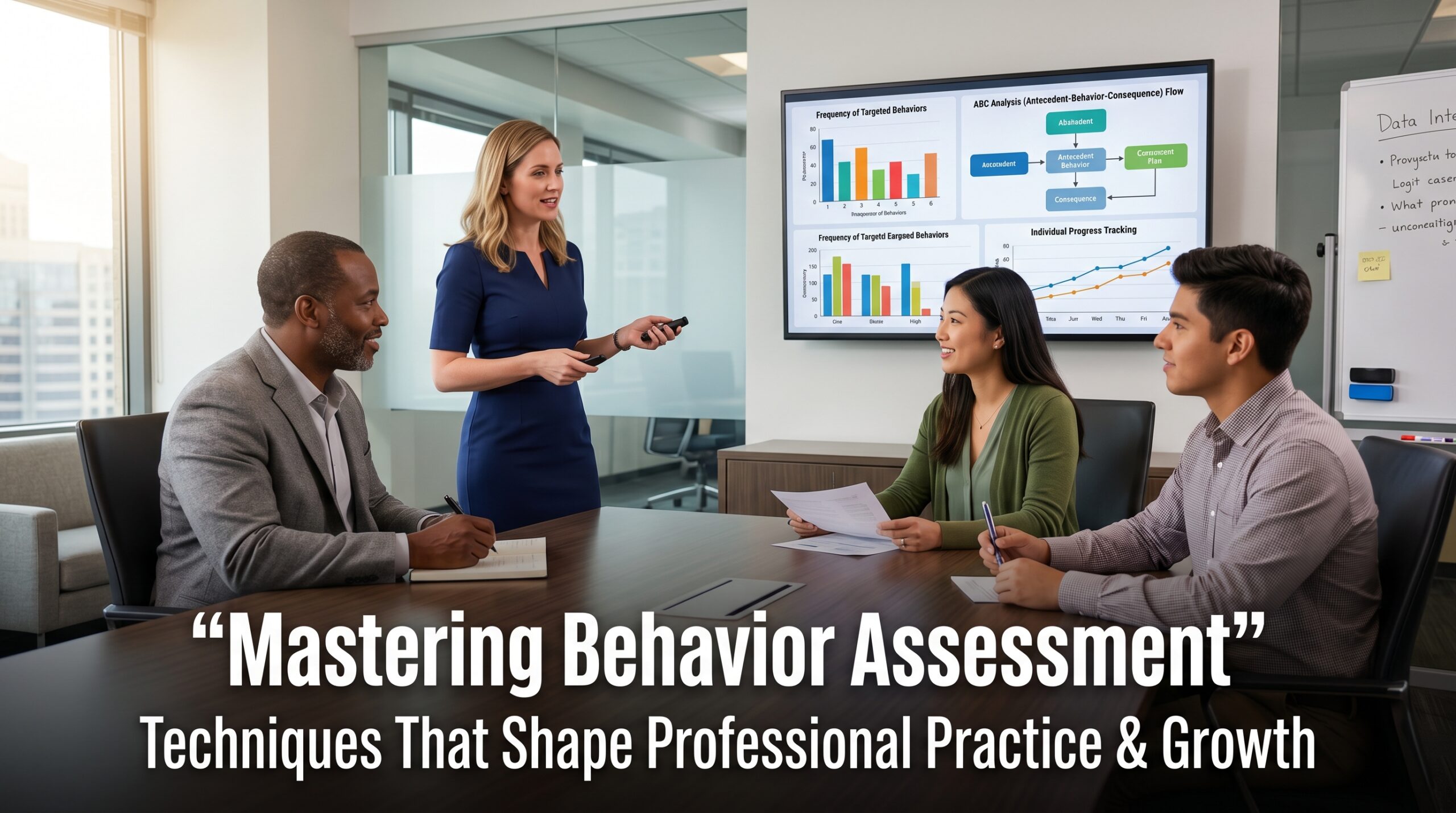

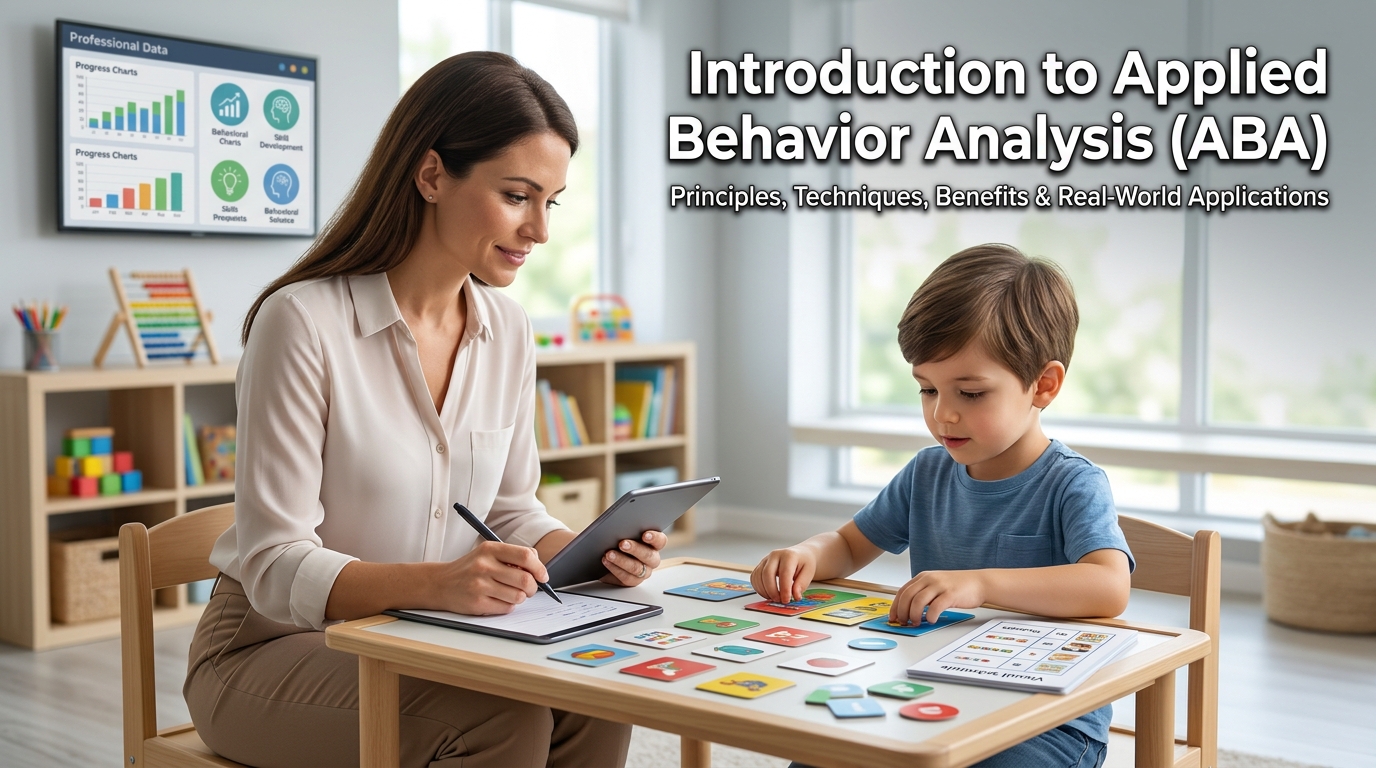
Introduction to Applied Behavior Analysis (ABA)
Understanding the Science of Behavior Change
Human behavior is shaped by experiences, environments, consequences, and learning opportunities. Whether a child is learning to communicate, a student is developing classroom skills, or an adult is building productive habits, behavior plays a central role in daily life. Applied Behavior Analysis (ABA) is a scientific discipline dedicated to understanding how behavior works and how meaningful, lasting behavior change can be achieved.
Over the past several decades, ABA has become one of the most extensively researched approaches in behavioral science. While it is widely known for its use in supporting individuals with autism spectrum disorder (ASD), its principles are also applied in education, healthcare, parenting, organizational leadership, sports performance, rehabilitation, and community-based programs.
What makes ABA distinctive is its practical focus. Rather than relying on assumptions about why behaviors occur, ABA uses observation, measurement, and evidence-based interventions to identify behavioral patterns and teach skills that improve everyday functioning. The goal is not simply to change behavior, but to help individuals develop skills that enhance independence, participation, and quality of life.
This comprehensive guide explores the foundations of Applied Behavior Analysis, how it works, where it is used, its benefits and limitations, and the role it continues to play in modern behavioral support services.
What Is Applied Behavior Analysis (ABA)?
Applied Behavior Analysis is the scientific study of behavior and the application of behavioral principles to improve socially significant outcomes.
In simple terms, ABA helps answer two essential questions:
- Why is a particular behavior occurring?
- What strategies can encourage positive and meaningful change?
ABA focuses on observable and measurable behaviors rather than assumptions or interpretations. Practitioners collect data, analyze patterns, and implement interventions based on objective evidence.
The term itself can be understood through three key components:
| Component | Meaning |
| Applied | Focuses on behaviors that have practical importance in everyday life |
| Behavior | Refers to observable actions that can be measured and evaluated |
| Analysis | Involves examining relationships between behavior and environmental factors |
The foundation of ABA is based on a simple but powerful concept: behavior is influenced by what happens before it occurs and by what follows afterward. Understanding these relationships makes it possible to teach new skills, strengthen beneficial behaviors, and reduce behaviors that create barriers to learning or independence.
Why Applied Behavior Analysis Matters
ABA has become a cornerstone of behavioral intervention because it combines scientific reliability with real-world practicality.
Unlike approaches that rely primarily on subjective interpretation, ABA uses measurable outcomes to guide decision-making. Every intervention is monitored, evaluated, and adjusted based on observable results.
ABA is valuable because it helps individuals:
- Develop communication skills
- Improve social interactions
- Build academic readiness
- Increase independence
- Learn self-management strategies
- Reduce behaviors that interfere with learning and safety
- Generalize skills across different environments
For families, educators, therapists, and employers, ABA provides a structured framework for helping people achieve meaningful and sustainable progress.
The Scientific Foundations of ABA
ABA is rooted in behavioral science, particularly the understanding that behavior is influenced by environmental events and learning experiences.
Behavior analysts study patterns and seek answers to questions such as:
- What triggers a behavior?
- What purpose does the behavior serve?
- What happens after the behavior occurs?
- Why does the behavior continue?
- Which intervention is most likely to produce positive outcomes?
These questions help practitioners move beyond simply reacting to behavior and instead understand its function.
For example, if a child repeatedly leaves their seat during class, ABA seeks to determine whether the behavior is motivated by seeking attention, avoiding a task, accessing a preferred activity, or fulfilling another need. Once the function is identified, appropriate interventions can be developed.
This problem-solving approach is one reason ABA remains highly effective across diverse settings and populations.
How the ABA Process Works
Although ABA programs vary depending on individual needs, most follow a structured framework.
1. Assessment and Evaluation
The process begins with gathering detailed information about the individual.
Areas commonly assessed include:
- Communication abilities
- Social skills
- Academic performance
- Adaptive behavior
- Daily living skills
- Behavioral concerns
- Learning preferences
- Environmental influences
The goal is to develop a complete picture of the individual’s strengths and areas requiring support.
2. Goal Development
Following assessment, specific goals are created.
Effective goals are:
- Measurable
- Realistic
- Functional
- Meaningful
- Individualized
Examples may include:
- Requesting help appropriately
- Following classroom instructions
- Completing daily self-care routines
- Improving peer interactions
- Increasing workplace productivity
Goals should focus on skills that have a meaningful impact on everyday life.
3. Intervention Planning
Behavior analysts design intervention strategies tailored to the individual’s needs and learning style.
The selected interventions are intended to:
- Teach new skills
- Strengthen existing skills
- Increase independence
- Reduce barriers to participation
- Improve overall functioning
Interventions are chosen based on evidence rather than personal preference or assumption.
4. Data Collection and Progress Monitoring
One of ABA’s defining features is its commitment to measurement.
Practitioners collect data regularly to determine:
- Whether progress is occurring
- Which strategies are effective
- Whether adjustments are needed
Data-driven decision-making helps ensure that interventions remain effective and accountable.
5. Program Review and Modification
Behavior change is rarely a straight line. As individuals grow and develop, goals and strategies often need refinement.
Continuous review allows practitioners to:
- Identify successful interventions
- Address new challenges
- Expand learning opportunities
- Ensure long-term progress
Core Principles of Applied Behavior Analysis
Several foundational concepts form the basis of ABA practice.
Reinforcement
Reinforcement refers to consequences that increase the likelihood of a behavior occurring again.
Positive Reinforcement
Positive reinforcement involves adding something desirable after a behavior.
Example:
A student receives verbal praise after completing an assignment independently. As a result, independent work becomes more likely in the future.

Negative Reinforcement
Negative reinforcement involves removing an unpleasant condition following a behavior.
Example:
A driver fastens a seatbelt to stop a warning alarm.
A common misconception is that negative reinforcement is punishment. In reality, it strengthens behavior by removing something undesirable.
The ABC Model
A fundamental ABA framework is the ABC Model.
| Component | Definition |
| Antecedent | What occurs before a behavior |
| Behavior | The observable action |
| Consequence | What occurs immediately after the behavior |
Practical Example
Antecedent: A teacher asks a student to solve a math problem.
Behavior: The student begins working on the task.
Consequence: The teacher provides encouragement and praise.
Analyzing these relationships helps identify why behaviors occur and how positive behaviors can be strengthened.
Key Characteristics of ABA
Several characteristics distinguish ABA from other intervention approaches.
Individualized Programming
No two individuals learn in exactly the same way. Effective ABA programs are customized to each person’s strengths, needs, preferences, and goals.
Evidence-Based Practice
ABA interventions are grounded in scientific research and ongoing evaluation.
Functional Focus
Behavior is viewed within its environmental context, helping practitioners understand its purpose and function.
Measurable Outcomes
Success is evaluated through observable and quantifiable results rather than subjective impressions.
Skill Generalization
Skills are taught in ways that promote use across different people, environments, and situations.
Continuous Improvement
Programs evolve based on data and changing individual needs.
Common ABA Techniques
ABA practitioners use a variety of teaching strategies depending on learning objectives.
Positive Reinforcement
Desired behaviors are followed by meaningful rewards or positive consequences that encourage repetition.
Prompting
Prompts provide temporary assistance while a skill is being learned.
Examples include:
- Verbal prompts
- Visual prompts
- Gestural prompts
- Physical prompts
As learning progresses, prompts are gradually reduced to encourage independence.
Task Analysis
Complex activities are divided into smaller, manageable steps.
For example, handwashing may include:
- Turning on the faucet
- Wetting hands
- Applying soap
- Scrubbing thoroughly
- Rinsing
- Drying hands
Breaking tasks into smaller steps often makes learning more achievable.
Modeling
A desired behavior is demonstrated so the learner can observe and imitate it.
Behavior Chaining
Multiple skills are linked together to create larger routines and sequences.
Examples include dressing independently, preparing a snack, or completing workplace procedures.
Natural Environment Teaching (NET)
Learning opportunities are incorporated into daily routines and naturally occurring situations, helping learners apply skills in real-world contexts.
Benefits of Applied Behavior Analysis
When implemented ethically and appropriately, ABA can support meaningful growth across multiple areas of development.
Enhanced Communication
Individuals learn effective ways to express needs, preferences, questions, and ideas.
Improved Social Skills
ABA can help develop:
- Conversation skills
- Turn-taking
- Cooperative play
- Friendship-building abilities
- Social problem-solving
Greater Independence
Programs often focus on practical skills that promote self-sufficiency.
Examples include:
- Personal hygiene
- Meal preparation
- Household responsibilities
- Money management
- Time management
Academic Support
ABA strategies can improve:
- Attention and concentration
- Task completion
- Classroom participation
- Learning readiness
Reduction of Challenging Behaviors
By understanding why behaviors occur, ABA helps teach safer and more effective alternatives.
Family and Caregiver Support
Families gain practical tools that help create consistency across home, school, and community settings.
Challenges and Limitations of ABA
A balanced understanding of ABA requires acknowledging its challenges.
Meaningful Change Takes Time
Developing new skills and reducing long-standing behavioral patterns often requires patience and consistency.
Individual Outcomes Vary
No intervention works identically for every individual.
Access Can Be Limited
Qualified providers may not be readily available in all regions.
Financial Considerations
Depending on service intensity and available funding, ABA programs can represent a significant investment.
Collaboration Is Essential
Success often depends on coordinated efforts among families, educators, therapists, and support teams.
Recognizing these realities helps establish realistic expectations and more effective planning.
Important Considerations Before Starting ABA Services
Choosing an ABA provider should involve careful evaluation.
Professional Qualifications
Seek providers with recognized certifications, training, and supervised experience.
Individualized Treatment Planning
Avoid programs that apply identical strategies to every learner.
Family Involvement
Strong family participation often improves long-term outcomes and skill maintenance.
Functional Goals
Goals should improve everyday life and address meaningful areas of need.
Ethical Practice
Quality ABA services prioritize dignity, autonomy, respect, and person-centered care.
Real-World Applications of ABA
Although ABA is frequently associated with autism intervention, its principles have broad applications.
Autism Support Services
Teaching communication, adaptive behavior, social interaction, and daily living skills.
Education
Supporting academic engagement, classroom management, and learning readiness.
Parenting
Helping establish routines, positive behaviors, and healthy habits.
Healthcare
Encouraging treatment adherence, rehabilitation participation, and healthy lifestyle choices.
Workplace Performance
Improving employee productivity, safety practices, leadership development, and organizational effectiveness.
Sports and Performance Coaching
Strengthening focus, consistency, motivation, and skill mastery.
Organizational Behavior Management (OBM)
Applying behavioral science principles to improve workplace systems and organizational outcomes.
Expert Recommendations for Effective ABA Programs
Experienced professionals often recommend:
- Prioritizing meaningful, functional goals
- Using reinforcement consistently
- Monitoring progress through data
- Celebrating small achievements
- Promoting independence whenever possible
- Practicing skills across multiple settings
- Encouraging collaboration among all stakeholders
- Reviewing goals regularly
Sustainable progress is often built through small improvements repeated consistently over time.
Common Mistakes to Avoid
Expecting Rapid Results
Behavior change is a process, not a single event.
Inconsistent Reinforcement
Mixed responses can weaken learning and create confusion.
Making Decisions Without Data
Objective information should guide intervention decisions whenever possible.
Neglecting Generalization
Skills should be practiced beyond the original learning environment.
Setting Overly Ambitious Goals
Breaking larger objectives into smaller milestones often improves success.
Limited Family Participation
Consistency across settings strengthens learning and long-term maintenance.
The Future of Applied Behavior Analysis
Behavioral science continues to evolve, and ABA is adapting alongside new research and technology.
Key trends include:
- Telehealth and remote service delivery
- Digital progress-monitoring systems
- Parent and caregiver coaching programs
- Greater interdisciplinary collaboration
- Person-centered intervention planning
- Technology-assisted learning tools
- Expanded use in healthcare and organizational settings
As these developments continue, ABA is becoming increasingly accessible, flexible, and responsive to individual needs.
Frequently Asked Questions
1. What does ABA stand for?
ABA stands for Applied Behavior Analysis, a scientific discipline focused on understanding and improving behavior.
2. Is ABA only used for autism?
No. ABA principles are used in education, healthcare, business, sports, parenting, and many other fields where behavior change is important.
3. Is ABA evidence-based?
Yes. ABA is supported by decades of research and is widely recognized as an evidence-based approach to behavior intervention.
4. What age groups can benefit from ABA?
ABA can be applied across the lifespan, from early childhood through adulthood.
5. How is progress measured?
Progress is measured through direct observation, systematic data collection, and regular review of individualized goals.
6. What is the difference between reinforcement and punishment?
Reinforcement increases the likelihood of a behavior occurring again, while punishment aims to reduce a behavior.
7. Can ABA be used at home?
Yes. Many ABA strategies can be integrated into daily routines and family activities.
8. Does ABA only focus on reducing problem behaviors?
No. A major focus of modern ABA is teaching meaningful skills, increasing independence, and improving quality of life.
9. How long does ABA intervention typically last?
The duration varies based on individual goals, needs, and progress. There is no universal timeline.
10. What should families look for in an ABA provider?
Families should consider qualifications, experience, ethical standards, individualized planning, and communication practices.
11. Can ABA help adults?
Yes. ABA principles can support adults in areas such as employment, independent living, health management, and community participation.
12. Is every ABA program identical?
No. Effective ABA programs are personalized to meet the unique needs, strengths, and goals of each individual.
Final Thoughts
Applied Behavior Analysis is a practical and evidence-based science dedicated to understanding how behavior develops and how meaningful change can be achieved. Its strength lies in its systematic approach, commitment to measurable outcomes, and focus on teaching skills that improve everyday life.
Whether used in autism services, education, healthcare, parenting, business, or community programs, ABA provides a framework for helping individuals learn, grow, and participate more fully in the world around them. When implemented ethically, collaboratively, and with a focus on individual needs, ABA can support lasting improvements in communication, independence, learning, and overall quality of life.
As research continues to advance and new technologies expand access to services, Applied Behavior Analysis remains one of the most influential and adaptable approaches for understanding behavior and promoting positive change.